 Vietnamnet.vn

 Podcast



The HCMC Statistics Office has released a report on the socio-economic situation in the fourth quarter and the whole year of 2025. In 2025, the city's GRDP increased by 7.53 percent; if oil and gas are not included, the figure would be 8.03 percent.
This raises the question of why the country’s economic engine reports two different growth rates.
At the conference reviewing socio-economic development tasks in 2025 and outlining tasks for 2026, held on January 6, Nguyen Khac Hoang, Head of the HCMC Statistics Office, explained that oil and gas activities depend heavily on fluctuations in global oil prices. Exploration and exploitation plans for these resources are managed and regulated by central authorities, and are largely beyond the scope of local government management and administration.
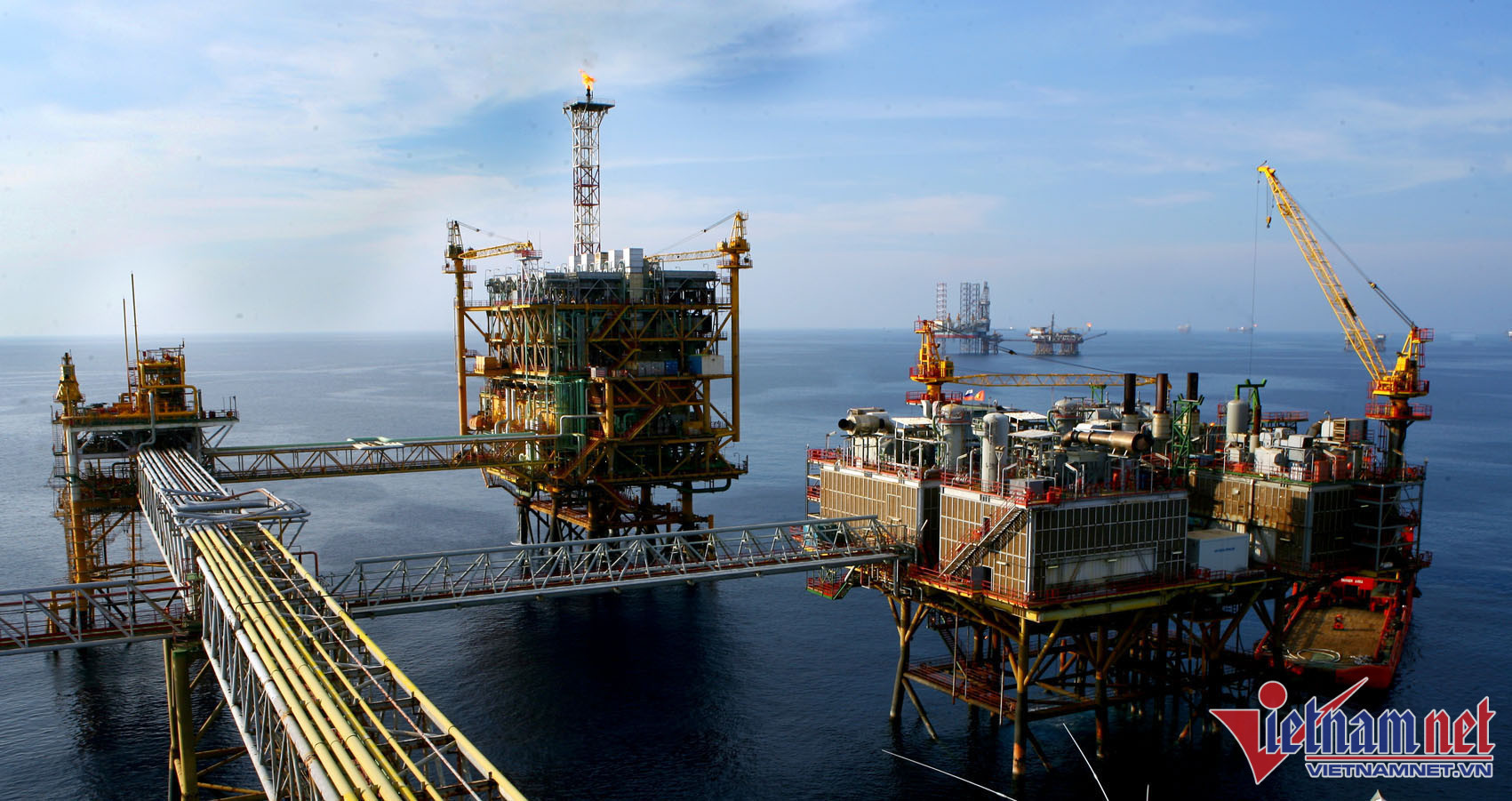
In 2025, oil and gas activities declined by 2.54 percent, thus reducing HCMC’s GRDP by 0.5 percentage points.
“If oil and gas activities are included in GRDP, it does not accurately reflect the effectiveness of the city government’s administration,” the HCMC Statistics Office leader said. Adding the oil and gas indicator has limited significance in improving people’s living standards.
This is because including oil and gas in statistical calculations raises per capita income figures but does not reflect the actual income situation of local residents.
“Therefore, excluding oil and gas from HCMC’s statistical assessment is necessary. This approach helps more accurately reflect growth quality and the city government’s administrative capacity in 2025,” Hoang said.
Nguyen Khac Hoang added that after the merger, the city’s economy accounts for about 23.1 percent of the total national size. A 1 percent growth rate of the city creates value of around VND18,442 billion, a figure equivalent to or even larger than the GRDP of several localities after mergers.
For example, Cao Bang’s GRDP is about VND14,000 billion; Dien Bien’s VND17,000 billion; and Lai Chau’s VND16,000 billion.
In addition, to achieve the same 1 percent GRDP growth as HCMC, other centrally governed cities would need to grow much faster: Hanoi would need 2 percent growth; Hai Phong 5 percent; Hue 44 percent; Da Nang 12 percent; and Can Tho 13 percent.
Looking ahead to 2026, the statistics authority forecasts that HCMC’s growth could reach around 8.5–9 percent. However, the city is setting a double-digit growth target to create momentum for the 2026–2030 period.
To achieve this, each business field must make substantial efforts. For example, agriculture would need to grow by more than 3 percent; industry and construction by 10–11 percent; and services by around 11 percent.
In addition, the total investment capital of society would need to reach about VND880,000 billion in 2026, compared with VND705,000 billion in 2025.
At the same time, public investment disbursement must reach 100 percent, outstanding credit growth exceed 15 percent, and labor productivity increase by about 8.5 percent, according to the Head of the HCMC Statistics Office.
In reality, the oil and gas sector has a significant impact on HCMC’s growth indicators today because before the merger, Ba Ria–Vung Tau was Vietnam’s largest center for oil and gas exploration and processing, leading the country’s energy sector.
The province has oil reserves of around 400 million tons, accounting for 93.29 percent of national reserves, and gas reserves exceeding 100 billion cubic meters, equivalent to 16.2 percent of the national total (according to 2023 statistics).
For many years, Ba Ria–Vung Tau has consistently ranked among the top 10 localities nationwide in terms of GRDP and total state budget revenue. In 2021, the province’s GRDP per capita reached $12,154 per person (including oil and gas) and about $7,141 per person (excluding oil and gas).
In related news, Bui Xuan Cuong, HCMC Vice Mayor at the third conference of the HCMC Party Committee for the 2025–2030 term held January 7, presented a proposal on the project to build a political and administrative center in the Thu Thiem New Urban Area.
According to Cuong, consolidating Party and government agencies at a single hub in Thu Thiem is a solution to the current fragmentation of the administrative infrastructure system, while also opening up modern development space for a special urban area after the merger.
Under the plan, HCMC will complete planning and investment procedures in the first quarter of 2026, break ground at the same time, and strive to put the project into operation in 2027.
Tran Chung
.svg)
