 Vietnamnet.vn

 Podcast



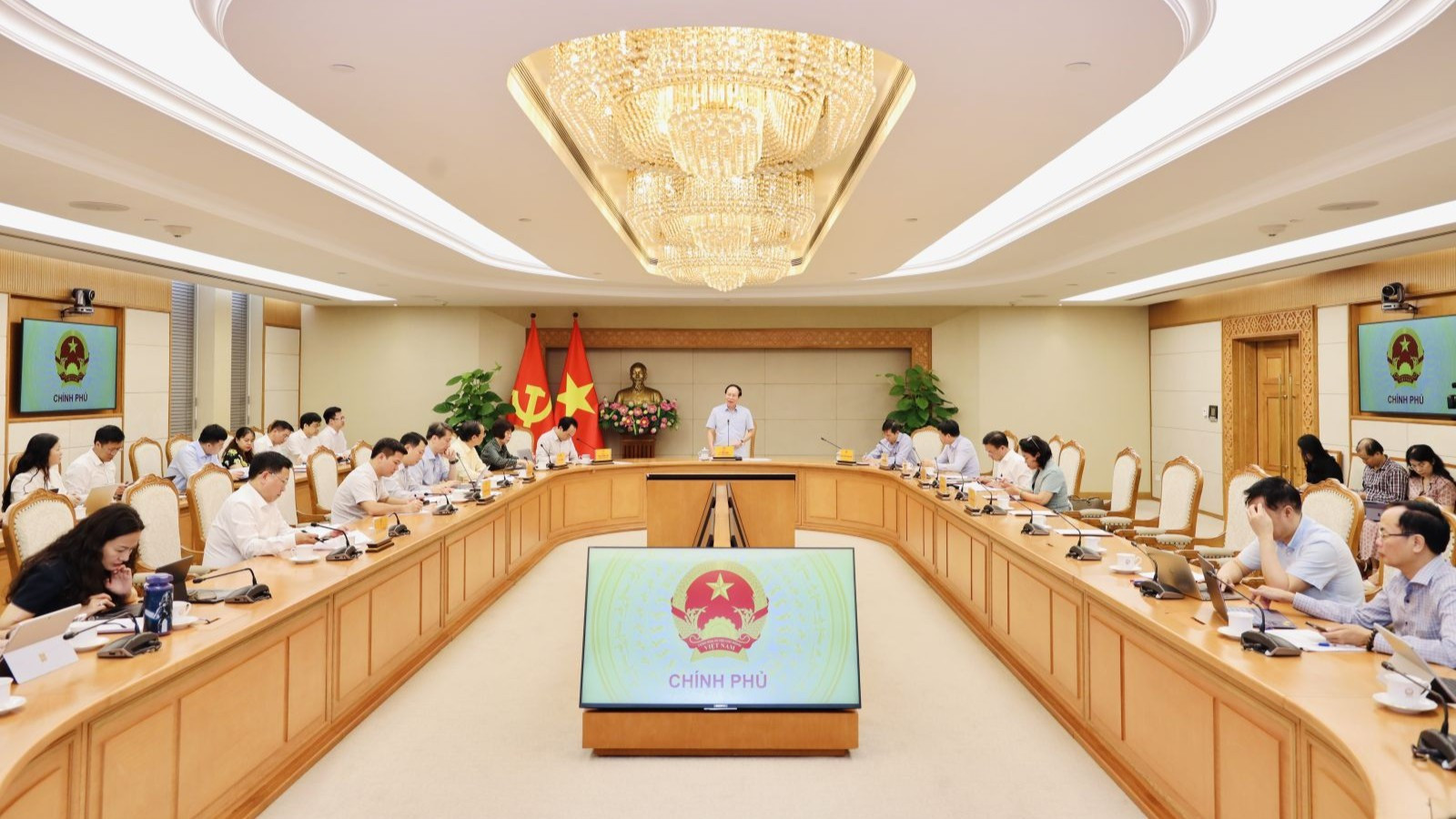
According to the ministry’s web portal, this was one of the contents the minister reported and clarified at a working session on June 26 with Deputy Prime Minister Le Tien Chau on the education sector’s key tasks.
Regarding the teaching workforce, the minister said preferential policies for the pedagogical sector in recent years have produced positive results, with the quality of entrants to teacher training institutions steadily improving.
Many young teachers have received solid professional training, possess strong expertise and have quickly adapted to digital transformation and the use of AI in teaching. At the same time, teacher training and professional development have continued to improve, helping prepare the workforce to meet the education sector's development needs in the new period.
However, the minister said Vietnam's education sector is facing a teacher shortage while also experiencing localized surpluses and shortages. Looking only at the number of vacant teaching positions does not fully reflect the nature of the problem.
"The issue is not that there are no people to teach, but that teachers are overloaded," Minister Son stressed.
According to the minister, there is one teacher per every 22-23 students in Vietnam, while in many developed countries the figure is only 15-16 students or even lower. When each teacher is responsible for too many students, it becomes more difficult to provide individual attention, adopt innovative teaching methods and organize experiential learning activities.
Regarding solutions, the minister said reorganizing the school network would allow the education sector to gain about 55,000 additional teacher positions by reducing the number of administrative and support staff positions. In addition, teacher staffing norms should be reviewed and adjusted to suit different stages of development.
In the long term, however, the country must ensure that teacher staffing meets the prescribed standards, as this is an important indicator of a nation's education quality.
On restructuring the school network, Son said the process involves a range of issues that need to be considered comprehensively, including whether students will have to travel farther to school and how teachers and school administrators will be reassigned.
One issue that particularly concerns the minister is contract-based teachers. He noted that many have been teaching for decades without being recruited as civil servant teachers, despite carrying out the same professional duties as teachers on the government payroll.
"I personally have great concerns about this issue. Why does inequality still exist between contract-based teachers and civil servant teachers? How can teachers who have devoted many years to the profession be given the opportunity to be officially recruited?" the minister said.
He stressed that the issue requires further study and policy solutions by authorities to ensure fairness for teachers who have dedicated many years to education.
Reducing exam pressure
Regarding efforts to reduce academic and examination pressure, Minister Son said the first step is to correctly identify the root cause. In his view, the pressure does not stem from examination formats or admission methods, but from the imbalance between supply and demand - specifically, the gap between people's educational needs and the education system's capacity.
Using higher education as an example, the minister said university admission was once highly competitive, but as enrollment capacity expanded and available places better matched demand, admission pressure eased significantly.
"If we do not solve the shortage of schools, classrooms and enrollment capacity, we cannot solve examination pressure," the minister said, adding that the fundamental solution is to ensure there are enough schools, classrooms and teachers.
Also discussing admissions, the minister said a change in approach is needed. According to him, the term "admissions" inherently implies selection and competition. If education is recognized as every student's right, then policymakers should shift the focus toward guaranteeing learning opportunities rather than simply selecting candidates.
Deputy Prime Minister Le Tien Chau has assigned MOET to preside over and coordinate with ministries, sectors, and localities to urgently review and compile statistics on the teacher surplus and shortage situation after localities complete staff allocation; and report to the Government before July 10 to propose solutions for immediate implementation in the 2026-2027 school year.
Thanh Hung
.svg)
