 Vietnamnet.vn

 Podcast



More than 1.22 million students across Vietnam completed the Literature exam on June 11, the opening test of the 2026 national high school graduation examination, with many candidates and teachers praising the paper for its relevance, creativity and real-world focus.
The exam marked the first major test day for the largest cohort ever registered for the national graduation examination. From early morning, students arrived at examination sites nationwide, accompanied by parents, teachers, volunteers and local authorities working to ensure a smooth and secure start.
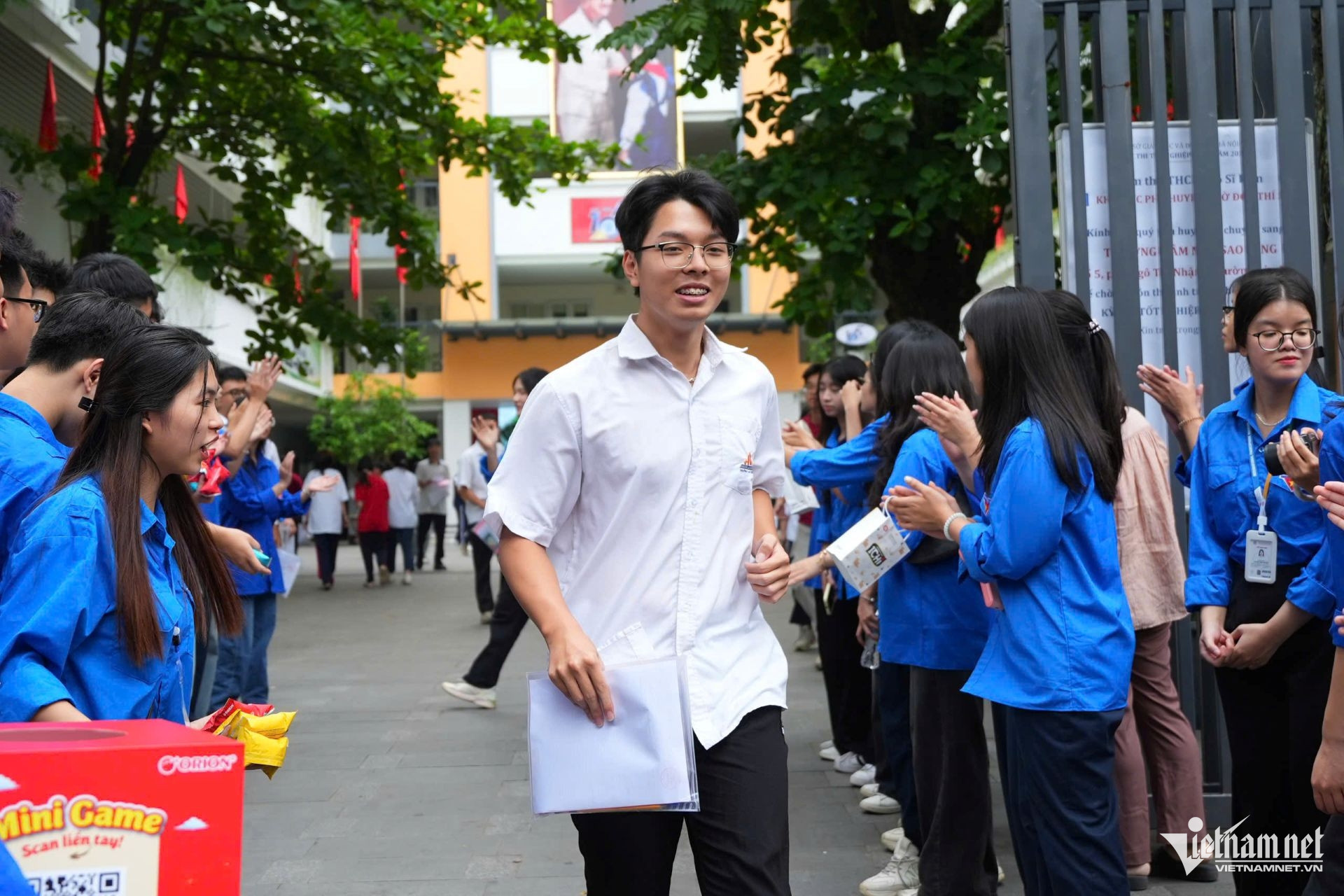
At examination centers from Hanoi and Ho Chi Minh City to Da Nang, Khanh Hoa, Quang Ninh, Bac Ninh, Ha Tinh, Lam Dong and Can Tho, candidates arrived hours before the test began, hoping to settle their nerves before facing one of the most important milestones of their academic journey.
Tran Quang Vinh, a student from Cau Giay High School in Hanoi, arrived at his test center shortly after 5:30 a.m.
"This is the most important exam of my 12 years of study. I hope I can apply everything I have learned and achieve the score needed to enter the National Economics University," he said.
Many students shared similar feelings of anticipation mixed with confidence. Others viewed the examination as the final chapter of their secondary education.
At several examination centers, candidates reviewed notes with parents while volunteers offered directions, drinking water and encouragement. In Da Nang, some students stopped to light incense at a statue of scholar Phan Chau Trinh before entering the examination hall.
After 120 minutes of testing, candidates emerged smiling and visibly relieved.
Many described the Literature paper as accessible, contemporary and closely connected to issues affecting young people today.
A reading passage extracted from "Code and Sand - The Technological Powers Reshaping the World" focused on technology, innovation and the influence of artificial intelligence. The social essay section challenged students to answer the question: "How can Vietnam produce its own Steve Jobs?"
The topic immediately resonated with many candidates.
Minh Phuc, a specialist IT student at Hanoi University of Science High School for Gifted Students, said the question reflected issues he frequently discusses.
"AI should be used responsibly and effectively. More importantly, Vietnam needs an educational and research environment capable of nurturing talent from an early age if we want to create future innovators," he said.
Many candidates reported feeling well prepared for the topic.
Phuong Ly, a candidate in Hanoi, said she had anticipated a question related to science, technology or artificial intelligence.
"My parents and I had discussed many current social issues before the exam. I was surprised that the topic was very close to what we had talked about. I think I did well and hope to score around eight points," she said.
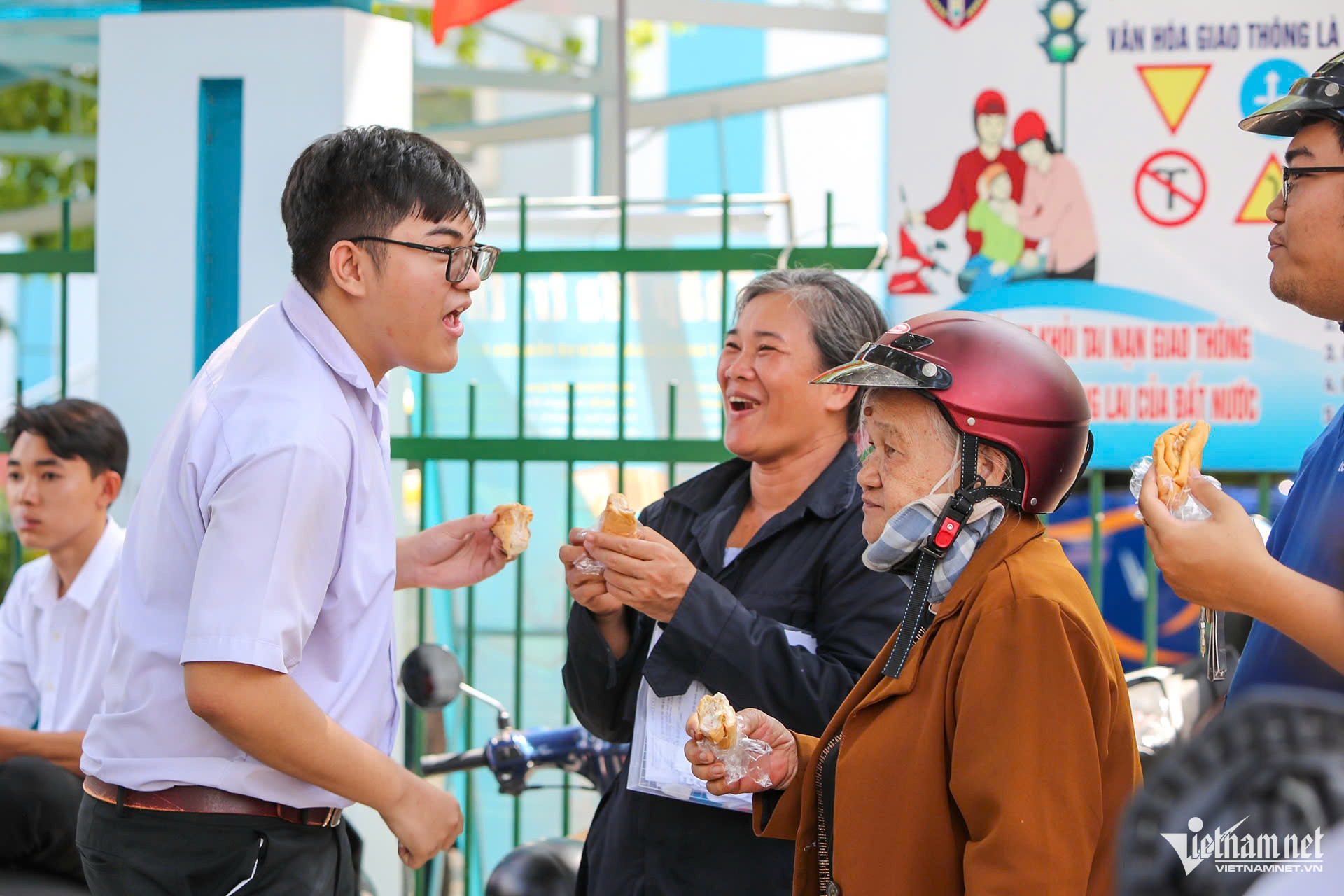
At examination centers in Ho Chi Minh City, students also welcomed the paper's openness.
Several candidates noted that the literary analysis section required them to interpret Nguyen Dinh Thi's poem "Leaves", a text outside the official textbook curriculum. While some found this challenging, many appreciated the opportunity to demonstrate independent thinking rather than relying on memorization.
Phuong Thao, a student at the Practice High School of Ho Chi Minh City University of Education, said she used seven answer sheets and felt confident about scoring above seven points.
Across the country, candidates consistently praised the exam's emphasis on real-life issues and independent viewpoints.
Teachers shared a similar assessment.
Nguyen Phuoc Bao Khoi, a lecturer at Ho Chi Minh City University of Education, described the exam structure as a surprise for both teachers and students.
The paper combined reading comprehension based on an argumentative text, a social commentary paragraph and a literary essay. While unexpected in some respects, Khoi said the structure aligned well with the objectives of the 2018 General Education Curriculum and provided stronger differentiation among candidates.
"The writing sections particularly challenged students' reasoning abilities and argumentation skills. The exam successfully evaluated competency rather than simply testing memorized knowledge," he said.
Ho Tan Nguyen Minh, head of the Literature Department at Luong Van Chanh High School for the Gifted, agreed that the paper demonstrated clear differentiation.
According to Minh, basic reading comprehension questions were accessible to most candidates, while higher-level questions required deeper understanding and personal viewpoints.
"The exam is more demanding than last year's version. It is more suitable for university admissions purposes, though average students aiming only for graduation may find it relatively difficult," he said.
Duong Thi Thanh Thuy, head of Literature at M.V. Lomonosov Secondary and High School in Hanoi, identified the most important message of the 2026 examination.
"Literature is no longer about memorization. It is about learning how to read, think and express independent opinions," she said.
According to Thuy, the exam maintained consistency with the direction of the 2018 curriculum while introducing stronger elements of contemporary relevance. Compared with previous years, the 2026 paper placed greater emphasis on science, technology, innovation and the responsibilities of young citizens in a digital society.
"If the 2025 exam focused more on human values and personal experiences, the 2026 exam expanded its assessment to include civic thinking and national development issues. Students needed critical thinking and the ability to connect with real-world contexts," she said.
Thuy predicted that most scores would fall between 6.5 and 7.75 points, while scores above nine would likely be reserved for candidates demonstrating exceptional depth of thought, strong reasoning and sophisticated language use.
The 2026 national high school graduation examination is being held from June 11 to 12, with a record 1,223,776 registered candidates.
Under the revised examination format, students sit two compulsory subjects - Mathematics and Literature - along with a combined test consisting of two elective subjects selected from Physics, Chemistry, Biology, Informatics, History, Geography, Foreign Languages, Economic and Legal Education, and technology-oriented subjects.
Results are scheduled to be released on July 1, nearly two weeks earlier than in 2025.
Thuy Nga - Thanh Hung - Le Huyen
.svg)
