 Vietnamnet.vn

 Podcast


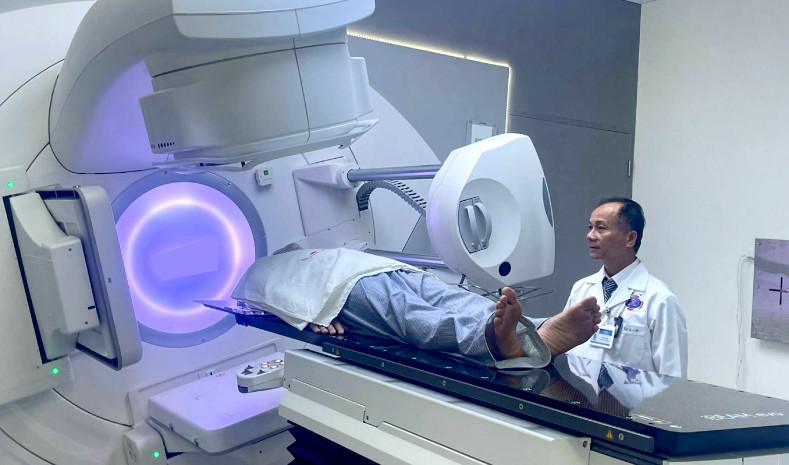
There are currently three generations of EGFR (Epidermal Growth Factor Receptor) targeted drugs, for example, commonly used in treating non-small cell lung cancer (NSCLC) with EGFR mutations.
Generation 1 includes erlotinib and gefitinib, which receive a 50 percent health insurance subsidy. Generation 2 includes afatinib and dacomitinib.
The Ministry of Health listed price for Giotrif (active ingredient afatinib) is VND1.4 million per tablet, with health insurance covering 50 percent. Generation 3 includes osimertinib, which is not yet covered by health insurance, costing VND42 million per month; patient assistance programs can reduce this to around VND27 million per month.
Dr. Trinh The Cuong from the Department of Chemotherapy at E Hospital in Hanoi said drug selection cannot rely solely on the drug generation. Physicians must evaluate mutation types, central nervous system metastasis, age, physical status, comorbidities, financial means, patient preferences, and drug availability.
This evaluation is especially crucial for elderly patients with multiple underlying health conditions.
Third-generation drugs have demonstrated advantages in the duration of disease control. In the FLAURA study, osimertinib showed clear superiority over erlotinib/gefitinib.
The median progression-free survival reached 18.9 months compared to 10.2 months, while median overall survival reached 38.6 months compared to 31.8 months. Osimertinib also has high central nervous system penetration, playing a key role in managing patients with brain metastases.
These figures are important, but they do not mean that every patient will live for exactly the median survival time reported in the trial.
Real-world outcomes also depend on patient characteristics, tumor biology, treatment tolerability and subsequent treatment options.
Cheaper drugs don’t always mean less effective treatment
Associate Professor Le Thuong Vu of the HCMC University of Medicine and Pharmacy said cancer treatment outcomes also depend on the biological characteristics of the tumor and its microenvironment.
He emphasized the role of molecular testing in identifying treatment targets. As sequencing technology advances, a single test can examine more genes, giving doctors additional information to select treatment regimens and assess prognosis.
In other words, before asking "Which drug is the most expensive?", patients need to understand the biological characteristics of their tumors and which drugs have targets that match those characteristics.
In clinical practice, the goal of targeted therapy is to prolong disease control, delay chemotherapy and maintain quality of life while keeping toxicity at an acceptable level.
First-generation drugs have advantages in accessibility and cost in some cases. Second-generation drugs are effective for certain patient groups, but their toxicity requires careful monitoring. Third-generation drugs offer advantages in efficacy and controlling disease in the central nervous system, but their high cost can be a barrier.
Osimertinib can also be combined with chemotherapy in certain situations, such as when the disease burden is high or the cancer is progressing rapidly. This decision must be based on the patient's specific condition.
Vu said cancer is no longer as frightening as it once was. Patients can now receive personalized treatment, with more drugs, molecular targets and treatment strategies available.
However, the growing number of new drugs has also made access to treatment more complicated. Dr. Ong The Due of the Institute of Strategy and Policy under the Ministry of Health said drug costs are rising, while the health insurance system must balance adding new medicines to its coverage list against the financial resources available.
Today's fight against cancer is not just about finding effective drugs. It is also about ensuring that patients can access the right medicines, use them appropriately and continue treatment long enough to benefit.
For a family dealing with cancer, the question is not only "How much longer could this drug help the patient live?" but also how long the family can afford to maintain that treatment plan and, if it becomes unaffordable, what suitable alternatives are available.
Vu said he had seen a patient spend around VND2.8 billion on two years of immunotherapy, even after receiving assistance from the drug manufacturer. Yet spending billions of dong does not guarantee that a patient will respond to treatment. Some patients see their tumors disappear after just a few treatment cycles. Others continue treatment for an extended period, but their disease still progresses.
Thus, while modern cancer therapy offers exciting new hope, treatment decisions must remain strictly individualized for every patient.
Phuong Thuy

