 Vietnamnet.vn

 Podcast



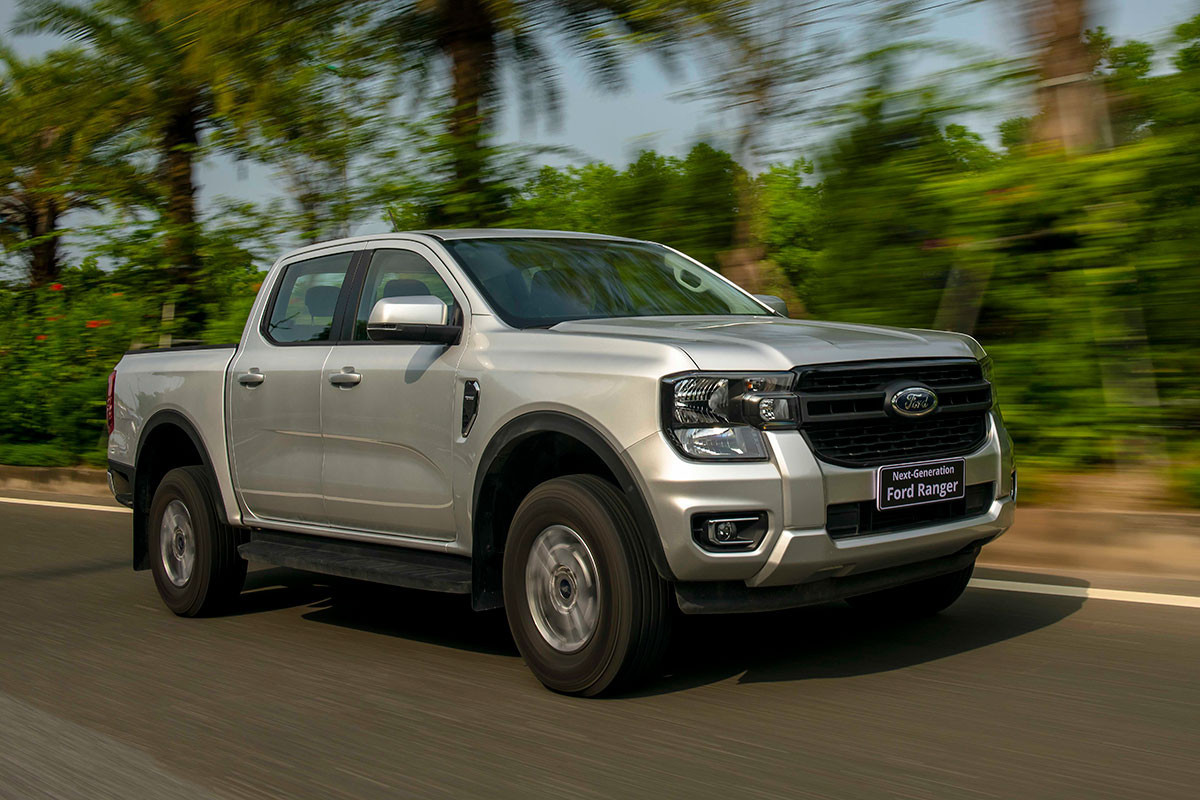
The Hanoi Department of Construction said the City People's Committee issued the Decision 01/QD/2026 (dated January 4) on road traffic organization, which is now being applied.
Accordingly, in the inner city area during peak hours from 6am to 9am and 4pm to 7:30pm, trucks under 2 tons are not allowed to operate. Trucks of 2 tons or more are only allowed to circulate from 9pm to 6am the following day.
Outside these time frames, vehicles must be approved by the competent authority. Vehicles from 2 to 10 tons are licensed by the City Police, and those 10 tons or more are evaluated by the Department of Construction.
The regulation is sparking debates about pickup trucks being classified as in the truck group and subject to similar restrictions.
A representative of a registration center in Hanoi said that according to Circular 53/2024 of the Ministry of Transport (now the Ministry of Construction) on vehicle classification, pickup trucks can be classified in the "pickup passenger car" group or the "pickup truck" group.
More than 99 percent of pickups are classified as pickup trucks; while pickup passenger cars only account for a very small, almost negligible proportion.
Popular vehicle models such as the Ford Ranger, Toyota Hilux, or Mitsubishi Triton, despite having modern designs and amenities like passenger cars, still belong to the pickup truck group.
If Hanoi applies truck restriction regulations according to time slots, the majority of personal pickup trucks will be affected.
“So, nearly all pickups will be restricted. Users will be forced to reconsider their travel needs, or even only be able to use the vehicle in areas where restrictions are not applied," one person said.
Also, according to the registration representative, vehicle classification is not based on external appearance but on technical records and registration certificates. This is the only legal basis for determining the type of vehicle.
The registration paper will clearly show the vehicle type. If it says “pickup passenger car,” it is allowed to circulate in the inner city during peak hours; conversely, if it says “pickup truck,” it falls under the truck category, regardless of single or double cabin.
This means all debates based on external appearance have no legal value without cross-checking the documents.
Careful research needed
Nguyen Van Quyen, Chair of the Vietnam Automobile Transport Association, said this regulation needs to be studied carefully to avoid a major impact on citizens and businesses.
Pickups are currently mainly serving personal needs, combined with carrying small goods, not as transport business vehicles. “For example, when traveling, many people need to carry tents, bicycles, and personal items. If completely banned, travel and daily activities will be affected," he said.
If following the standards and decisions of the Hanoi People's Committee, more than 90 percent of pickup trucks will not be allowed into the inner city during peak hours.
“This application may lead to inadequacies, especially for small businesses and people using vehicles for combined purposes," Quyen said.
He said the association is continuing to study legal regulations and operational practices. “If banned, it is necessary to ensure consistency and harmony, without obstructing daily activities and the transport of small goods. The association will soon have an official opinion,” he said.
According to some traffic experts, the regulation to restrict pickup trucks needs to be considered carefully, as it may have an unintended impact on people's lives. Many Hanoi pickup owners are scrambling for alternatives to access the city during the daytime.
The big difference of pickup trucks is their versatility, serving both personal travel and small-scale goods transport. This is a popular vehicle for small business households, service providers, and even families with travel or picnic needs.
“If applied rigidly according to registration classification, pickup truck users for personal purposes will have their right to travel significantly restricted. They are not the group putting major pressure on infrastructure like transport trucks," an expert said.
Vu Diep
.svg)
