 Vietnamnet.vn

 Podcast


From a childhood marked by hardship to monastic life
Most Venerable Thich Thien Nhon, whose birth name is Phan Minh Hoang, was born in 1950 in the former Tra Vinh Province, now part of Vinh Long Province in southern Vietnam.
Born into a family with a strong Buddhist tradition, he experienced hardship from an early age. His mother died when he was young, and his childhood unfolded against the backdrop of war.
In 1957, at just seven years old, he formally took refuge in the Three Jewels of Buddhism, marking the beginning of a lifelong spiritual journey.
Three years later, at the age of 10, he entered monastic life at Phuoc Tuong Pagoda.
From this modest beginning, he pursued Buddhist education at several respected institutions, including Luong Xuyen Buddhist School, Hue Nghiem Buddhist Institute and Hai Duc Buddhist Institute in Nha Trang.
He later continued his studies in Buddhist philosophy and attended the University of Letters in Saigon.
These formative years laid the foundation for his commitment to Buddhist scholarship, moral discipline and religious service.
His early involvement in Buddhist teaching and the propagation of Buddhist teachings gradually led him to assume greater responsibilities within the Vietnam Buddhist Sangha (VBS).
Over the decades, he served as Secretary of the Central Sangha Affairs Committee, Deputy General Secretary, Head of Office II, Vice Chairman and General Secretary, and Standing Vice Chairman of the Executive Council.
He subsequently became Deputy Supreme Patriarch of the Patronage Council and Chairman of the VBS Executive Council.
Throughout his leadership career, Most Venerable Thich Thien Nhon has emphasized organizational unity, respect for monastic discipline and stronger coordination among Buddhist institutions.
For him, effective Buddhist leadership requires not only administrative ability but also the preservation of religious ethics and the spirit of harmony within the monastic community.
Bringing Buddhist compassion into everyday life
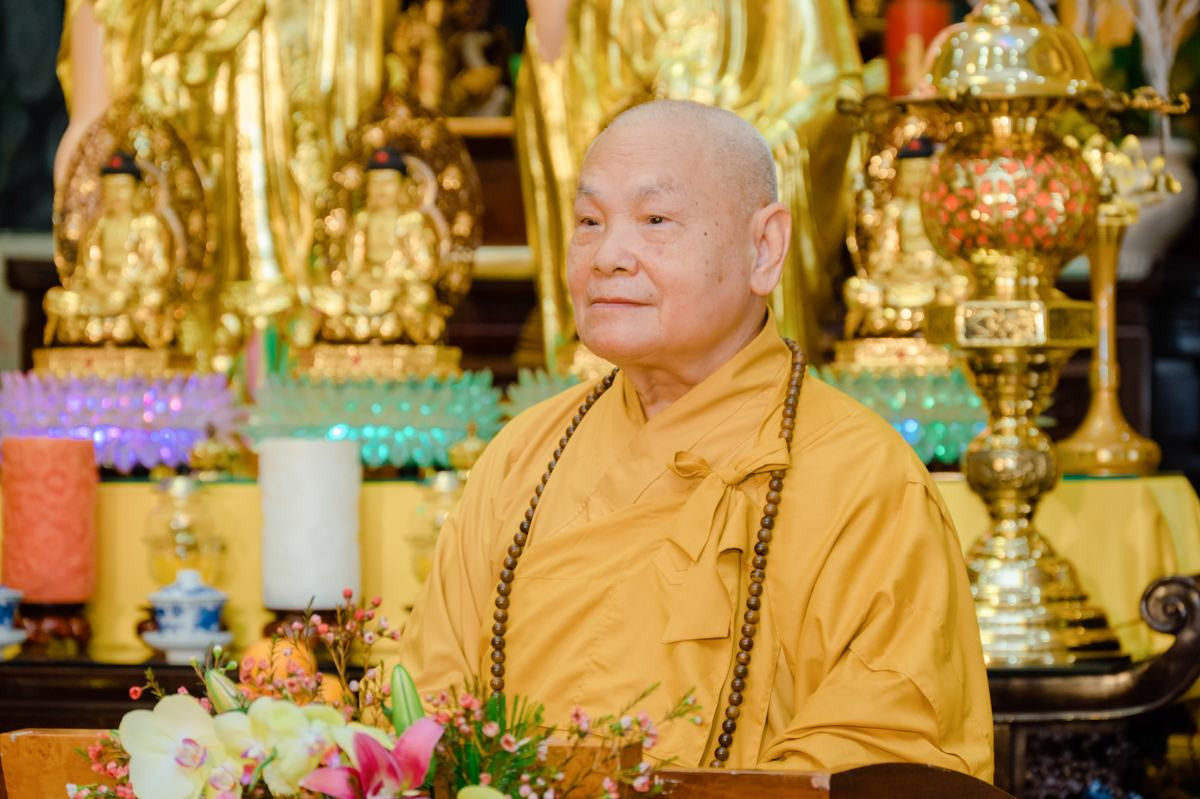
Most Venerable Thich Duc Thien. Photo: Dang Huy
A defining feature of Most Venerable Thich Thien Nhon's leadership has been his emphasis on socially engaged Buddhism, encouraging monks, nuns and Buddhist followers to translate religious teachings into practical service.
Under this approach, Buddhist activities extend beyond pagodas and monasteries to include humanitarian assistance, environmental protection, education and community welfare.
During the 2022-2026 term, Buddhist organizations and followers across Vietnam contributed more than VND 7.5 trillion (approximately $290 million) to charitable and social welfare activities.
These included disaster relief, assistance for disadvantaged communities, care for elderly people, orphans and people with disabilities, and the construction of charitable housing, bridges, roads and schools.
Buddhist organizations also supported free medical examinations and treatment, alongside international humanitarian relief programs.
Such initiatives reflect a central principle in Most Venerable Thich Thien Nhon's approach: Buddhist teachings should remain closely connected to the needs of society.
His leadership has also been associated with efforts to strengthen Vietnam's international Buddhist engagement.
One of the most prominent events was the 2025 United Nations Day of Vesak celebration in Ho Chi Minh City, which brought together more than 2,700 domestic and international delegates from 85 countries and territories.
The event provided an opportunity to highlight Buddhist values of peace, compassion and wisdom while promoting Vietnam's cultural identity and strengthening international exchanges.
Held during the 50th anniversary of the liberation of southern Vietnam and national reunification, the celebration also carried messages of reconciliation, harmony and a shared future.
For Most Venerable Thich Thien Nhon, international Buddhist cooperation is not limited to religious ceremonies. It also provides a platform for dialogue on peace, education, culture and sustainable development.
Education as the foundation of the Sangha's future
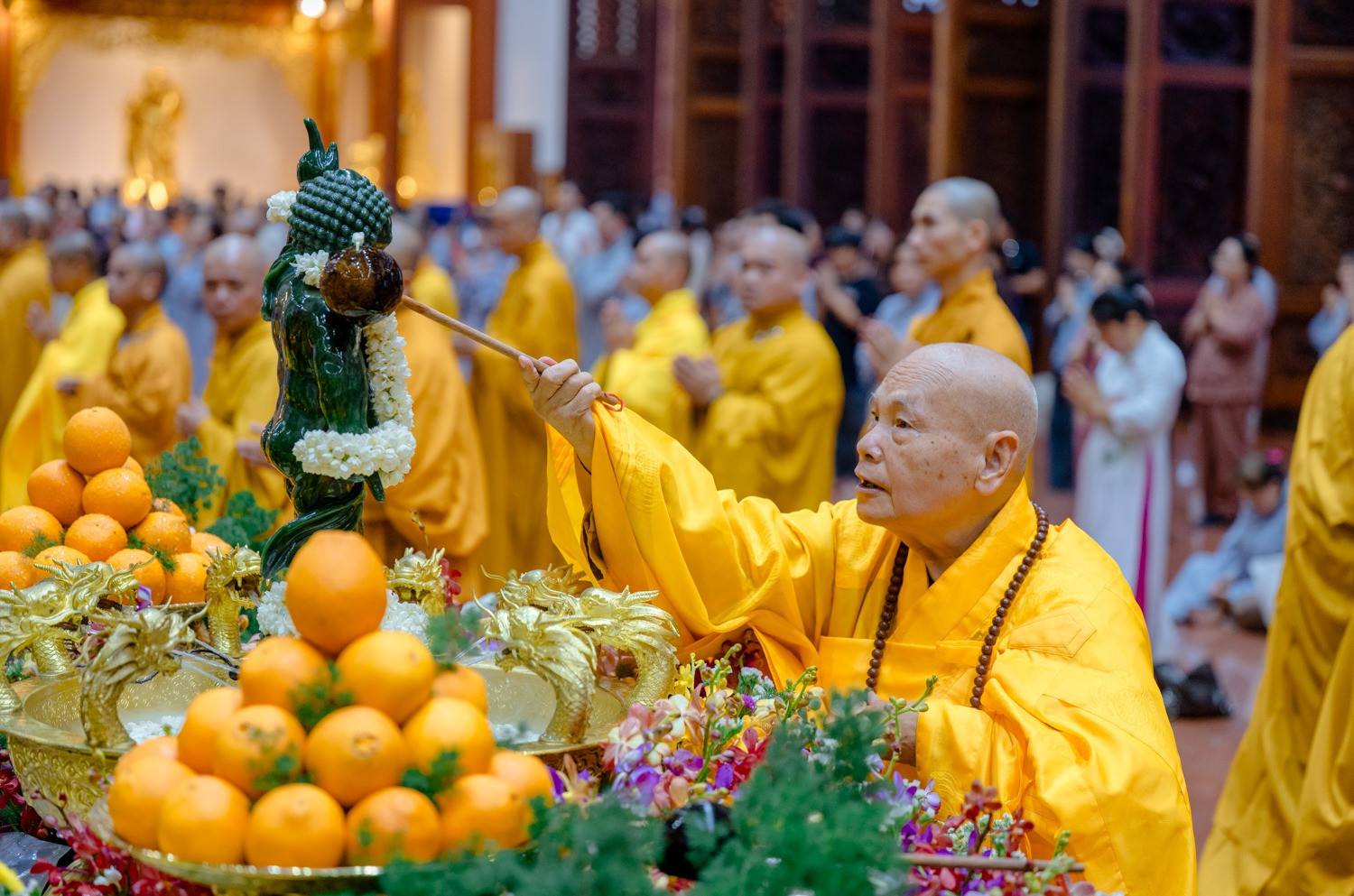
Most Venerable Thich Duc Thien has devoted considerable effort to social welfare and humanitarian activities. Photo: Dang Huy
Despite his extensive administrative responsibilities, Most Venerable Thich Thien Nhon has consistently identified monastic education as one of the most important priorities for Vietnamese Buddhism.
He believes that the Sangha's long-term development depends primarily on the quality of education and spiritual practice among monks and nuns.
"The decisive factor in the Sangha's long-term future lies first and foremost in the quality of education and religious practice among monks and nuns," he said. "Buddhist knowledge must be cultivated alongside moral discipline and the ability to apply Buddhist teachings in everyday life."
In his view, future generations of monastics must develop a firm foundation in morality, concentration and wisdom, the three fundamental elements of Buddhist training.
Alongside religious knowledge and ethical conduct, they should also acquire foreign-language skills, technological literacy and scientific research capabilities.
These competencies, he believes, are increasingly important as Buddhism engages with contemporary social issues and an increasingly interconnected world.
He has advocated stronger cooperation among Vietnam's four Buddhist academies, intermediate Buddhist schools, the Buddhist Research Institute and the nationwide network of monasteries and pagodas.
His educational priorities also include translating Buddhist scriptures, digitizing religious heritage and identifying promising young monastics for systematic training.
Rather than treating these initiatives as short-term projects, he has called for a sustained strategy that can support successive generations of Buddhist practitioners.
This emphasis on education reflects his belief that the future of the Sangha must be built through both intellectual development and moral cultivation.
Preserving tradition while adapting to a changing society
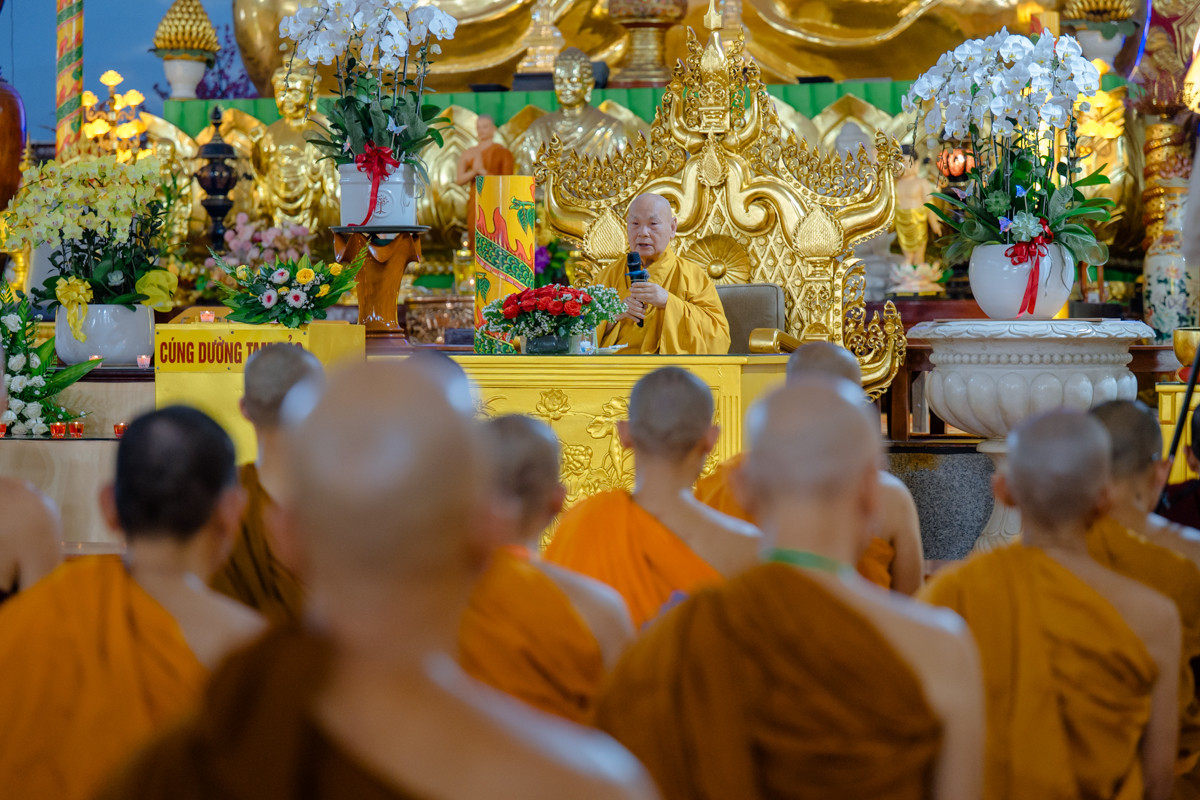
The Most Venerable emphasized that the Sangha’s long-term future depends primarily on the quality of monastic education and spiritual practice among monks and nuns. Photo: Dang Huy
As Vietnam undergoes administrative restructuring, digital transformation and deeper international integration, Most Venerable Thich Thien Nhon has called for the Buddhist Sangha to modernize its operations without compromising its religious identity.
He believes changes in governance, technology and social expectations require Buddhist institutions to improve their organizational effectiveness.
At the same time, modernization must remain grounded in Buddhist discipline, ethical conduct and harmony.
His approach includes consolidating Buddhist executive boards across Vietnam's 34 provinces and cities and reviewing departments and institutes with overlapping responsibilities.
The objective is to improve coordination, clarify responsibilities and make better use of available resources.
However, he has stressed that organizational reform must respect the traditions of different Buddhist schools and the distinctive characteristics of local communities.
"Over the past 45 years, Vietnamese Buddhism has established an important foundation," he said. "The responsibility of today's generation is to make that foundation stronger, better and more adaptable to the times."
"Organizational structures may change, but the spirit of harmony must remain unchanged. Governance methods may be modernized, but monastic discipline and order must be preserved. Technology may become increasingly advanced, but people must always remain at the center. International integration may deepen, but the identity of Vietnamese Buddhism must always be respected."
These principles capture his view that innovation and tradition should reinforce rather than undermine each other.
For Most Venerable Thich Thien Nhon, maintaining religious discipline does not mean resisting social change. Equally, adopting modern management practices should not weaken the values that have sustained Buddhist institutions for generations.
His vision emphasizes discipline, innovation, effectiveness and efficiency, with monastic ethics as the foundation, education and Buddhist teaching as central priorities, and service to society as the guiding purpose.
A legacy of service and responsibility
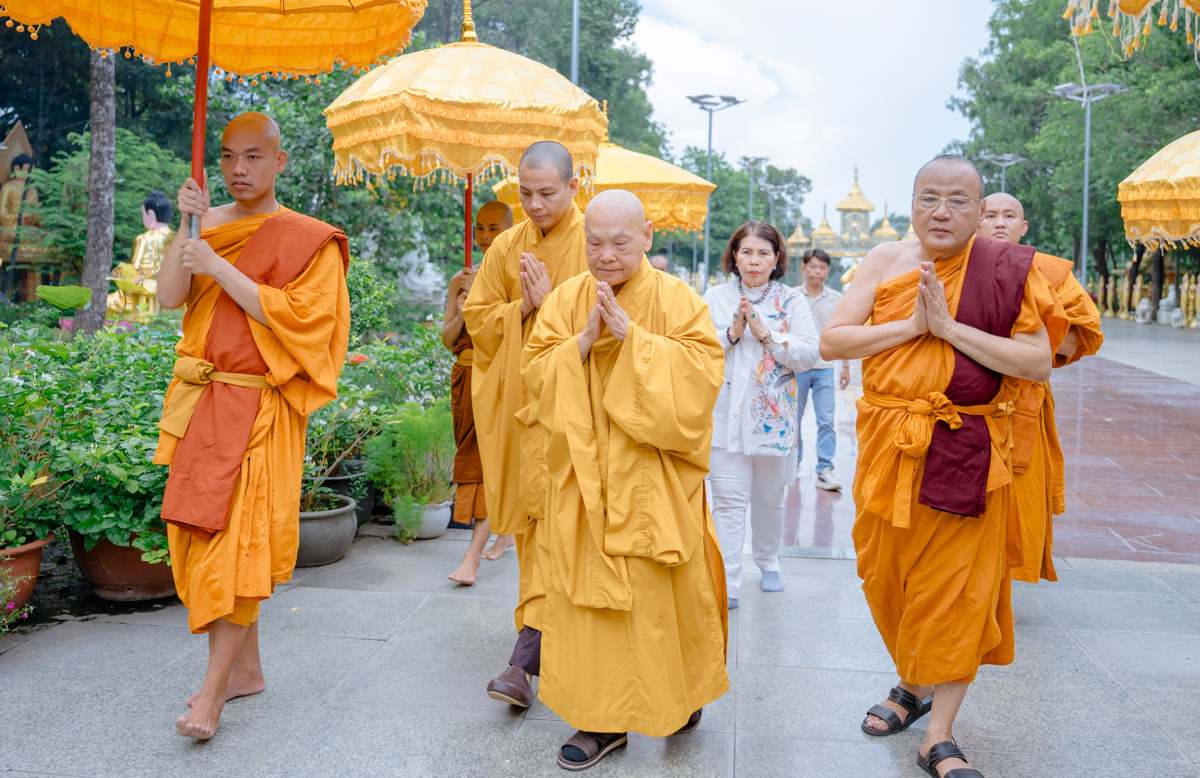
The Most Venerable Elder (center) encourages monks and nuns attending the 2570 Buddhist Era rains retreat at Phuoc Son Meditation Monastery in Phuoc Tan, Dong Nai. Photo: Dang Huy
Throughout his decades of Buddhist practice and leadership, Most Venerable Thich Thien Nhon has sought to balance three interconnected responsibilities: preserving Buddhist traditions, strengthening the Sangha's institutions and responding to the needs of society.
His contributions span monastic education, religious administration, humanitarian activities and international Buddhist relations.
In recognition of this work, he has been nominated for the First-Class Labor Order, a state honor awarded by the President of Vietnam.
The nomination acknowledges his longstanding contributions to the development of the Vietnam Buddhist Sangha and his role in promoting Buddhism's engagement with national life.
Yet the central theme of his leadership remains focused on the future.
He has repeatedly emphasized that each generation of Buddhist practitioners must do more than fulfill its immediate responsibilities. It must also create stronger foundations for those who follow.
From a seven-year-old boy taking refuge in the Three Jewels to a senior monk entrusted with guiding one of Vietnam's largest religious organizations, Most Venerable Thich Thien Nhon's journey reflects a lifetime dedicated to Buddhist learning, practice and service.
His vision for Vietnamese Buddhism combines respect for centuries-old traditions with an openness to education, technology and international cooperation.
At its heart is a commitment to ensuring that Buddhist values continue to find meaningful expression in contemporary society, while preserving the Sangha's longstanding tradition of accompanying the nation through periods of change.
Hong Phuc

