 Vietnamnet.vn

 Podcast



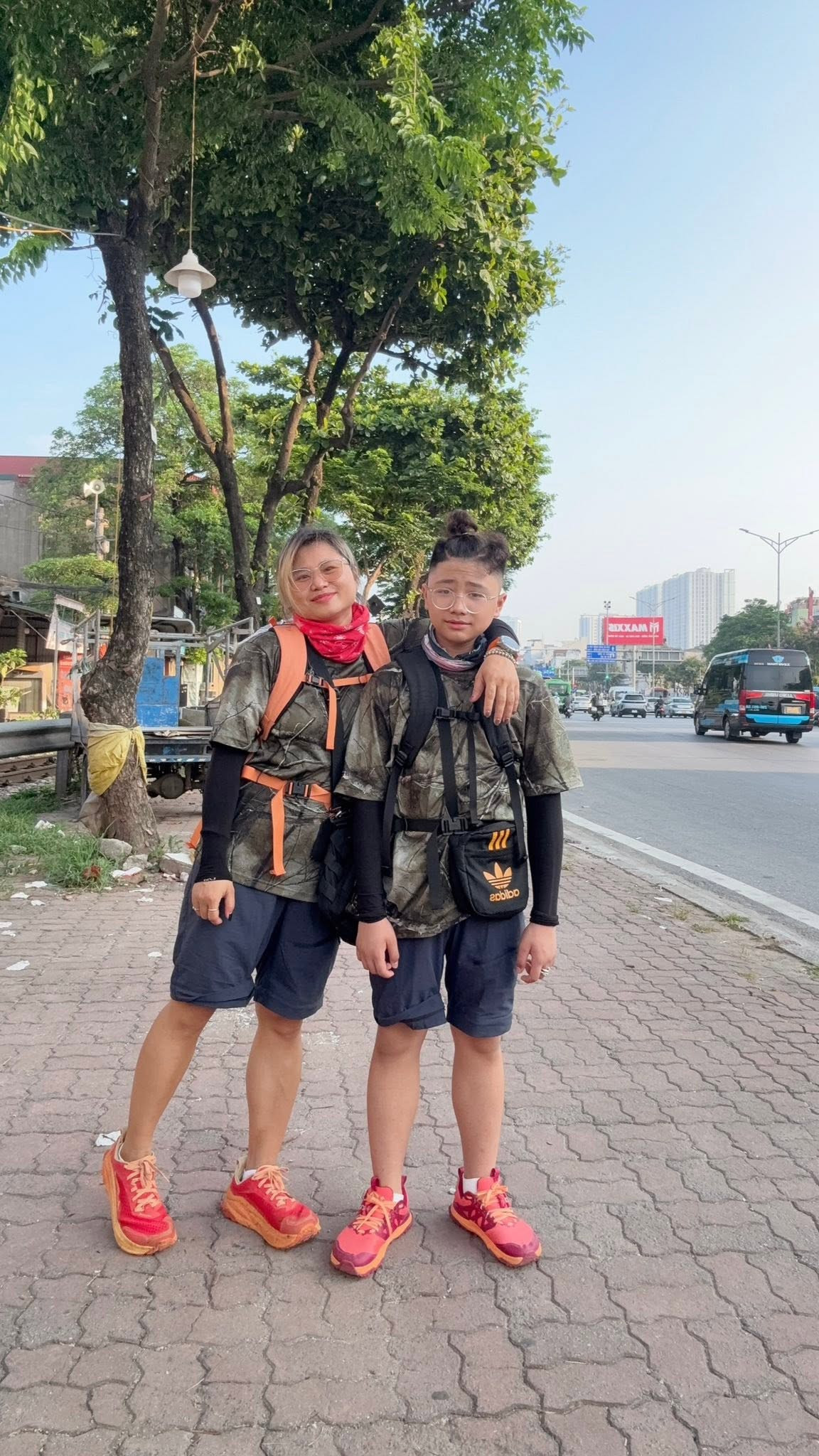
The trip is expected to last 45 to 50 days, allowing her to explore the beauty of the country with her son and overcome personal limits.
At 5pm, Ha Phuong, 38, a teacher in Hanoi, and her son Ha Khoa, 13, (affectionately nicknamed Khoai) put on their backpacks and began a new leg of their journey on National Highway 1. On some days, the mother and son walked more than 20 kilometers, but on other days, they stopped early to hide from the intense heat or torrential downpours.
After more than a month, they set foot in Quang Tri, continuing toward Hue, the destination of the walking journey.
A year ago, the mother and son undertook a two-month cross-Vietnam trip spanning 1,700 kilometers, which included over 1,000 kilometers of cycling. The impressive natural landscapes and fascinating historical stories about the country motivated Khoa to continue his summer travel journey with his mother in an unconventional way.
Phuong recalled that at the end of 2025, she took her son trekking to the summit of Fansipan for his birthday. On the way home, Khoa casually suggested, "Mom, let's walk across Vietnam next summer."
At first, she thought it was just a passing idea. But the more they talked, the more she realized her son was serious, and he began preparing enthusiastically for the trip. Seeing his determination, she rearranged her work schedule to accompany him.
For more than six months, the pair trained, researched the route, prepared equipment, estimated expenses, and developed safety plans.
They set off from Hanoi on June 1. Each day they walk about 20km, divided into several shorter stages. During hot weather, they start early in the morning, rest at midday, and continue when temperatures become more comfortable.
They always carry enough drinking water and electrolyte supplements. Throughout the journey, they also schedule short breaks to recover, wash their shoes, and rest.
Every route is a lesson
Phuong prioritized taking her son to historical and cultural landmarks, as well as places associated with the nation's tradition of building and defending the country, such as the Hoa Lu Ancient Capital, the Citadel of the Ho Dynasty, and the Lam Kinh Historical Relic Area.
The mother wanted her son to see with his own eyes the landmarks he had studied in textbooks and listen to historical stories right where they occurred so that knowledge would become closer and more vivid.
In Quang Tri, the mother and son will stay for a long time to learn about the Ancient Citadel, Hien Luong Bridge, and the Truong Sơn National Martyrs Cemetery.
Because they can manage their own time, this year, they have had many opportunities to explore rural villages along the way and talk to local people to understand more about life in each region.
"This is an outdoor classroom of life, where every day brings a new lesson. He learns history through relics, geography through the very routes, how to communicate with people he meets, and how to be independent, responsible, and caring toward others," Phuong shared.
Phuong revealed that there were times during the journey when she wanted to stop. Those were the days with scorching heat, sudden rains, or the long and deserted coastal routes in Ha Tinh where not a soul was in sight, testing both their physical and mental strength.
"But Khoa was the strong one who encouraged me. Instead of setting long-term goals, the two of us enjoyed every route we passed. Pristine beaches with crystal-clear water where the bottom could be seen, or lotus ponds blooming in the sunset afternoon were the daily gifts we received," she recounted.
On the road, they have met many kind strangers who were willing to invite them in to rest, drink water, and eat fruit. Phuong's friends in different provinces also followed their journey, ready to support them when needed.
Phuong noted that compared to last year's trip, Khoa has learned to care more for his mother and help people he meets on the road, and has not hesitated to face difficulties.
Linh Trang
.svg)
