 Vietnamnet.vn

 Podcast



By 2026, smartphones have become nearly flawless. Flagships like the Galaxy S and iPhone lines offer speed, stunning cameras, and seamless user experiences. But that perfection comes with predictability - and a lack of surprise.
That’s where Motorola found a niche with its Edge series. Stylish, competitively priced, and just powerful enough, these phones stood out with personality. Now, Motorola seems ready to go further.
Enter Motorola Signature - a rumored premium flagship that’s not just real, but aiming squarely at Samsung’s crown.
Sleek, slim - and built like a tank
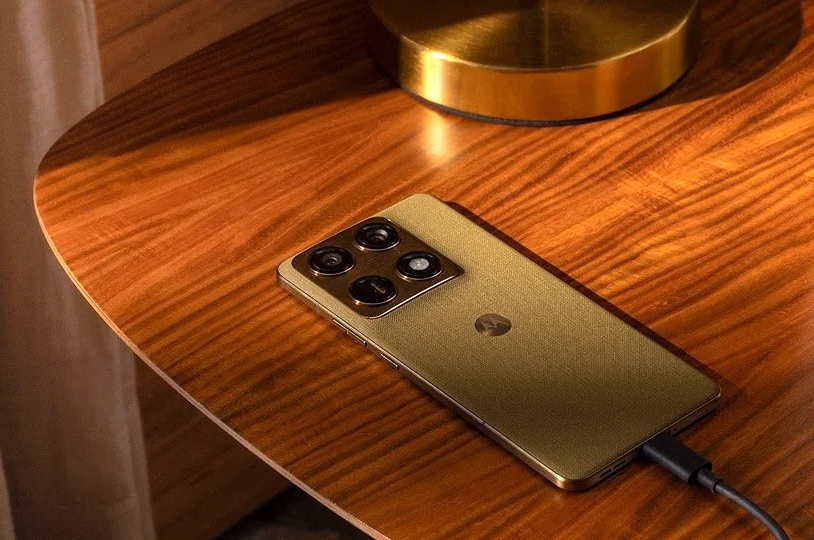
Photo: PhoneArena
Motorola is known for elegant design, often using faux leather finishes, textured surfaces, and colors curated by Pantone. The Signature continues this tradition with two finish options: crosshatch texture or linen, available in Pantone Olive and Pantone Carbon.
But Signature isn’t just about looks. The phone carries both IP68 and IP69 ratings for water and dust resistance - the highest available - and meets the U.S. military’s MIL-STD-810H standard for durability. That means it can survive shocks, extreme temperatures, and harsh environments.
These rugged specs are typically reserved for bulky, ruggedized phones. To pack them into a sleek, slim flagship is a rare - and impressive - feat.
A direct challenge to Galaxy S26 Ultra
Priced around €1,000 (approx. USD 1,100), Motorola Signature is clearly targeting the same high-end bracket as the Galaxy S26 Ultra, which is expected to retail from €1,450 in Europe.
With no U.S. pricing announced, Europe is the most relevant market for comparison.
The Signature boasts a large 6.8-inch AMOLED display with a blazing 165Hz refresh rate and stylus support via the Moto Pen Ultra. However, the stylus is sold separately for €60 - unlike the S Pen, which is integrated into the Galaxy Ultra’s frame.
That puts the actual price for Signature at €1,060 - not far off from Samsung’s flagship, especially once you factor in Samsung’s frequent launch-day promotions and discounts. In real-world terms, a Galaxy S26 Ultra can often be had for around €1,200.
This raises a key question: is Motorola offering enough to sway users away from the Samsung ecosystem?
A flagship chip - on paper only
A major sticking point could be the processor. The Motorola Signature is powered by the Snapdragon 8 Gen 5 - not to be confused with the more powerful Snapdragon 8 Elite Gen 5, Qualcomm’s true top-tier chip this year.
In benchmarks, the Gen 5 performs similarly to last year’s Snapdragon 8 Gen 3 - found in the Galaxy S24 Ultra. While still fast, that may disappoint buyers expecting the very best performance for €1,000.
Motorola tries to offset this with a new copper mesh liquid-metal cooling system, which helps maintain high performance for longer periods. Still, for hardcore users and spec-driven buyers, this may feel like a compromise.
A camera that could change everything
The most compelling feature of the Signature might be its camera system.
It houses three 50MP sensors, led by the Sony LYT-828 - a relatively new sensor with immense potential. With a dynamic range exceeding 100 dB (roughly 17 stops), the LYT-828 supports Hybrid Frame-HDR, putting it close to cinematic-grade imaging.
Early tests of this sensor in the Vivo X300 Pro showed vibrant colors, sharp details, and stellar HDR performance - photos ready to share without editing.
Whether Motorola can match Vivo’s image processing is an open question. If it can, Signature’s camera might be a game-changer.
The secondary cameras are more modest: a 3x telephoto with 100x digital zoom (mostly for marketing), plus ultra-wide and telephoto lenses that both support macro photography - a thoughtful touch for macro enthusiasts.
Disruption or demonstration?
Despite its premium look, Motorola is playing things cautiously. Signature has no firm launch schedule in the U.S., hinting that this may be more of a market test than a global flagship rollout.
At its current price, Signature competes with the OnePlus 15 - but with less power and an unproven camera. If its photo quality matches the Vivo X300 Pro, Motorola could silence skeptics. If not, it may struggle to justify its cost.
Still, Signature has its strengths: distinctive design, unmatched durability in its class, and a price that's more accessible than Samsung’s top-tier model.
More than anything, the Signature seems designed to gauge just how much trust Motorola has earned from users over the years. This isn't a phone built to dominate with brute specs or killer features - it’s a phone built on brand goodwill.
And perhaps, Motorola is just as curious as the rest of us to see if that’s enough.
Hai Phong
.svg)
