 Vietnamnet.vn

 Podcast


Evenings spent building a tourism website
Kim Phu Commune in Quang Tri Province boasts considerable tourism potential, with vast limestone mountain ranges, spectacular cave systems, rivers, streams, valleys and the distinctive cultural identities of local ethnic communities.
However, information about attractions, transport routes, accommodation and dining options remains scattered, making it difficult for visitors to research destinations and plan their trips.
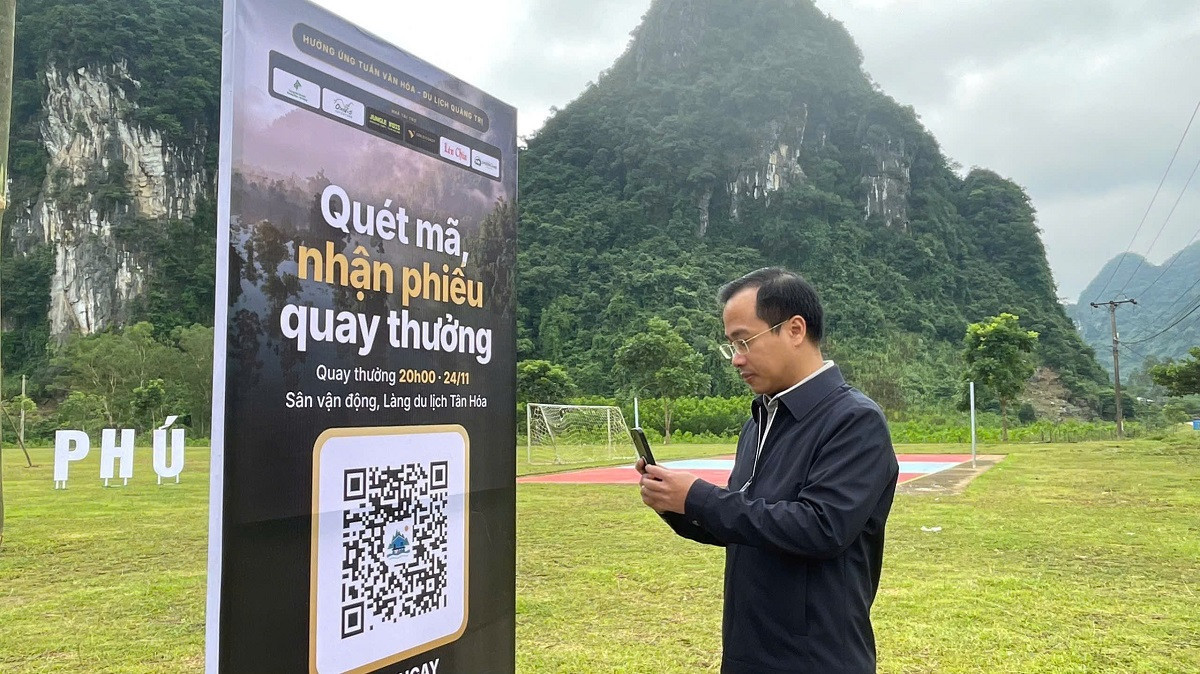
Hoang Tu Quoc Hung, chairman of the Kim Phu Commune People's Committee, independently researches and develops the tourism website during evenings after work. Photo: Kim Phu Commune People's Committee
Recognizing this challenge, Hoang Tu Quoc Hung, chairman of the Kim Phu Commune People's Committee, came up with the idea of creating a dedicated tourism website for the locality.
Rather than launching a major investment project, Hung independently researched and developed visitkimphu.com, working on the website in the evenings after completing his official duties.
"Kim Phu is incredibly beautiful, but information is difficult to find. That's why I created a tourism website where visitors anywhere can look up directions, accommodation and food in both Vietnamese and English. Even a mountainous commune can embrace digital transformation in tourism if it is willing to take the initiative," Hung said.
The website began trial operations in late October 2026. Information about transport routes, prices, accommodation and services is verified by commune officials before publication.
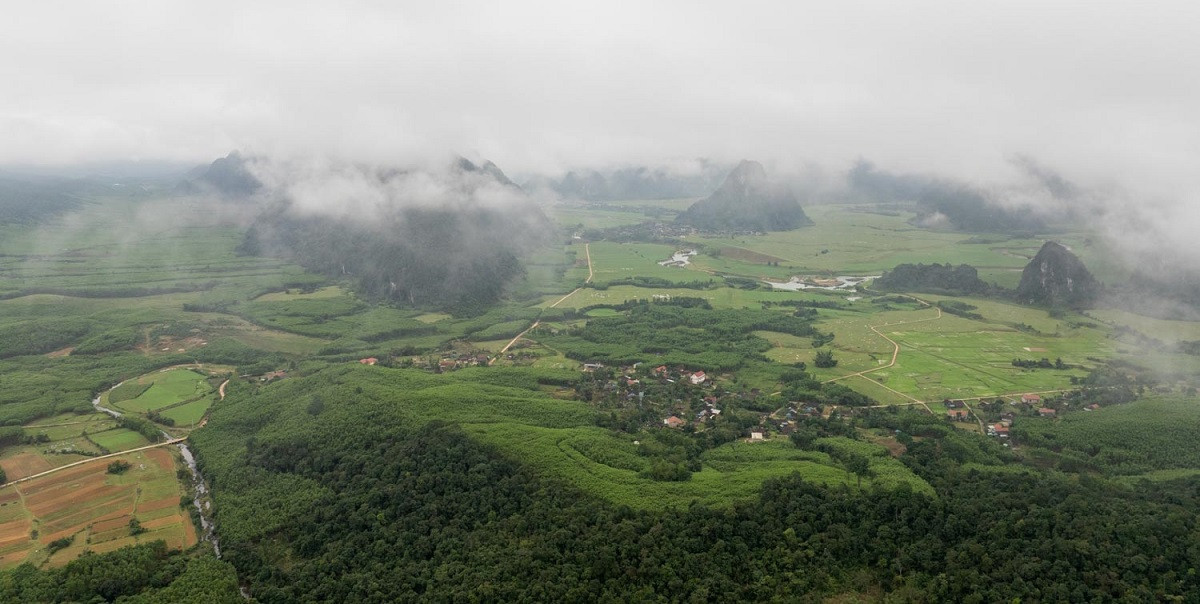
An aerial view of Tan Hoa Tourism Village. Photo: Oxalis
Hung does not want the website to simply showcase scenic attractions through beautiful photographs. Instead, he wants it to serve as a practical information resource, helping visitors discover what Kim Phu offers, how to get there, where to stay, what to eat and which activities to experience.
From its initial concept, Visit Kim Phu has evolved into a unified tourism promotion brand encompassing a website and channels on Facebook, TikTok, YouTube and Instagram.
The website serves as the central platform, providing bilingual information in Vietnamese and English about destinations, transport routes, accommodation, cuisine, service prices and suggested seasonal itineraries.
Notably, the platform incorporates an artificial intelligence (AI) assistant called "Ask about Kim Phu," which answers visitors' questions around the clock using information verified by local authorities.
Bilingual QR codes are also expected to be installed at tourist attractions and service establishments, allowing visitors to access information, listen to audio guides and check listed prices.
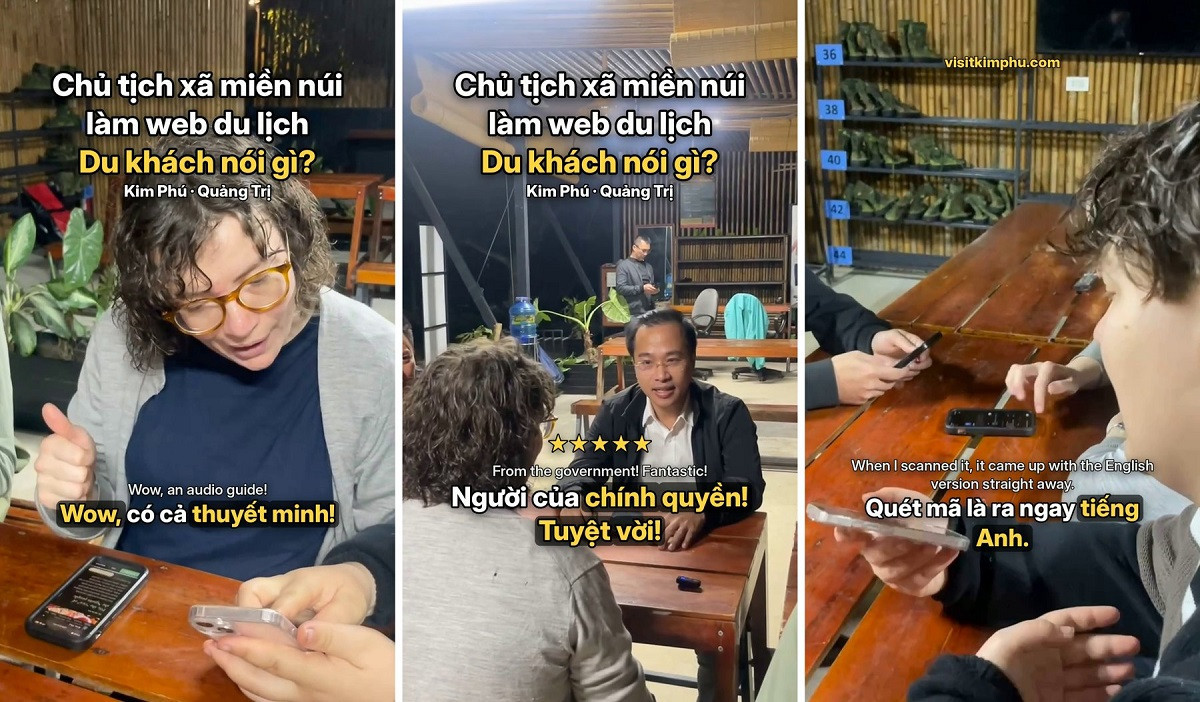
Visit Kim Phu has been developed as a unified local tourism promotion brand, encompassing a website and channels on Facebook, TikTok, YouTube and Instagram. Photo: Kim Phu Commune People's Committee
QR code scans will be monitored to better understand visitor demand and improve service quality.
Rather than promoting his personal image, Hung aims to establish a shared tourism brand that connects local resources, communities and services through digital technology.
The appeal of community-based cultural experiences
Kim Phu was established through the merger of four communes - Tan Hoa, Thuong Hoa, Trung Hoa and Minh Hoa - in the former Minh Hoa District of Quang Binh Province.
Covering more than 550 square kilometers, the commune is home to over 60 caves and numerous natural attractions, including the Tu Lan cave system, Ruc Mon and Tam Gioi caves, Yen Phu Lake, Hung Trau Valley and a village distinguished by its natural rock formations.
In 2023, Tan Hoa Tourism Village was named one of the world's Best Tourism Villages by UN Tourism.
The area has also served as a filming location for several movies, including Kong: Skull Island, Nguoi bat tu (The Immortal) and Truyen thuyet ve Quan Tien (The Legend of Quan Tien).
Kim Phu's appeal also lies in its rich community-based cultural heritage.

Hung Trau Valley during the flood season. Photo: Kim Phu Commune People's Committee
Among its distinctive communities are the Ruc people, a subgroup of the Chut ethnic minority living in Yen Hop Village, who lived in forest caves until 1959, and the Nguon people, whose traditional customs, practices and cuisine have been preserved across generations.
Local dishes such as poi (a traditional rice dish), limestone mountain snails, edible wild ferns, long (wild banana soup) and nhuc flour are not only regional specialties but also reflect the cultural identity of indigenous communities and their adaptation to the natural environment.
Through its website and social media channels, the commune hopes to share stories about local culture, cuisine and everyday life, establishing a distinctive identity for Kim Phu tourism.
One of the locality's priorities is to encourage visitors to stay longer rather than simply explore caves, admire the scenery and leave on the same day.
With more than 620 floating houses in Tan Hoa, floating homestays offer a distinctive accommodation experience while helping visitors understand how local residents adapt to natural disasters.
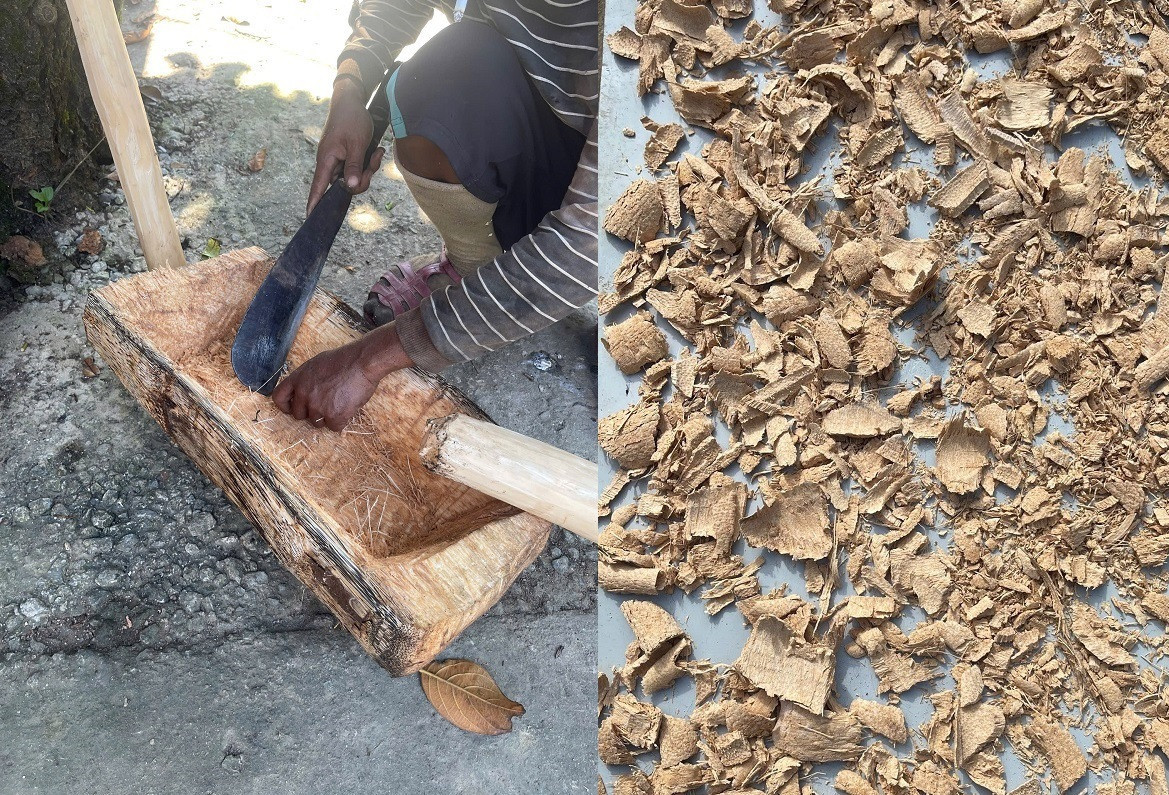
The Ruc people, a subgroup of the Chut ethnic minority, preserve the traditional practice of making nhuc flour from the stems of the nhuc plant. Photo: Kim Phu Commune People's Committee
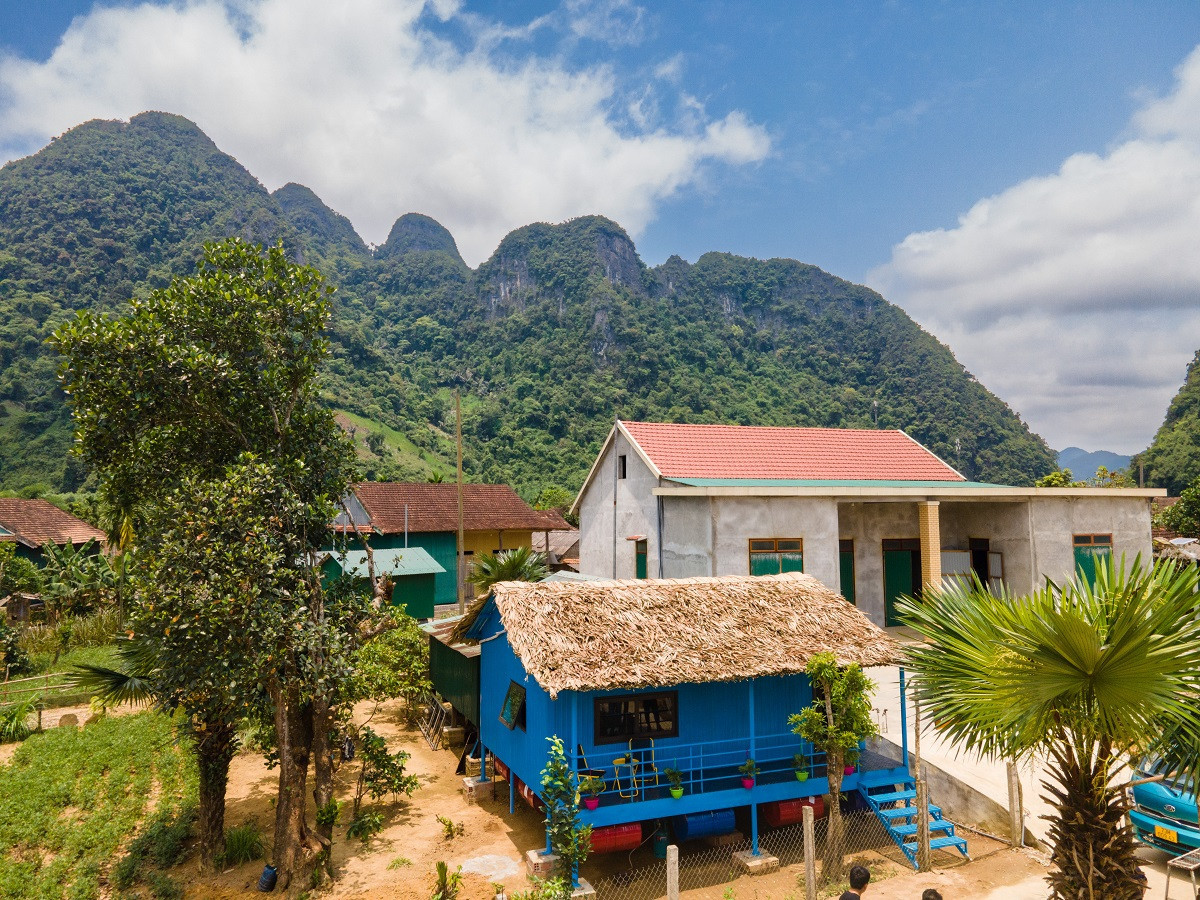
Floating homestays offer visitors a distinctive accommodation experience. Photo: Oxalis

Tam Gioi Cave. Photo: Kim Phu Commune People's Committee
The commune also plans to develop additional tourism experiences rooted in community life, including traditional cuisine, folk games, cultural exchanges and participation in everyday village activities.
Residents are encouraged to provide accommodation and dining services, introduce local products and showcase their cultural heritage, thereby creating additional livelihood opportunities and income through tourism.
For Hoang Tu Quoc Hung, the website is only the beginning.
The greater challenge is turning online interest into actual visits, encouraging tourists not only to explore the area's natural beauty but also to experience its culture, stay overnight and contribute to local livelihoods.
What began as an idea pursued after office hours is gradually helping Kim Phu bring its tourism potential closer to domestic and international travelers.
Hai Sam

