 Vietnamnet.vn

 Podcast



Hai Duong
On February 5, Pham Tuan Linh, Director of Yok Don National Park, said the park had submitted a report to the Department of Forestry and Forest Protection, the Dak Lak provincial People’s Committee, the provincial Department of Culture, Sports and Tourism, and the People’s Committee of Buon Don Commune regarding the newly discovered stone site.
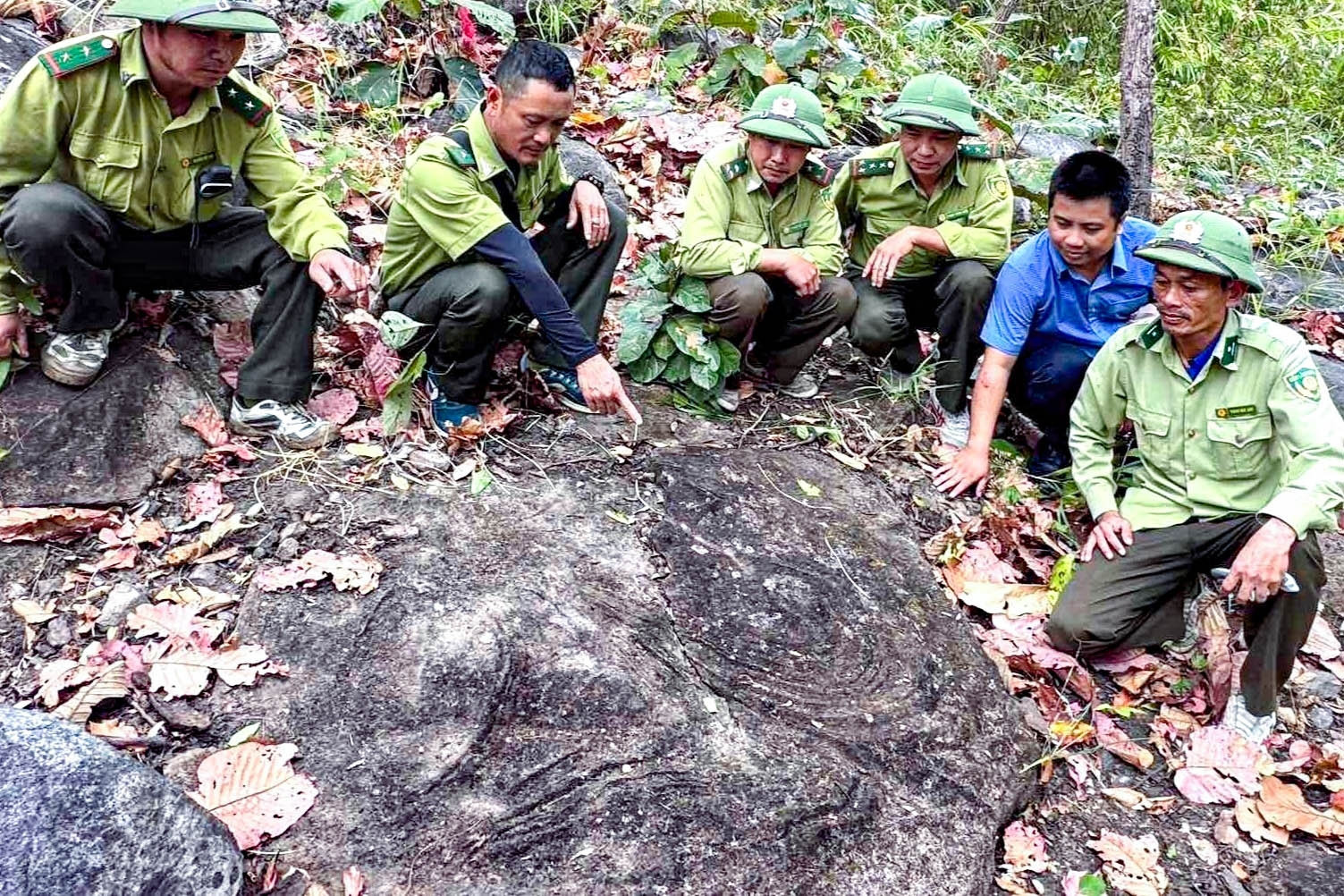
According to the report, following on-site inspections, authorities identified four clusters of stones stretching across a length of 22 meters on a hillside in sub-area 471, which is managed and protected by the national park.
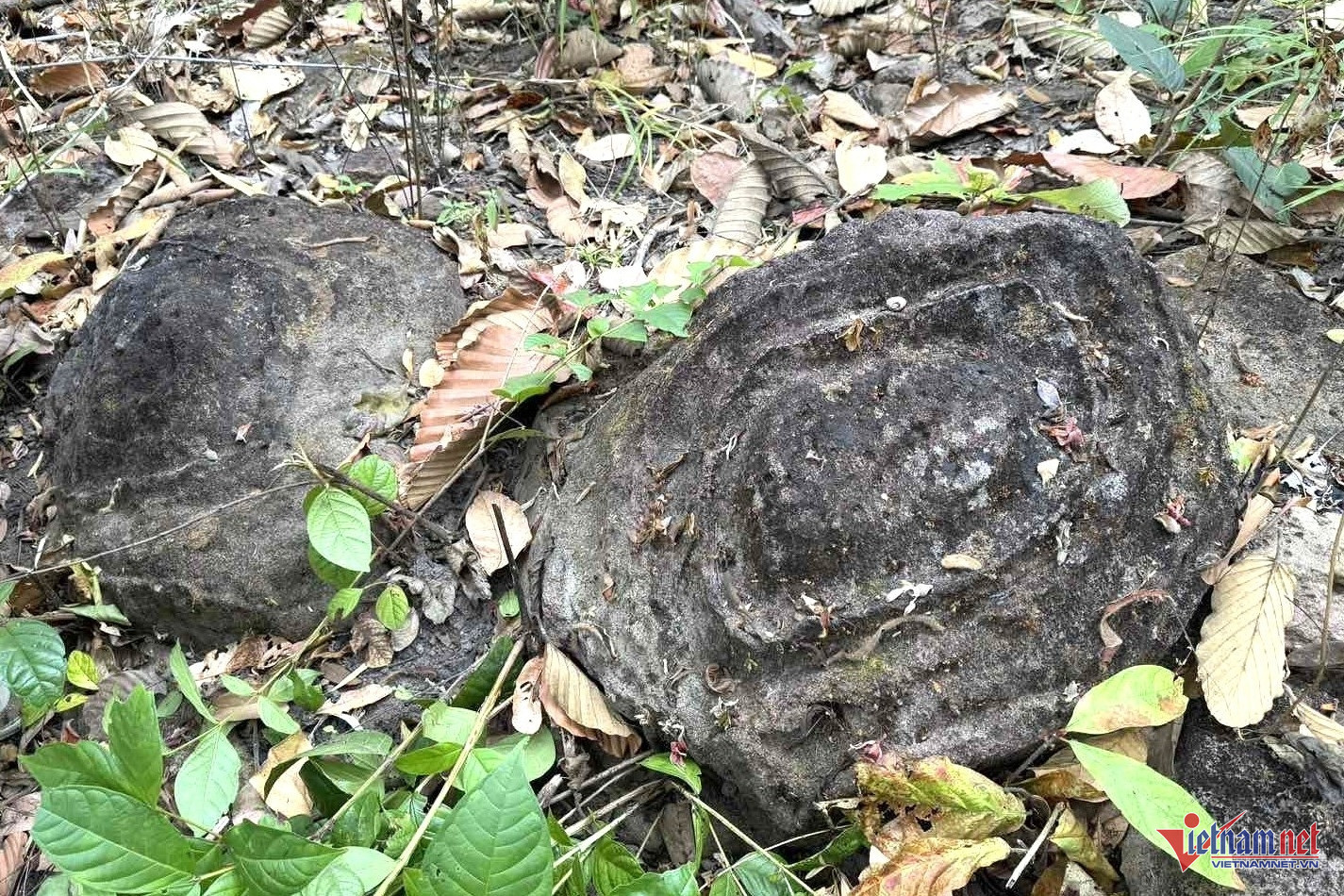
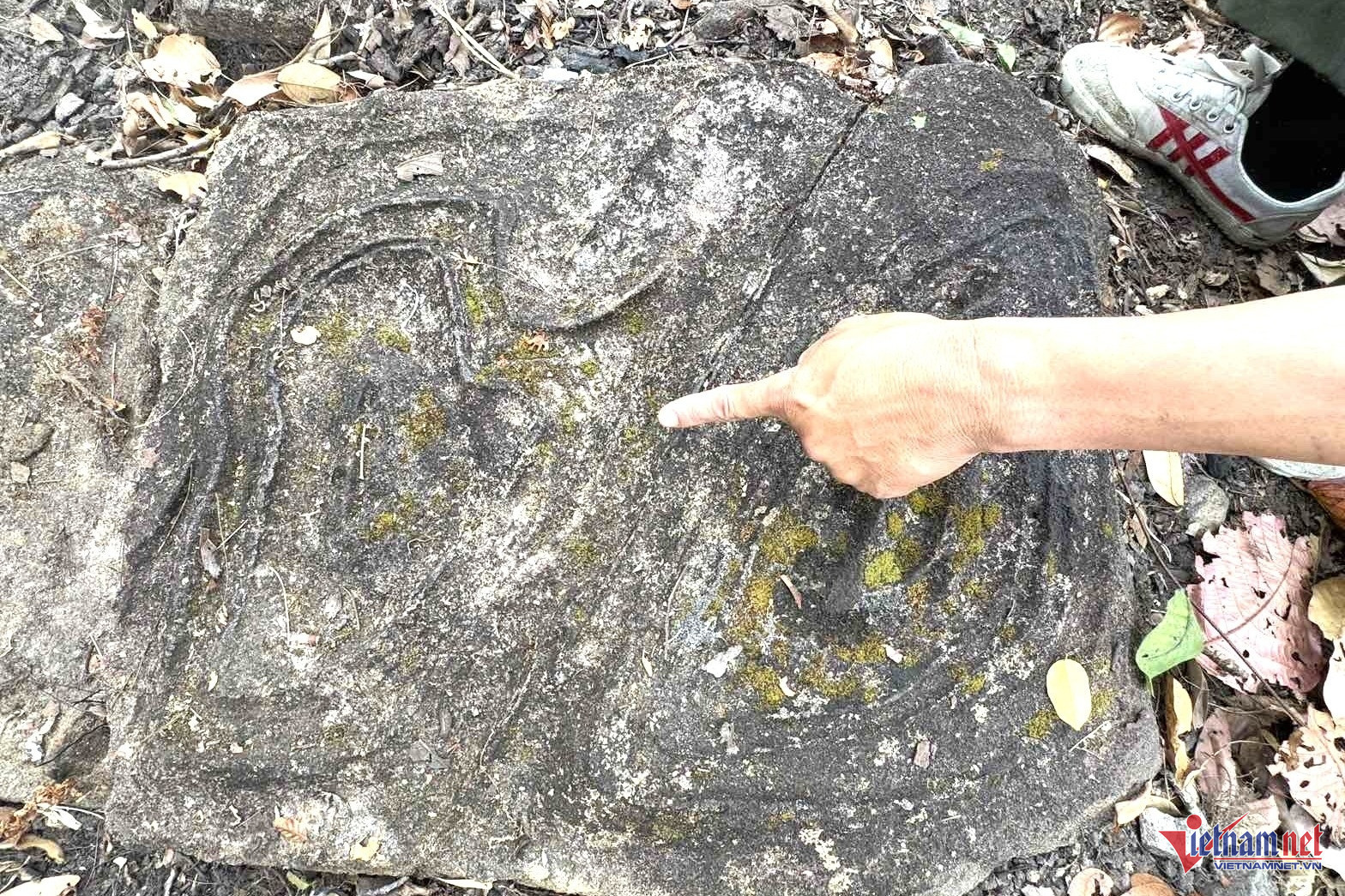
In total, 65 stones were found to bear unusual patterns on their surfaces.
Cluster No.1 contains 29 stones.
Cluster No.2 has six stones.
Cluster No.3 includes nine stones.
Cluster No.4 comprises 21 stones.
The clusters are located between two and five meters apart.
The report notes that all of the stones feature patterns, but it has not yet been determined whether these markings were created by human hands or resulted from natural weathering processes.
Yok Don National Park has arranged forces to safeguard the site and preserve the current condition of the stone clusters.
Regarding the incident, Tran Hong Tien, Director of the Dak Lak Department of Culture, Sports and Tourism, said that after receiving the information, the department assigned the provincial museum to coordinate with Yok Don National Park to conduct a detailed verification.
As previously reported by VietNamNet, on February 17, 2022, Pham Trung Kien, head of a forest ranger station at Yok Don National Park, along with his colleagues, discovered the stone site while on forest patrol duty.
At the time, Kien believed the stones were ordinary rocks and did not report the find to authorities.
The discovery only began to attract attention recently, when during visits to local villages, Kien heard residents speak about the existence of stones with strange patterns on the mountain.
He then reported the matter to his superiors.
The stones are arranged in a remarkably orderly manner and display numerous unfamiliar patterns, though the shapes themselves remain difficult to identify.
According to Kien, the carvings are deeply incised into the stone surfaces and are highly likely to be the result of human activity, rather than erosion caused by flowing water or natural abrasion.
A cultural officer from Buon Don Commune also said the patterns do not appear to be natural and show signs of deliberate arrangement.
Each motif on the stones has a clear composition, and several patterns bear similarities to one another.
“If this were a natural phenomenon, there would be many more stones scattered randomly around the site, rather than being organized into distinct clusters like this,” the official emphasized.
.svg)
