 Vietnamnet.vn

 Podcast




Thien Luong
According to the provincial Department of Agriculture and Environment, a report has been sent to local authorities in Hai Ninh ward after large areas of mangrove trees were found dead or severely weakened.
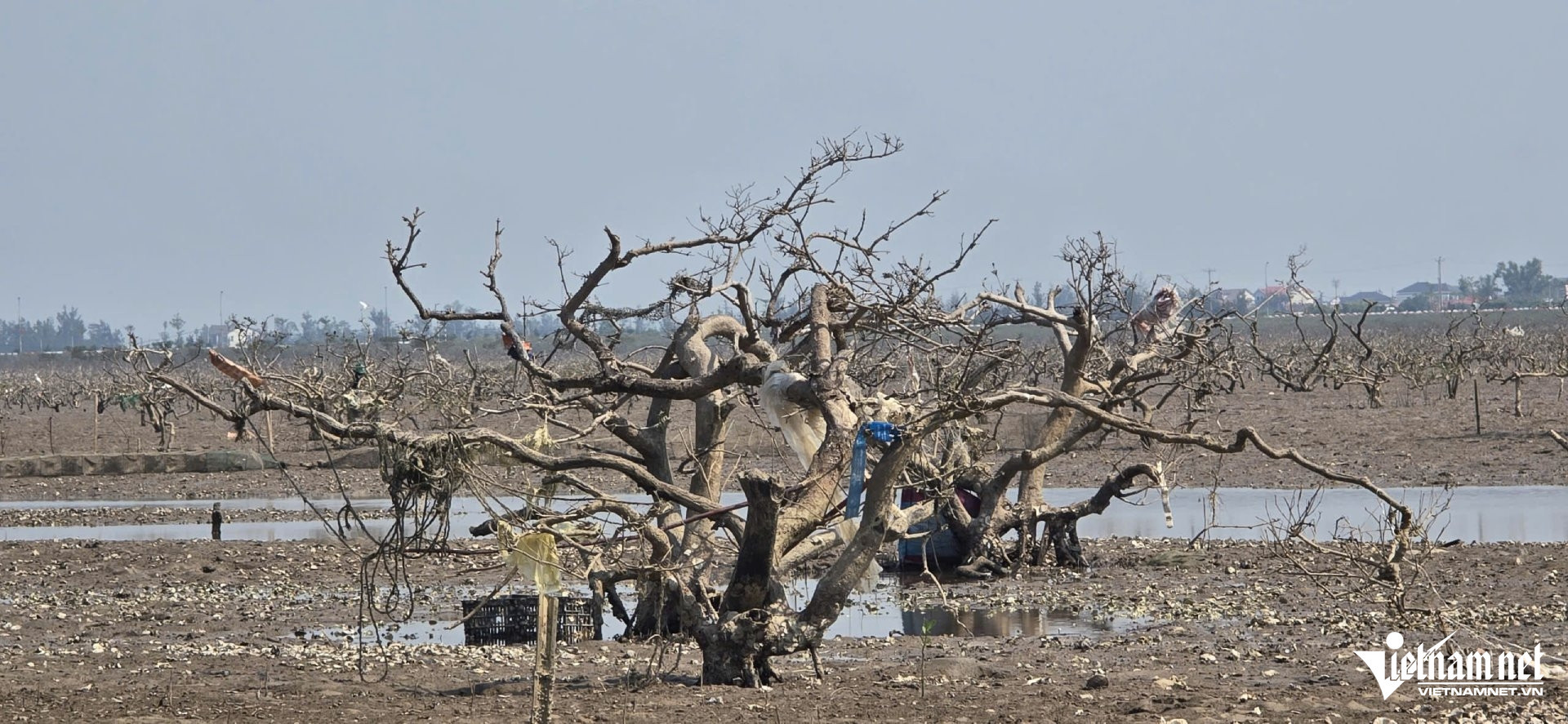
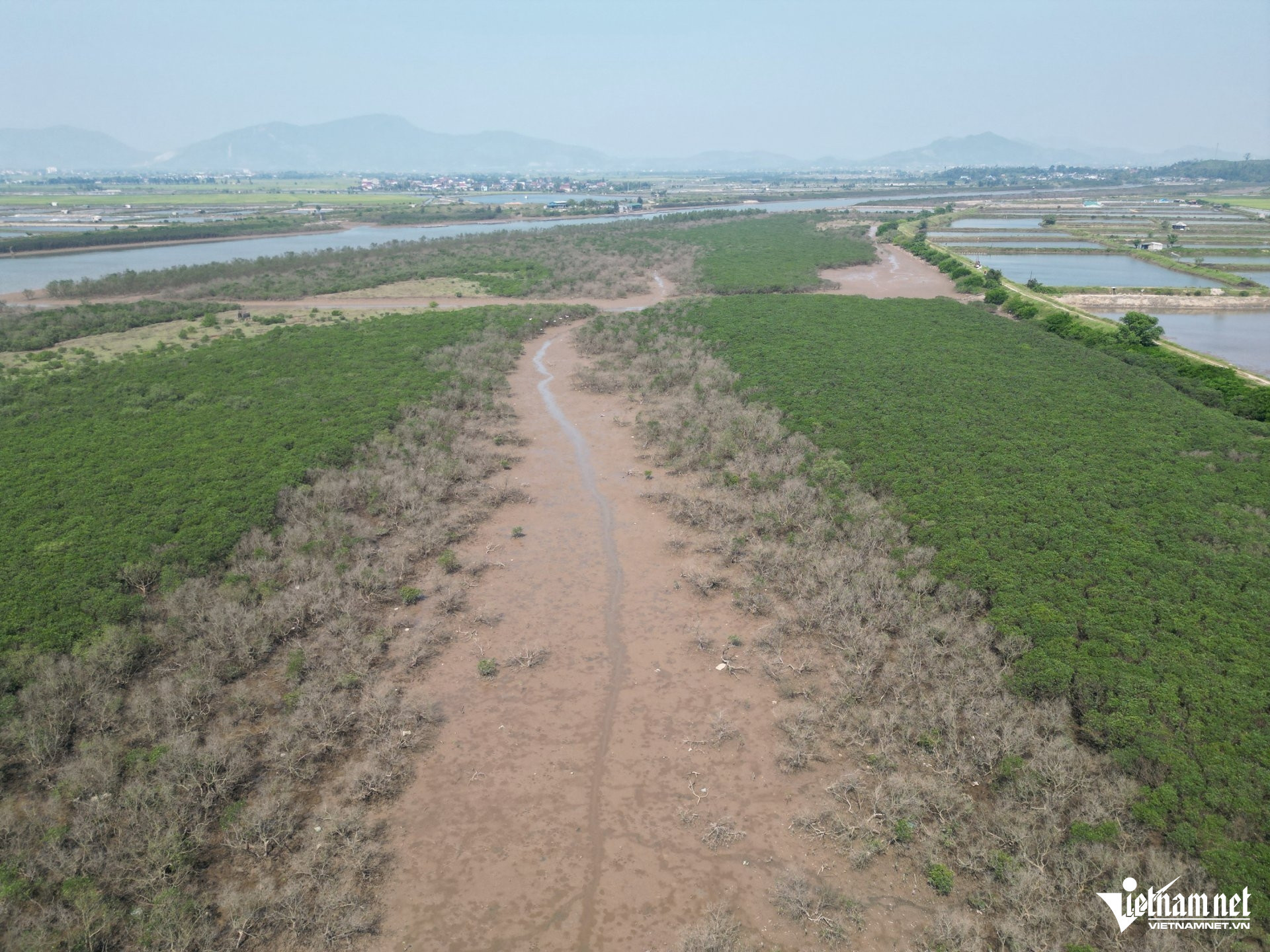
Field inspections were conducted after local officials reported widespread damage to mangrove species in the area. The affected forest includes three species: Avicennia marina, Sonneratia caseolaris and Kandelia. Of these, only Avicennia marina, planted in 1994 under an Oxfam-supported project, has been impacted.
The total affected area is estimated at around 5 hectares, including approximately 3 hectares where trees have died completely - with dry branches and decaying roots - and another 2 hectares showing signs of yellowing leaves, wilting and dieback from the canopy downward. The site is located in a designated protection forest zone managed by the Hai Ninh ward authorities.
Initial reports indicate that the die-off began around November 2025, following prolonged heavy rainfall and flooding lasting 26 to 30 days due to a major storm. Combined with unusual tidal fluctuations, these conditions are believed to have altered the habitat, negatively affecting the growth of the mangrove trees.
However, on-site inspections found no evidence of pests or harmful organisms such as crustaceans, borers or barnacles. Cross-sections of tree trunks appeared fresh, with bright wood and no abnormal signs of disease. Surrounding areas also showed no indications of water pollution.
Water samples collected for analysis confirmed that environmental parameters remain within permitted limits, meeting current regulatory standards. Soil, salinity and climate conditions in the area are also considered generally suitable for mangrove growth.
Based on these findings, authorities have initially ruled out biological pests and water pollution as the primary causes of the die-off.
Local officials have been instructed to maintain the current state of the affected forest, strengthen site protection and continue monitoring developments. Detailed documentation of the site - including location, area, species, planting year, density and extent of damage - is being compiled to support future response plans.
Authorities are also coordinating with scientists and mangrove specialists to conduct further surveys and assessments, aiming to determine the exact cause and propose appropriate restoration measures.
Despite early conclusions, the incident remains unresolved, underscoring the complexity of coastal ecosystems and the challenges in identifying environmental disruptions in vulnerable mangrove habitats.

.svg)
