 Vietnamnet.vn

 Podcast



Daniel Stables, a contributing writer for National Geographic, praised Vietnam’s rapid development and progress while highlighting the nation's deep respect for its past. Across the country, museums and monuments pay tribute to generations who shaped the nation's history.
The list includes top destinations for travelers who appreciate history and are looking for meaningful experiences - especially ahead of Vietnam’s National Day on September 2.

Ho Chi Minh City
War Remnants Museum: This museum offers a stark and honest portrayal of what the Vietnamese people endured during wartime. A highlight of the site is its collection of aircraft and weapons used in the war, including ammunition and explosives.

Independence Palace, a powerful symbol of Vietnam’s reunification. (Photo: Nguyen Hue)
Independence Palace: One of Ho Chi Minh City’s most iconic landmarks, this building is tied to the historical milestone of April 30, 1975. It is now open to visitors with guided tours available in Vietnamese and several foreign languages.
Cu Chi Tunnels: Located about 70 kilometers northwest of central Ho Chi Minh City, this over-200-kilometer-long tunnel system was built by Cu Chi’s military and civilians during wartime. It includes underground layers, living quarters, combat rooms, medical stations, and kitchens.
Quang Ngai
Son My Memorial Site: This memorial complex includes a large monument of a mother holding her child, surrounded by bomb-scarred bunkers and relics. Visitors can also take river tours and enjoy fresh seafood along the nearby beach to better understand the local way of life.
Quang Tri
Demilitarized Zone (DMZ): This area marked the separation between North and South Vietnam, established on July 21, 1954, under the Geneva Accords.


Vinh Moc Tunnels, a complex multi-level underground shelter system. (Photo: Quang Thanh)
Vinh Moc Tunnels: Built between 1966 and 1969, the Vinh Moc tunnel system stretches over 6.2 kilometers with three underground levels. It features more than 18 functional rooms, including kitchens, schools, maternity wards, and clinics - all located deep underground to withstand aerial bombings.
Hanoi
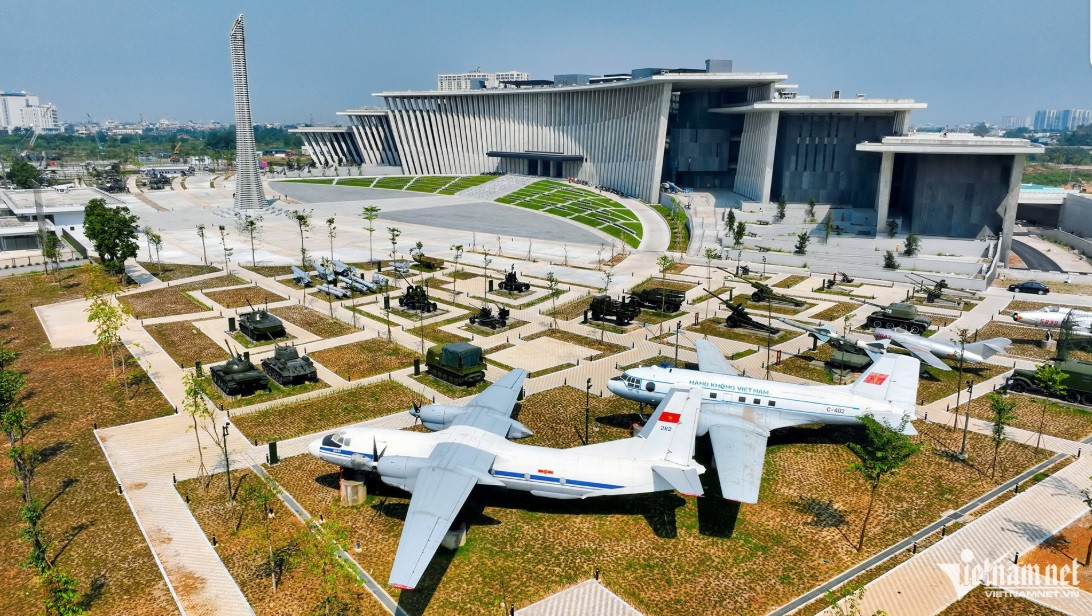

Vietnam Military History Museum preserves over 150,000 wartime artifacts. (Photo: Pham Hai - Hoang Ha)
Vietnam Military History Museum: Located on a plot of approximately 38.7 hectares with over 64,640 square meters of floor space, this museum on Thang Long Avenue has four above-ground floors and one basement level.
The museum houses more than 150,000 artifacts and documents, including national treasures and rare collections. Exhibits include personal belongings, photographs, and handwritten letters of great historical value.

Hoa Lo Prison Museum: Built by the French in the late 19th century to detain political prisoners, most of Hoa Lo Prison was demolished in the 1990s. A section has been preserved and converted into a museum, now open to the public.
National Geographic, founded in 1888 and supported by the U.S. National Geographic Society, is one of the most influential publications in science, travel, and education. It reaches millions of readers in over 170 countries and has been translated into more than 40 languages.
Do An
.svg)
