 Vietnamnet.vn

 Podcast



The inclusion of Patrick Le Giang, Ngo Dang Khoa and Nguyen Tai Loc has emerged as one of the biggest talking points in Vietnam's latest national team squad, with head coach Kim Sang Sik seeking the right balance between experience, youth and renewal ahead of ASEAN Cup 2026.
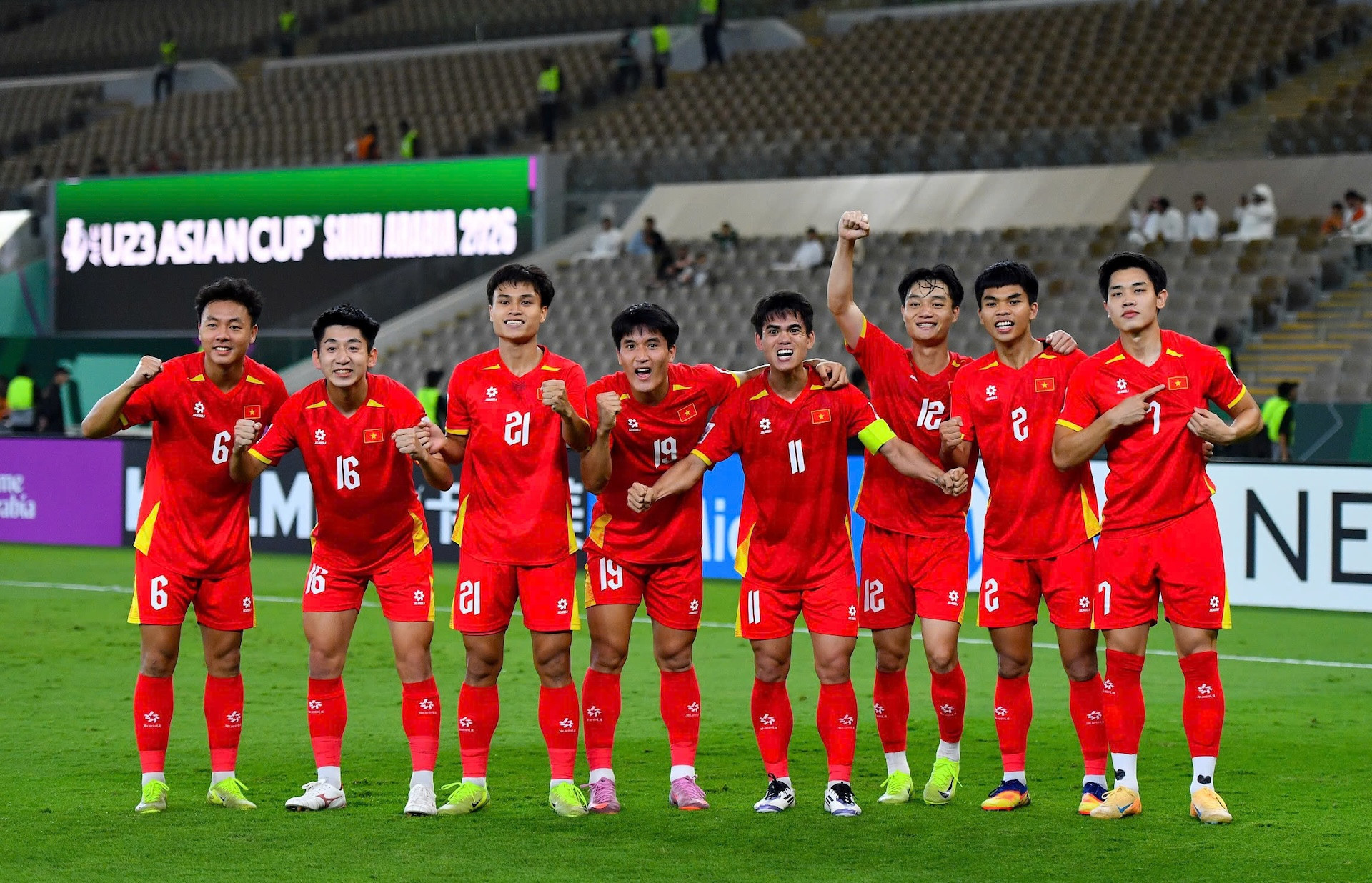
On June 15, Kim announced a 28-player squad for an international training camp and a series of warm-up matches before the regional championship. While most selections were familiar faces, the arrival of three newcomers has intensified competition across several positions and raised questions about the future roles of some established stars.
Notably absent from the squad are several players who have been regular members of the national team in recent years, including goalkeeper Nguyen Filip, defender Cao Quang Vinh and striker Nguyen Tien Linh.
Beyond considerations of form and tactics, the latest selections suggest Kim is already preparing for longer-term objectives that extend beyond defending Vietnam's ASEAN Cup title to include qualification for the 2027 AFC Asian Cup finals.
New arrivals bring fresh competition
Among the newcomers, Nguyen Tai Loc is regarded as one of the most intriguing additions.
The forward has spent years playing in Vietnam's top flight for clubs including Sai Gon, Ha Noi FC, The Cong Viettel, Ha Tinh and most recently Ninh Binh. Last season he scored nine goals in 23 V.League appearances and added two more goals in four National Cup matches.
Known for his versatility across the attacking line, pace, technical ability and finishing, Tai Loc is expected to provide Kim with greater flexibility in attack throughout ASEAN Cup 2026 and future competitions.
Ngo Dang Khoa, meanwhile, was born in Australia to Vietnamese parents and developed through the Australian football system before moving to Vietnam to join Cong An TP.HCM.
The 2006-born attacker quickly made an impression in the V.League with his close control, speed and tactical intelligence. He recorded four goals and one assist this season and has earned recognition for his ability to adapt to multiple positions despite not possessing a physically imposing frame.
Before deciding to include Dang Khoa in the national team, Kim personally attended the National Cup final between Ninh Binh and Cong An TP.HCM to observe the youngster.
The third newcomer, Patrick Le Giang, brings considerable experience.
Born in 1992 and developed in European football, the goalkeeper has played in Vietnam since 2023, first with Ho Chi Minh City FC and now with Cong An TP.HCM. Standing 1.88 meters tall, he is considered to possess the quality, form and commitment needed to challenge Dang Van Lam for the number-one goalkeeper position.
His call-up inevitably places additional pressure on Nguyen Filip, who misses out on this training camp.
A squad built on continuity
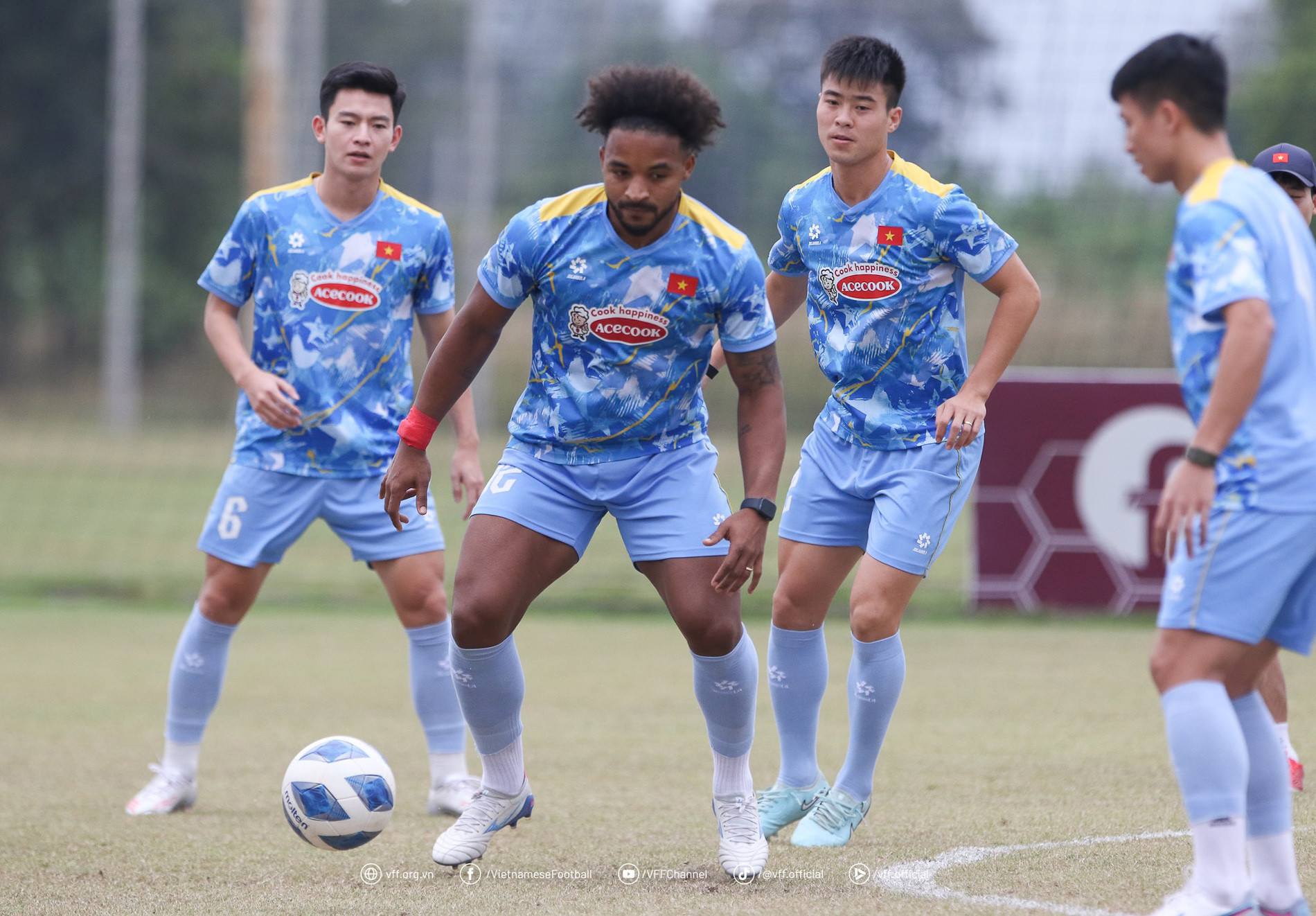
Despite the excitement surrounding the newcomers, the overall composition of the squad contains few surprises.
Most of the players selected have been key members of Kim's plans since he took charge of the national team. This continuity reflects the South Korean coach's preference for stability rather than wholesale change, particularly ahead of a tournament where Vietnam's objective is clear: retaining the ASEAN Cup title.
Some observers worry that relying heavily on familiar faces could lead to tactical predictability or stagnation. However, others argue that continuity remains one of Vietnam's greatest strengths.
Many of the selected players have enjoyed strong V.League campaigns and have already proven their quality at international level. In a short tournament such as the ASEAN Cup, experience and understanding within the squad can be decisive advantages.
Kim appears willing to sacrifice experimentation for reliability. Whether that proves the correct decision may ultimately depend on both results and performances once the tournament begins.
Should Vietnam fall short of expectations, questions will inevitably be raised about whether the coach was too cautious in his squad selection.
Young players still fighting for opportunities
Another notable feature of the squad is the continued presence of seven U23-eligible players, highlighting Kim's efforts to gradually prepare the next generation of national team talent.
The strategy has been in place since the coach's arrival, with both Kim and the Vietnam Football Federation seeking to integrate younger players into the senior setup before several established veterans eventually move on after the 2027 Asian Cup cycle.
Yet being included in the squad does not necessarily guarantee significant playing time.
Goalkeeper Trung Kien, for example, has developed rapidly and is widely regarded as one of Vietnamese football's most promising young talents. Nevertheless, displacing experienced goalkeepers such as Dang Van Lam or Patrick Le Giang remains a difficult challenge.
The same applies to midfielder Khuat Van Khang. Despite being a regular call-up since the days of former coach Philippe Troussier, he has yet to fully establish himself as the first-choice option in any specific role.
Among the younger players, Dinh Bac is perhaps the most likely to break through. The attacking player from Nghe An is enjoying a period of impressive form and appears capable of competing for a place in the starting lineup, even against more experienced and naturalized teammates.
Ngo Dang Khoa could also become an important figure thanks to the maturity and resilience he developed while progressing through Australia's football system before arriving in the V.League.
Even if many of the U23 players begin the tournament as supporting options, their presence creates valuable internal competition and pushes senior players to maintain their standards.
As Vietnam prepares for a packed schedule of regional and continental competitions, such competition for places may prove just as important as the starting lineup itself.
VFF remains cautious despite title ambitions
Vietnam enters ASEAN Cup 2026 as defending champion after defeating Thailand in the 2024 final, but senior officials are wary of underestimating the challenge ahead.
"Whenever I think back to Vietnam's victory over Thailand and the ASEAN Cup triumph on their home ground, I still feel emotional," said Tran Anh Tu, Vice President of the Vietnam Football Federation and Chairman of the Vietnam Professional Football Joint Stock Company.
"This year, Vietnam aims to defend the title and maintain its position as Southeast Asia's number one team. First and foremost, I hope the team reaches the final. Of course everyone wants to become champion, but we also have to take other factors into account."
Tu also expressed hopes that Vietnam's youth teams would achieve success in upcoming continental and regional competitions, emphasizing the importance of long-term development alongside immediate results.
Vietnam will regroup in Hanoi on June 22 before traveling to South Korea for a training camp from July 2 to July 14. During the camp, the team will play three international friendlies to evaluate personnel and refine tactical plans.
After returning to Hanoi, Kim's squad will continue preparations before facing Myanmar in a friendly match in Thai Nguyen on July 18, their final test before the tournament.
Vietnam will begin its ASEAN Cup 2026 campaign away to Timor-Leste on July 24.
With a carefully assembled blend of experienced internationals, promising young talents and newly eligible players, Kim Sang Sik's side believes it has the depth required to mount a successful defense of its regional crown.
Dai Nam - Duy Nguyen
.svg)
