 Vietnamnet.vn

 Podcast



Vietnam and India have shared commercial, cultural and religious connections since ancient times, with centuries of exchange leaving enduring traces in both societies.
In Hanoi, that long relationship can be seen in an unusually tangible form: two Bodhi trees growing within the grounds of two of the capital’s most distinctive and sacred Buddhist sites, the One Pillar Pagoda and Tran Quoc Pagoda.
Beyond their religious significance, the trees have become symbols of cultural and spiritual exchange between Vietnam and India.
A gift rooted in the story of the Buddha
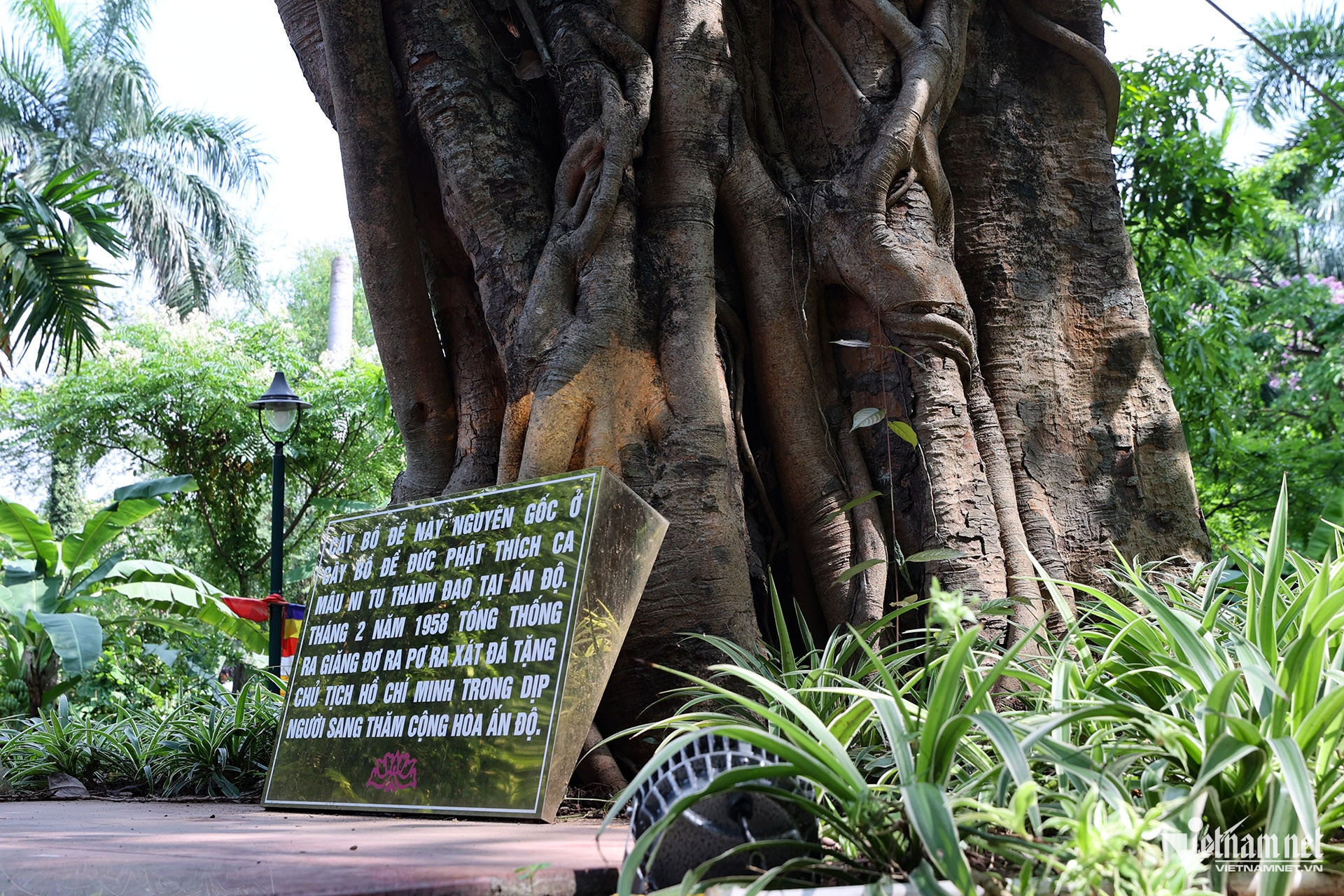
The Bodhi tree at the One Pillar Pagoda traces its origins to the tree associated with the place where Siddhartha Gautama attained enlightenment and became the Buddha.
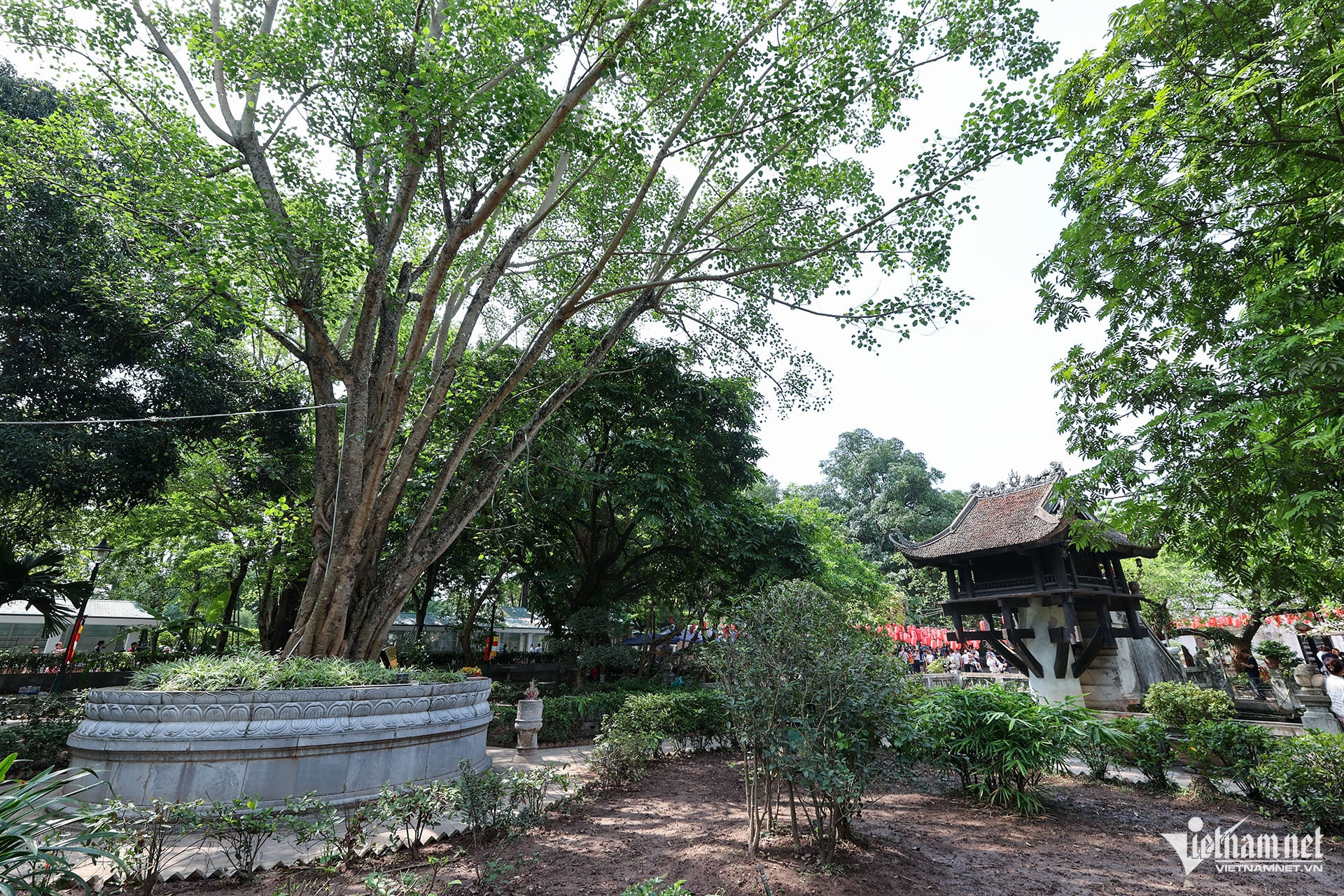
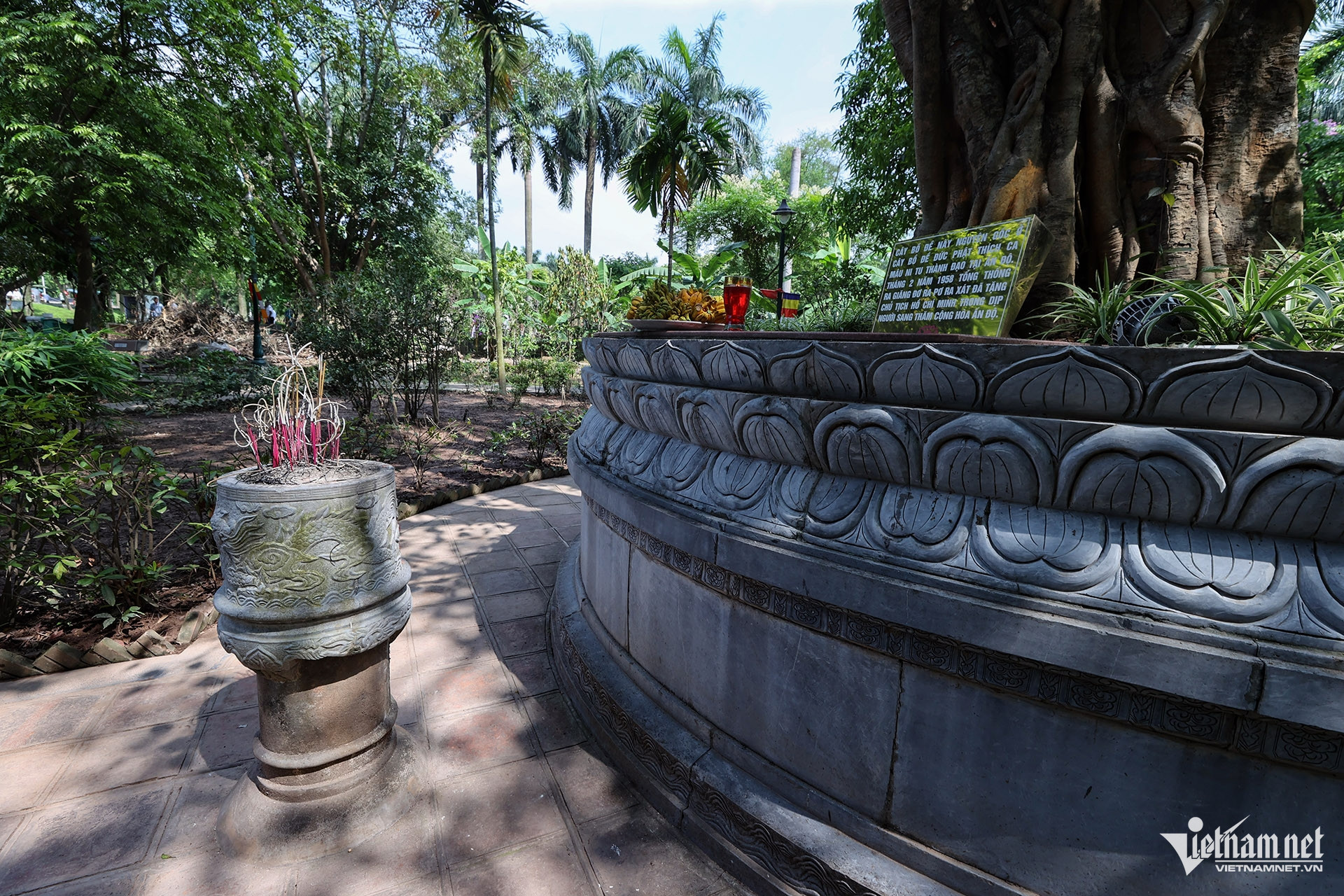
The sapling was presented by Indian President Rajendra Prasad to President Ho Chi Minh during the Vietnamese leader’s visit to India in 1958. Ho Chi Minh later brought it back to Vietnam and planted it in the grounds of the One Pillar Pagoda.
Nearly seven decades later, it has grown into a towering tree.
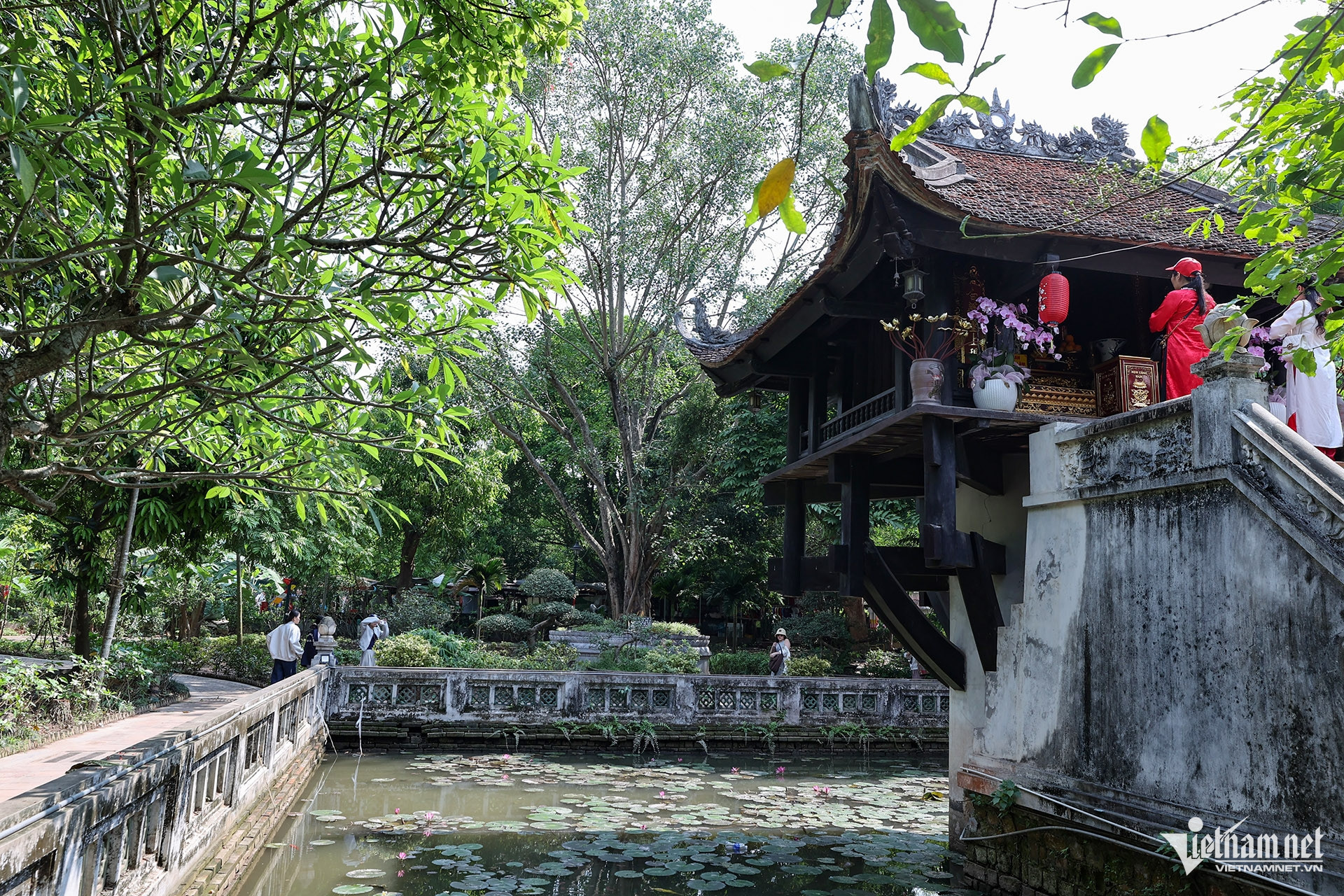
The One Pillar Pagoda was built in 1049 as part of the Dien Huu Pagoda complex on what is now Chua Mot Cot Street, near the Ho Chi Minh Mausoleum.
Originally known as Lien Hoa Dai, or Lotus Pavilion, the structure is celebrated for its distinctive architecture: a Buddhist sanctuary resting on a single pillar, designed to evoke the image of a lotus rising from the water.
Lien Hoa Dai is the best-known structure within the Dien Huu complex, whose name conveys the meaning of “lasting blessings.”
According to Buddhist tradition, Siddhartha Gautama meditated beneath a Bodhi tree until he attained enlightenment and became the Buddha.
For generations, the Bodhi tree has therefore held profound significance for Vietnamese people and Buddhist communities across Asia, symbolizing wisdom, enlightenment and the spirit of tolerance at the heart of Buddhism.
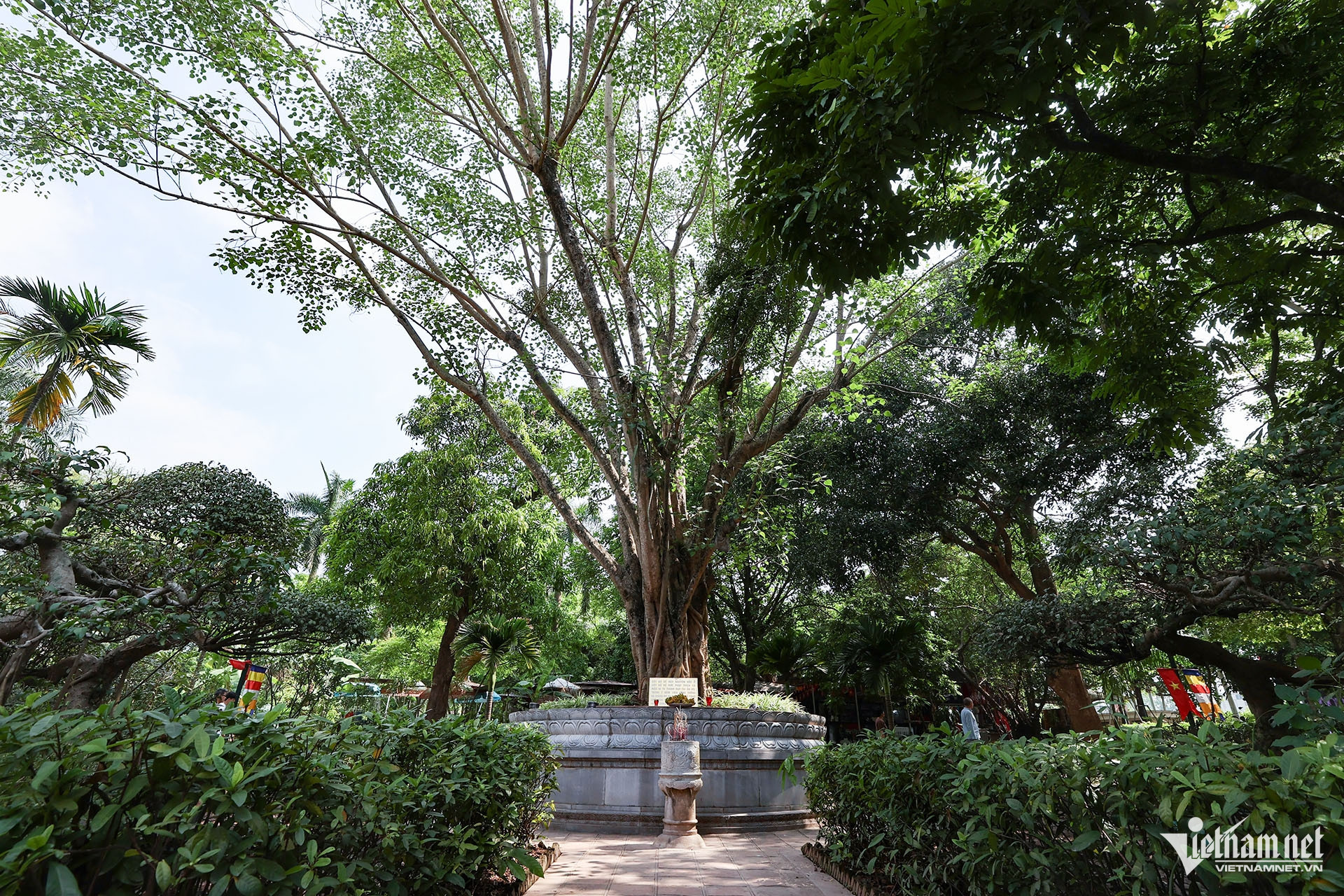
After more than six decades growing in Hanoi, the Bodhi tree at the One Pillar Pagoda now stands around 20 meters tall, with a trunk so large that it would take roughly three people joining hands to encircle it.
A second ‘diplomatic tree’ in Hanoi
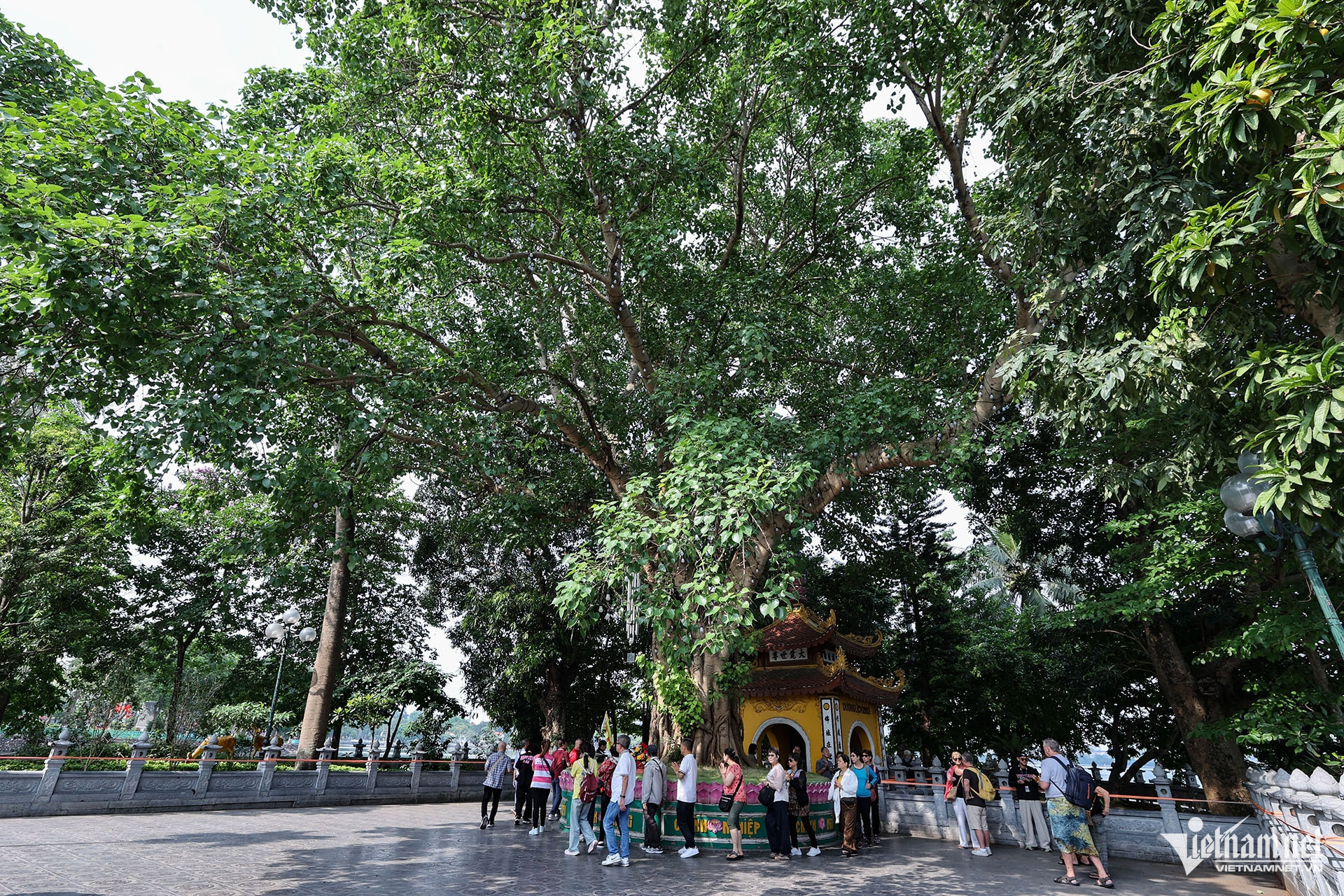
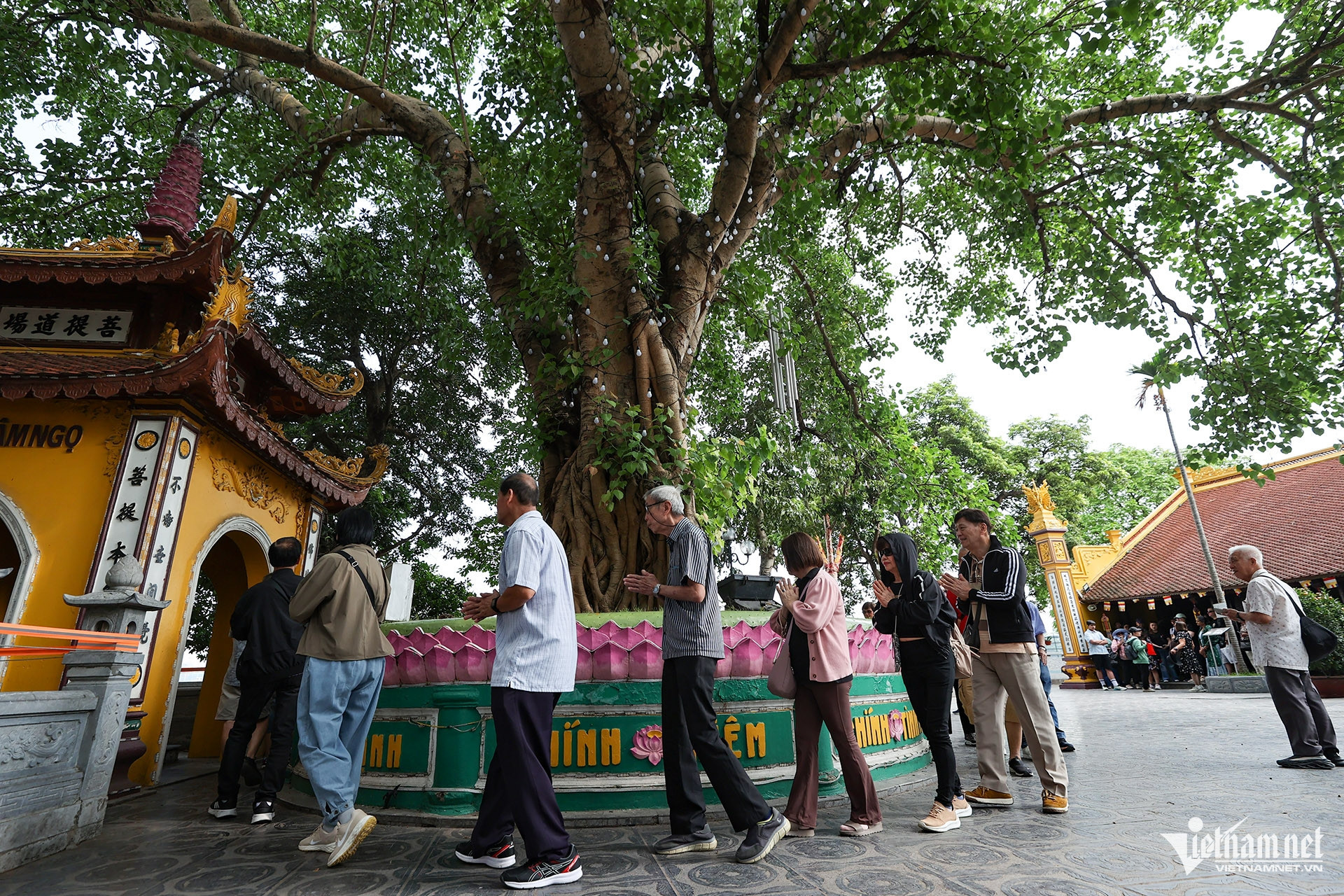
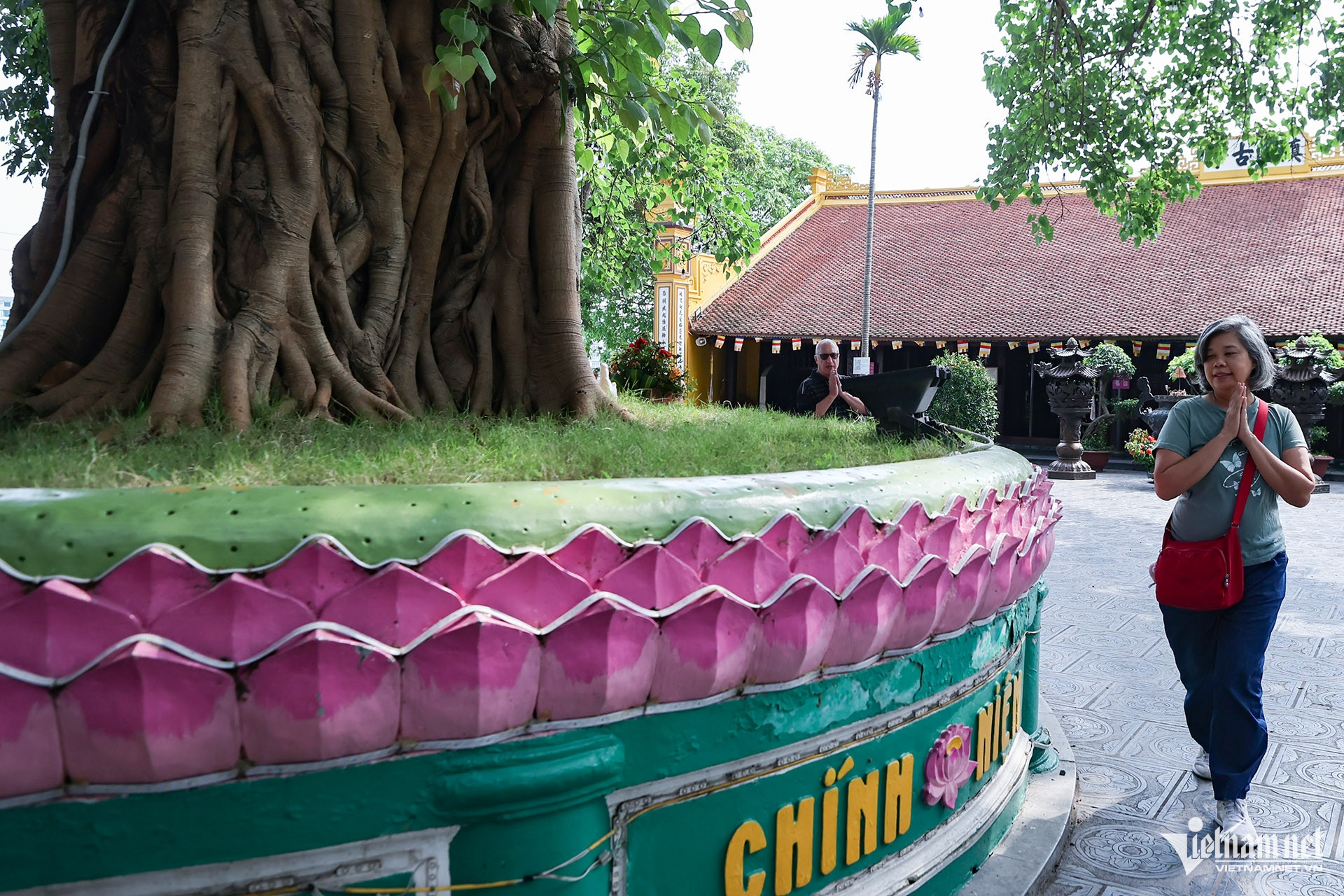
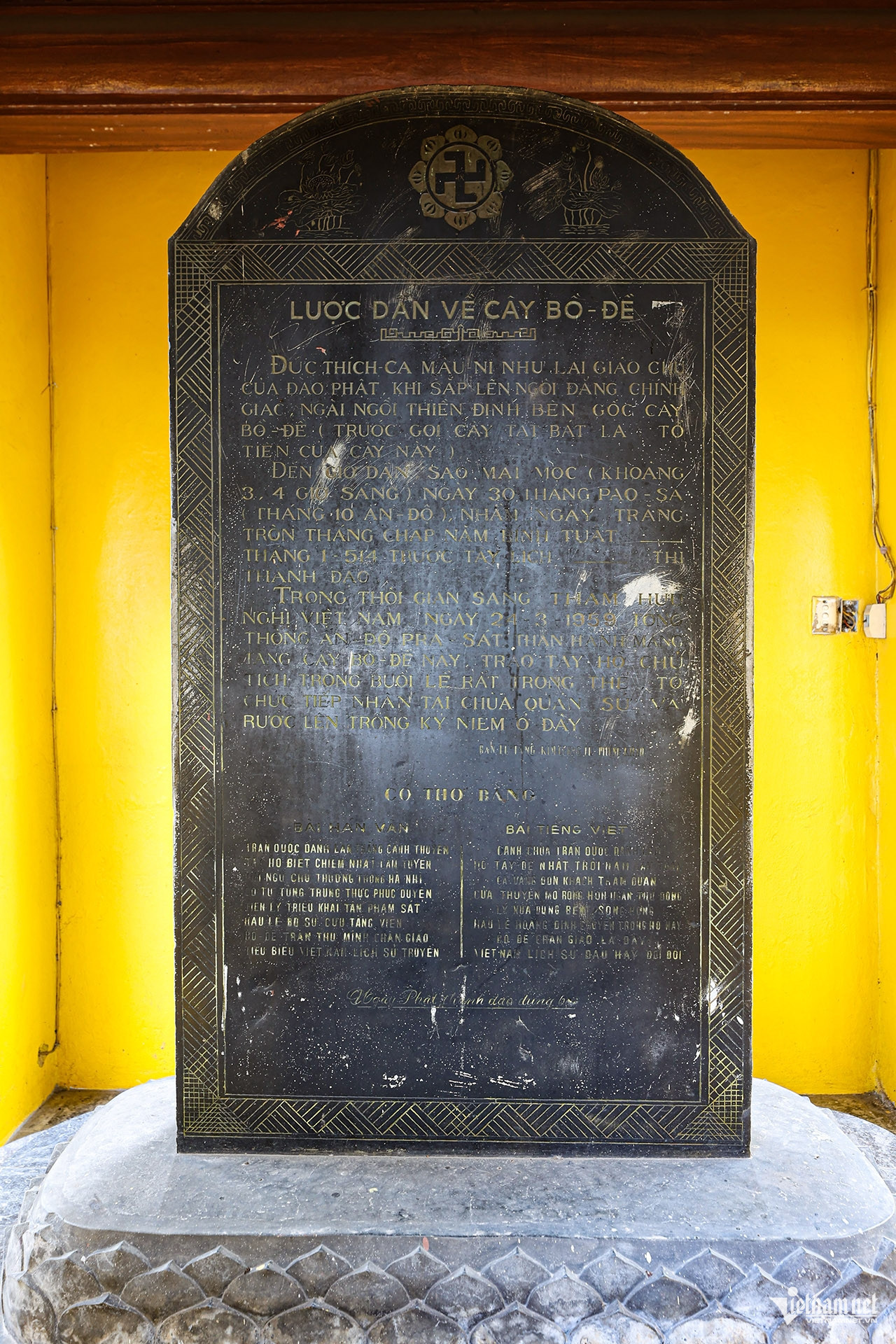
A second Bodhi tree of Indian origin has stood for nearly 70 years in the grounds of Tran Quoc Pagoda.
This tree was a gift from Indian President Rajendra Prasad during his visit to Vietnam in 1959.
It is sometimes described as a “diplomatic tree” because its planting formed part of a symbolic exchange between the two countries. During his earlier visit to India, Ho Chi Minh had planted a frangipani tree, another species closely associated with Buddhism, as a gift to India. President Prasad’s Bodhi tree was planted in Vietnam in return.
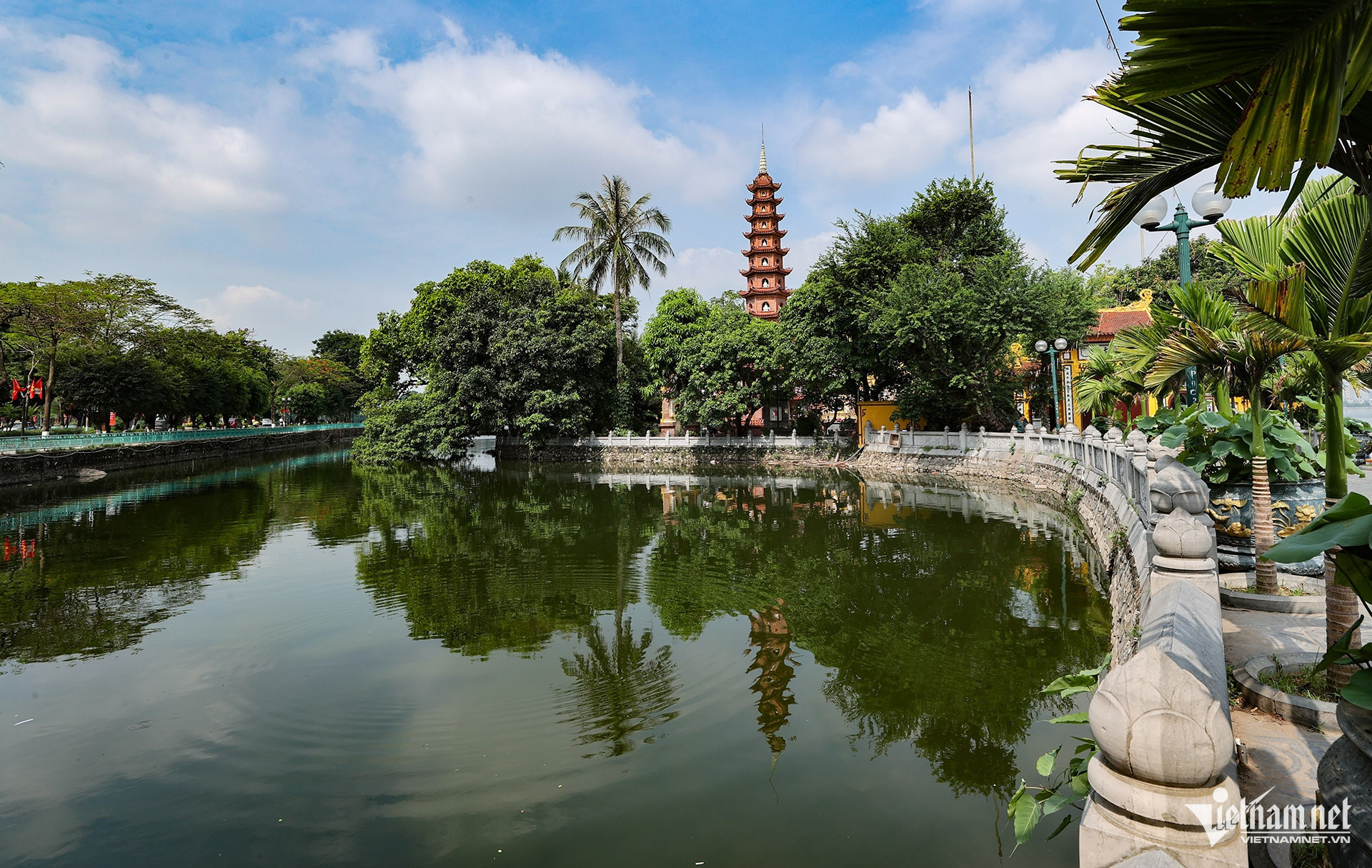
Tran Quoc Pagoda sits on a small island on the eastern side of Hanoi’s West Lake. With a history stretching back more than 1,500 years, it is regarded as one of Vietnam’s oldest and most sacred Buddhist temples.
The pagoda is known for its distinctive architecture, lotus-inspired stupa and tranquil lakeside setting. During the Ly and Tran dynasties, it was an important center of Buddhism and today remains a popular destination for both worshippers and visitors.
According to Buddhist scholar Thich Thanh Tam, writing in Giac Ngo magazine, Indian monks played an important role in bringing Buddhism to Vietnam along maritime trade routes.
The religion interacted with indigenous culture over time, becoming an integral part of Vietnamese cultural life.
From this perspective, Buddhism provided one of the earliest foundations for the relationship between Vietnam and India - centuries before the establishment of modern diplomatic ties.
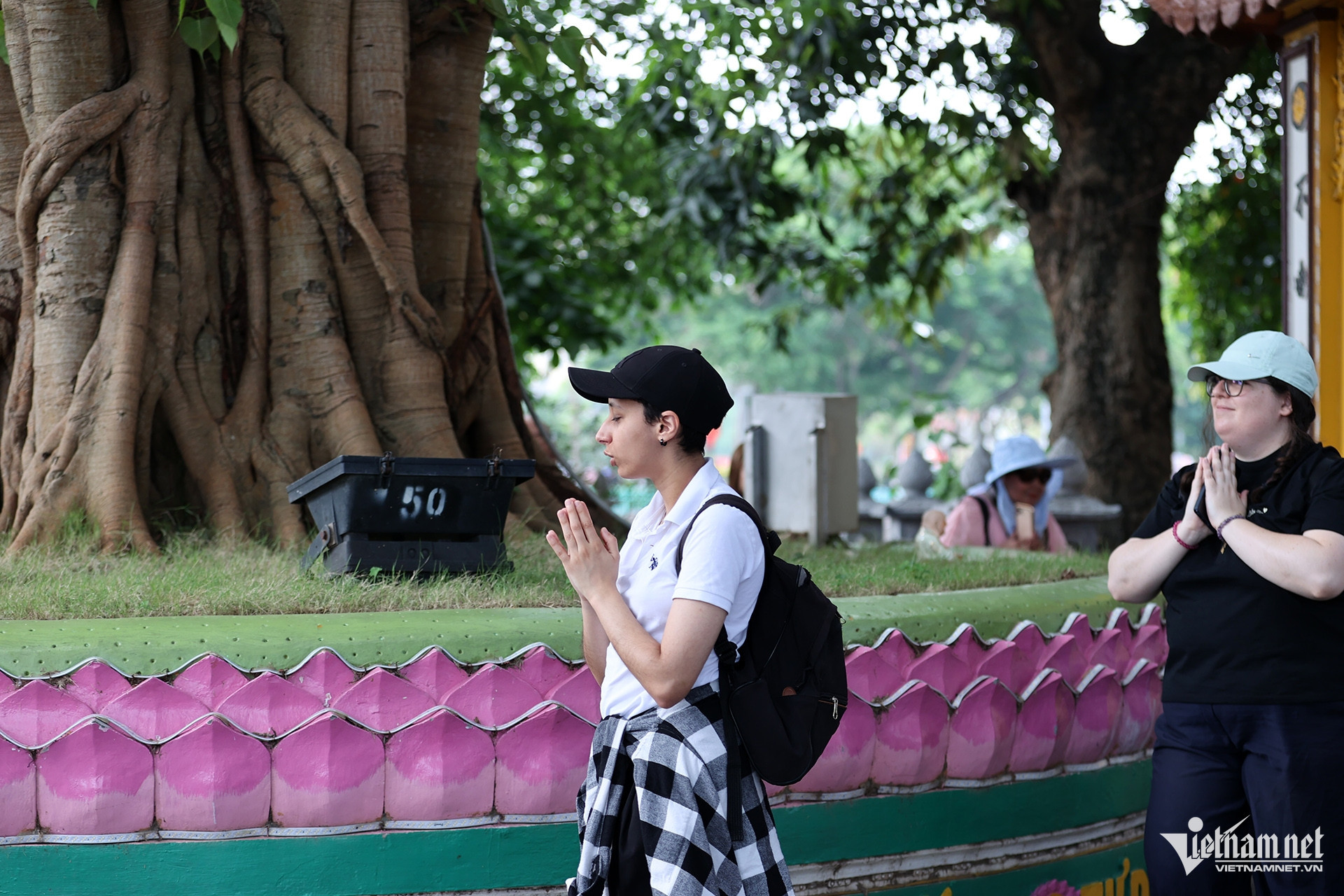
The significance of Hanoi’s Bodhi trees can also be seen in the people who visit them. Visitors from Asian countries with strong Buddhist traditions regularly stop to pay their respects, while travelers from Europe and elsewhere can also be seen quietly circling or standing beneath the trees. Their diplomatic symbolism has endured as well.
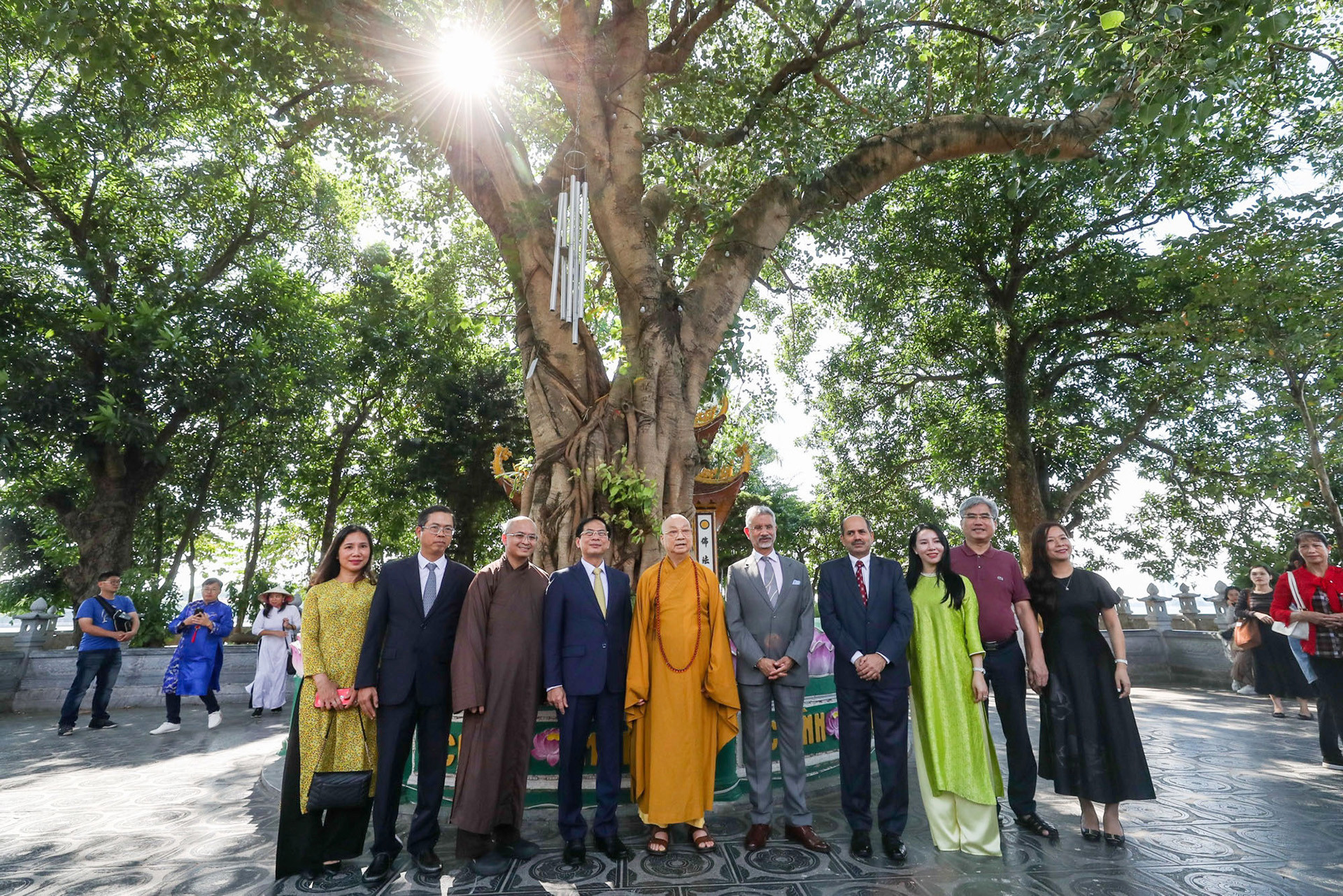
Nearly seven decades after they were planted, the two Bodhi trees remain rooted in two of Hanoi’s most historic religious spaces.
Their branches now stretch over generations of worshippers and visitors, while their origins preserve the memory of an exchange between Vietnam and India that reaches far beyond conventional diplomacy.
They are living reminders of a relationship shaped not only by modern state-to-state ties, but also by centuries of religious, cultural and civilizational connections.
Le Anh Dung
.svg)
