 Vietnamnet.vn

 Podcast



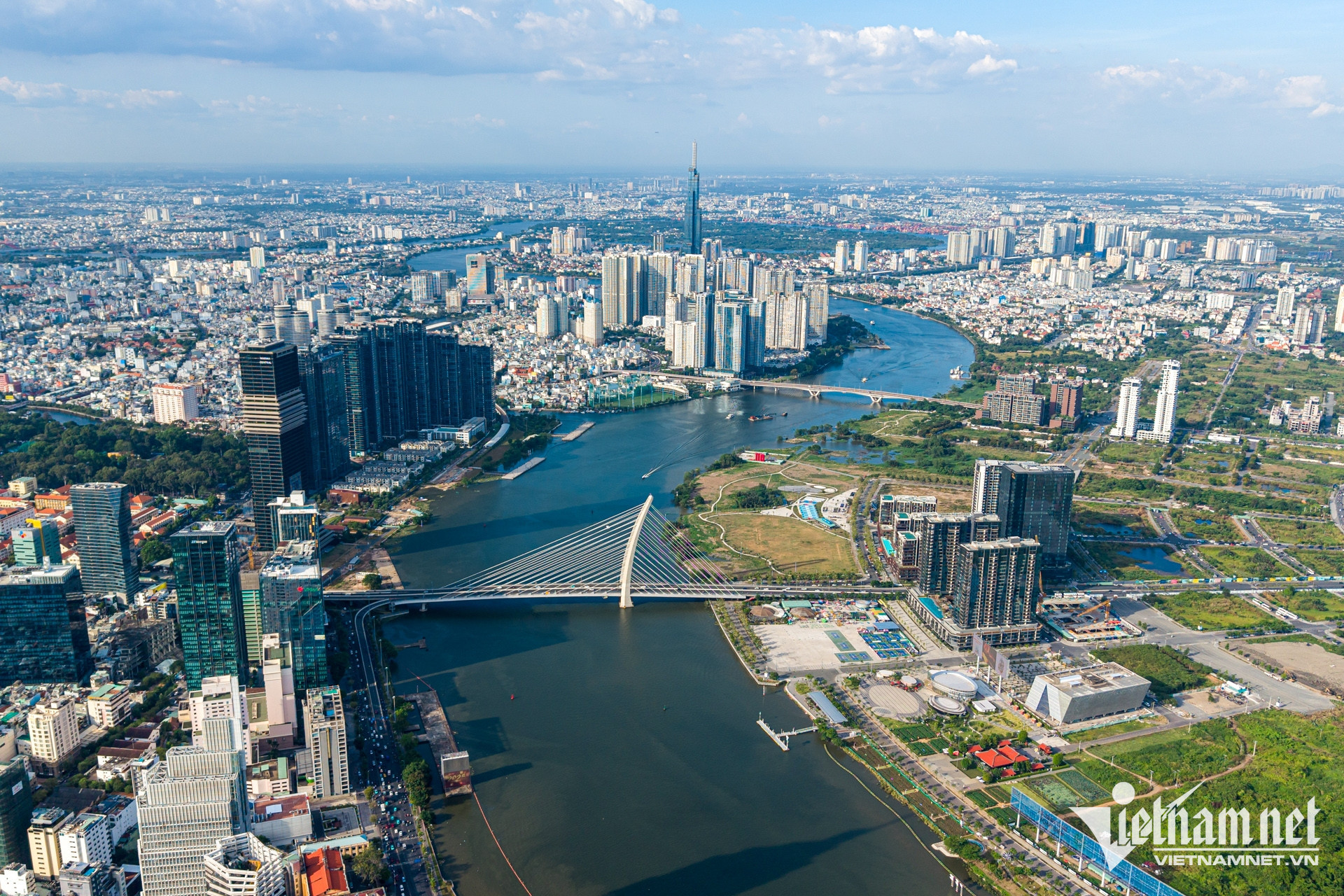
On the morning of August 24, the National Assembly passed the draft Urban Development Law, with 465 of the 474 deputies present voting in favor.
Under the Urban Development Law, Ho Chi Minh City and other cities classified as special-class urban areas may decide to pilot new mechanisms and policies that differ from laws and resolutions adopted by the National Assembly, or address matters not yet regulated by law.
Such pilot mechanisms and policies may not be implemented in the fields of national defense, security, foreign affairs, religion or other areas directly related to national sovereignty.
Subject to approval from the competent authorities, the municipal People’s Council will issue resolutions authorizing pilot mechanisms and policies, clearly defining their objectives, scope, subjects, content, duration and geographical areas of implementation.
The municipal People’s Council must also set out the anticipated results and impacts of each pilot program; the rights, obligations and responsibilities of relevant agencies, organizations and individuals; risk-management measures; mechanisms for oversight, monitoring and evaluation; and the conditions and procedures for adjusting, extending or terminating a pilot.
The municipal People’s Committee is responsible for submitting proposed pilot mechanisms and policies to the People’s Council for approval.
Where a proposed pilot mechanism or policy could affect the wider special-class urban region, the municipal People’s Committee must assess its regional and national socioeconomic impacts and consult the People’s Committees of relevant provinces before submitting the proposal to the municipal People’s Council for consideration and approval.
The municipal People’s Committee is also responsible for addressing, or recommending solutions to, issues arising during implementation. It may suspend a pilot and report to the People’s Council for consideration and a decision if negative impacts exceed those initially anticipated.
Rules for special economic zones
The Urban Development Law devotes a separate chapter to mechanisms and policies for developing special economic zones.
Under the law, a commune, ward or special administrative zone may be recognized as a special economic zone if it meets several criteria: it must occupy a strategic location aligned with national socioeconomic development priorities and national defense and security requirements; have an international airport or a Class I or higher seaport; and possess a relatively independent and easily controlled geographical space, with a large population and natural area.
According to the report explaining revisions to the draft law, the Government said the legislation had been amended to remove a provision that would have authorized People’s Councils in special economic zones to approve controlled pilot schemes.
For sea-reclamation urban areas, the law stipulates that investment, construction and development must be based on comprehensive assessments of natural and geological conditions, as well as the project’s impact on coastal and surrounding areas.
Sea-reclamation urban areas must be planned, invested in and developed as modern, green and smart urban areas, with efficient use of marine and land resources, energy conservation, resilience and infrastructure safety.
The law also requires investment, construction and the commissioning of sea-reclamation urban areas to be carried out in stages appropriate to their scale, infrastructure capacity, construction safety requirements and environmental protection standards.
Investors are responsible for the management, operation, upkeep and maintenance of reclamation works and technical infrastructure within sea-reclamation projects and urban areas.
The National Assembly assigned the Government to establish criteria for sea-reclamation urban development projects seeking to attract strategic investors, as well as the conditions for determining which strategic investors qualify for mechanisms and policies provided under the law.
Regarding the development of Vietnam’s International Financial Center, the law transfers the authority to regulate “conditions, procedures and processes for licensing the establishment of banks conducting investment banking activities at the International Financial Center in Vietnam, and for issuing international financial products through the International Financial Center in Vietnam” from the city’s International Financial Center executive body to the municipal People’s Council. Such regulations must be developed in consultation with the Ministry of Finance and the State Bank of Vietnam.
The law also adds a provision allowing members of the International Financial Center in Vietnam to provide financial and other support services within the center, in accordance with their establishment and operating licenses, to domestic organizations seeking to conduct transactions and raise international capital.
Scope of pilot mechanisms and policies
The law allows special-class cities to pilot:
New organizational models for different levels of city government, alongside advanced and modern governance and development models, as well as new civil service and public employee arrangements.
New economic models based on science and technology, innovation, digital transformation, education and training, culture, sports, tourism, healthcare and health services.
Ecological agriculture, high-tech agriculture, urban agriculture and agricultural models designed to reduce greenhouse gas emissions.
New approaches to urban and rural management, spatial planning and sustainable development.
Methods for effectively exploiting, mobilizing, allocating and using resources for urban development and governance.
Solutions to problems that seriously and directly affect residents’ quality of life or the city’s socioeconomic development.
Other mechanisms and policies directed by competent authorities.
Tran Thuong
.svg)
