 Vietnamnet.vn

 Podcast



The National Assembly today passed a resolution approving the investment policy for the Hanoi Capital Region Ring Road 5 project.
The approximately 349-kilometer route will run through seven cities and provinces: Hanoi, Ninh Binh, Hung Yen, Hai Phong, Bac Ninh, Thai Nguyen and Phu Tho.
Entire route targeted for completion before 2035
The project will be financed by the state budget and other lawful sources of capital and divided into multiple component projects.
It aims to create an expressway connecting Hanoi with other localities across the region, meet growing transportation demand, open up new areas for economic development and generate broader growth momentum.
The route is also expected to divert traffic before it reaches central areas, easing congestion and environmental pollution while completing the capital region’s ring-road network.
The project will incorporate advanced and modern technologies to ensure safety, connectivity and efficiency. The use of high technology in surveying, design and construction, as well as measures to adapt to climate change, will be encouraged.
Once operational, the expressway will use electronic non-stop toll collection.
Preliminary investment is estimated at VND288.268 trillion ($11 billion), funded through the state budget allocated under medium-term public investment plans and other lawful sources.
During the 2026-2030 period, the central government budget is expected to allocate approximately VND61.394 trillion ($2.3 billion) to develop around 116 kilometers of the main expressway through Ninh Binh, Hung Yen, Hai Phong and Bac Ninh.
Investment preparations will begin in 2026, with construction scheduled to start in 2027. The entire route is targeted for completion before 2035.
The project will require approximately 4,011 hectares of land, including around 1,776 hectares of rice-growing land. Of this, 1,590 hectares is land dedicated to growing two or more rice crops annually. The project will also require approximately 210 hectares of forestry land and 2,025 hectares of other land.
Compensation and resettlement costs based on land clearance requirements
Before the National Assembly vote, Minister of Construction Tran Hong Minh, on behalf of the Government, presented a report responding to and explaining lawmakers’ comments and conclusions from the National Assembly Standing Committee.
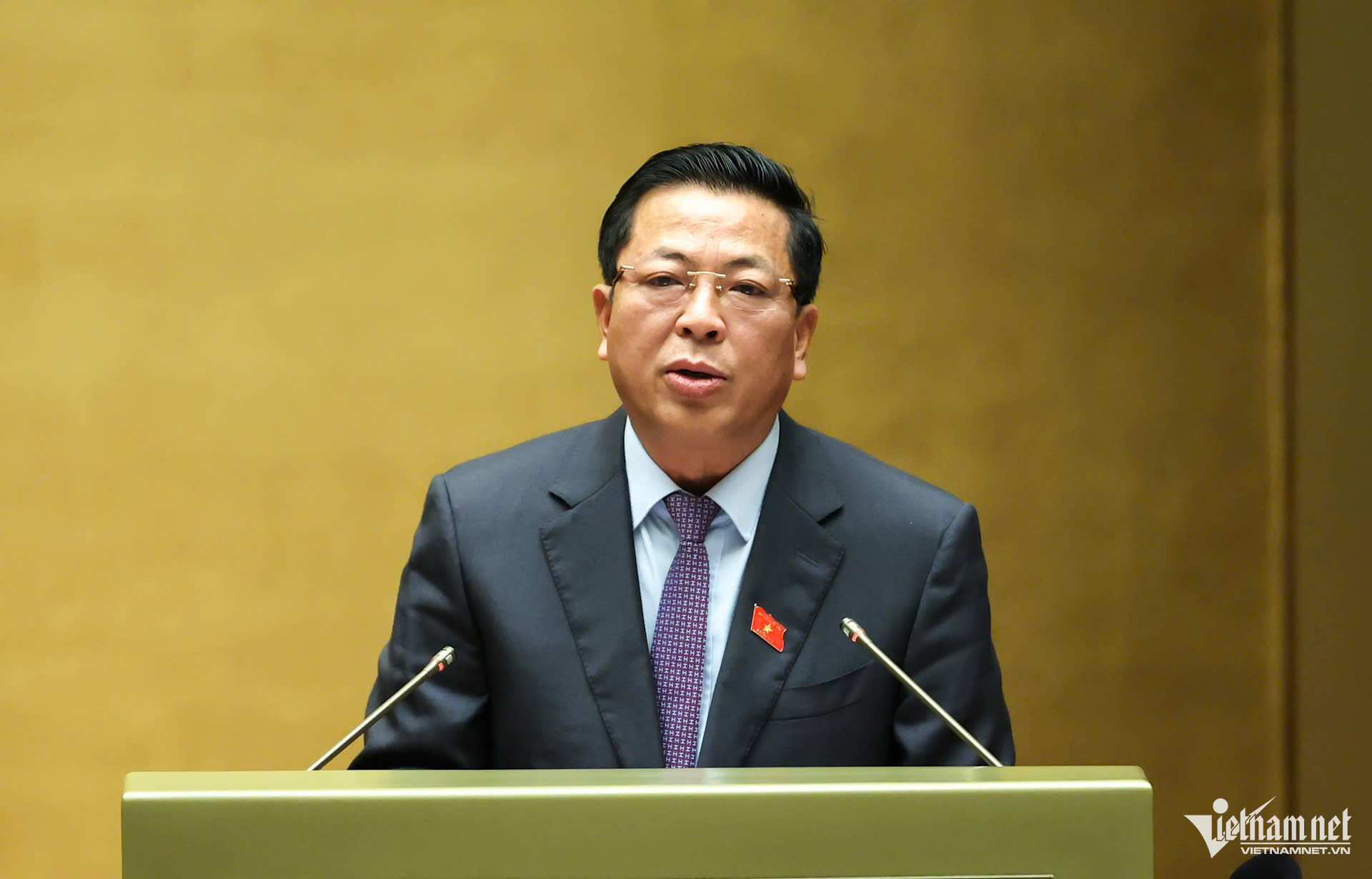
According to the minister, the Government has instructed relevant agencies to review the total investment estimate to ensure costs are calculated fully and accurately while minimizing additional expenses during implementation.
Compensation, support and resettlement costs are calculated based on the volume of land clearance shown on cadastral maps and land-use plans. Calculations also take into account compensation rates for land and assets attached to it, land-price coefficients and support levels applied by provincial and municipal People’s Committees during the project preparation period in 2026.
Given the central government’s limited ability to balance its budget during 2026-2030, the Government opted to seek National Assembly approval for the entire route as a six-lane expressway developed through public investment, while extending the completion schedule into the 2031-2035 period.
The guiding principle is to fully develop individual sections within the available funding envelope, allowing each completed section to enter operation immediately rather than spreading resources too thinly or leaving unfinished works.
For the initial phase, priority will be given to an approximately 116-kilometer eastern section running from Thai Ha Bridge to the Bac Giang-Lang Son Expressway interchange.
According to the Government, this section has high transport demand, can operate independently and offers significant potential for industrial, urban and service-sector development.
Preparatory work, land management and resource mobilization will begin immediately for the remaining sections needed to complete Ring Road 5. Once funding becomes available, these sections can proceed under the investment policy approved by the National Assembly.
Thanh Hue
.svg)
