 Vietnamnet.vn

 Podcast



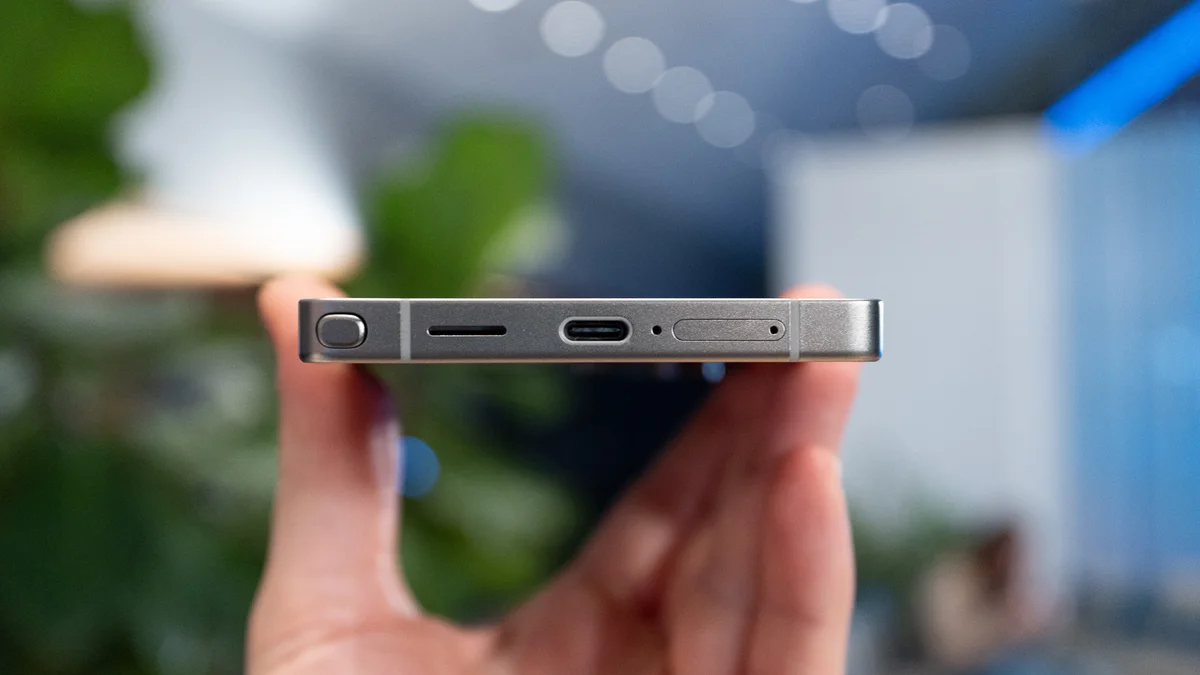
What stands out is that this advancement may not come solely from a next-generation 2nm processor, but also from a less noticeable factor - storage technology.
In an increasingly competitive smartphone market, overall performance, especially responsiveness, is becoming a decisive factor. A flagship chip alone does not guarantee a smooth experience if other components fail to keep pace. With the Galaxy S27, Samsung appears to be adopting a more comprehensive approach, optimizing everything from hardware to storage systems.
Moving toward next-generation storage
On the Galaxy S26 series, Samsung continued to use UFS 4.0 storage, even though UFS 4.1 had already emerged at the time. UFS (Universal Flash Storage) is a high-performance storage standard designed for mobile devices requiring fast data access, stability and energy efficiency.
With the Galaxy S27, Samsung is likely to be among the first manufacturers to bring UFS 5.0 into real-world use. This is considered a major step forward, significantly improving read and write speeds - a key factor directly affecting user experience.
According to leaks from South Korea, not all Galaxy S27 variants will feature UFS 5.0. The main reasons are rising memory costs and limited supply.
It is likely that only higher-end models such as the Galaxy S27 Ultra and a rumored Galaxy S27 Pro will include the new standard, while the base version may retain older technology to maintain competitive pricing.
Base storage capacity is also expected to remain largely unchanged. The standard Galaxy S27 may start at 128GB, while the Ultra variant is expected to begin at 256GB, balancing growing user demands with cost considerations.
UFS 5.0: a performance game changer
Announced in late 2025, UFS 5.0 could make its commercial debut with the Galaxy S27 series. While other Android manufacturers are expected to follow quickly, questions remain over whether some brands will lag behind in adopting the new storage speeds.
Technically, UFS 5.0 represents a clear leap forward. Maximum sequential read and write speeds increase from around 5.8GB per second on UFS 4.0 to up to 10.8GB per second - nearly double.
This has significant real-world implications. Most smartphone tasks, from opening apps and gaming to processing photos and videos, rely on data read and write operations. As storage speed increases, the entire system becomes more responsive.
Users may notice near-instant app launches, smoother gaming experiences, more stable 8K video recording, and faster on-device AI processing, including photo editing and content recognition.
Despite these improvements, an important question remains: do users really need to upgrade to UFS 5.0?
The answer, as with many technological upgrades, is not necessarily. UFS 4.0, introduced in 2022, still delivers more than enough performance for most everyday tasks.
Moving to UFS 5.0 will provide superior performance, potentially bringing smartphone storage speeds closer to high-end desktop systems. However, this alone may not justify an upgrade unless users regularly push their devices to the limit.
For those who feel their current devices are struggling with demanding tasks such as video editing, high-end gaming or intensive AI use, the combination of UFS 5.0 and a 2nm chip could be a compelling reason to upgrade.
The potential arrival of UFS 5.0 in the Galaxy S27 Ultra highlights a clear trend: smartphone performance is no longer dependent solely on processors. Manufacturers are increasingly optimizing the entire system, from storage and software to AI capabilities.
If the leaks prove accurate, the Galaxy S27 Ultra could mark a significant turning point, bringing smartphones closer than ever to desktop-level performance - not just in theory, but in everyday use.
Hai Phong
.svg)
