 Vietnamnet.vn

 Podcast



The construction site of VSIP Nghe An 2 Industrial Park (Tan Chau commune) in the province remains bustling with the sound of machinery. More than 700 engineers and workers along with over 100 pieces of machinery and equipment are being used to build infrastructure items.
The construction tempo at VSIP Nghe An 2 reflects the success of the first VSIP Nghe An 1 Industrial, Urban, and Service Park. After nearly a decade of development, this 750-hectare project has become a destination for many large manufacturing corporations in the world.
By the end of 2025, the industrial park had attracted 58 secondary investors with a total registered capital of $2.7 billion, and the occupancy rate reached more than 91 percent.
VSIP Nghe An 2 is expected to provide more clean land funds, meeting the investment expansion needs of international enterprises as global supply chains continue to shift to Vietnam.
Many corporations in the fields of electronics, precision mechanics, and supporting industries such as Luxshare-ICT, Everwin Precision Vietnam and Innovation Precision Vietnam have chosen Nghe An, contributing to a high-tech manufacturing chain within the province.
The WHA Industrial Zone Nghe An is also becoming an attractive destination for domestic and foreign investors. The infrastructure continues to expand, and many new projects are being deployed, creating additional industrial land funds and increasing the attractiveness of the Southeast Economic Zone.
In the northern part of the province, another solid economic driver is being shaped as the Quynh Lap LNG Power Plant project with a total investment capital of nearly $2.2 billion.
When operational, the project will supplement a stable power source for the national power system, and create massive headroom to develop industry, logistics, and seaport services, while enhancing investment attraction capacity for the entire northern Nghe An region.
The robust development of industrial parks has brought about an increasingly massive demand for human resources. At the beginning of July, the third job fair of 2026 was organized at Hoang Mai I Industrial Park, a place which, together with Hoang Mai II, Dong Hoi, and Nghia Dan, is forming new industrial manufacturing hubs of the province.
Nghe An Vice Chair Bui Thanh An, in the first six months of the year, said the province created about 24,800 new jobs during the first six months of the year.
Expanding development space, welcoming new investment
While today's flagship projects are fueling economic growth, strategic policies are laying the groundwork for long-term expansion.
A key milestone came when the government approved the expansion of the Southeast Economic Zone to more than 104,269 hectares, roughly five times its previous size.
At the same time, Nghe An is actively preparing a proposal for a Free Trade Zone. If approved by the central government, this would enhance its competitiveness in attracting investment while promoting logistics, international trade, and export-oriented manufacturing.
Transport infrastructure is also being upgraded through several strategic projects. Among the most significant is the eastern section of the North-South Expressway. With the entire route through Nghe An now operational, travel time between Hanoi and the province's administrative and economic center has been reduced to around three hours.
Meanwhile, construction has begun on the Vinh–Thanh Thuy Expressway, which is expected to become an important part of the future Hanoi–Vientiane expressway corridor, strengthening transport connectivity and supporting economic development in western Nghe An.
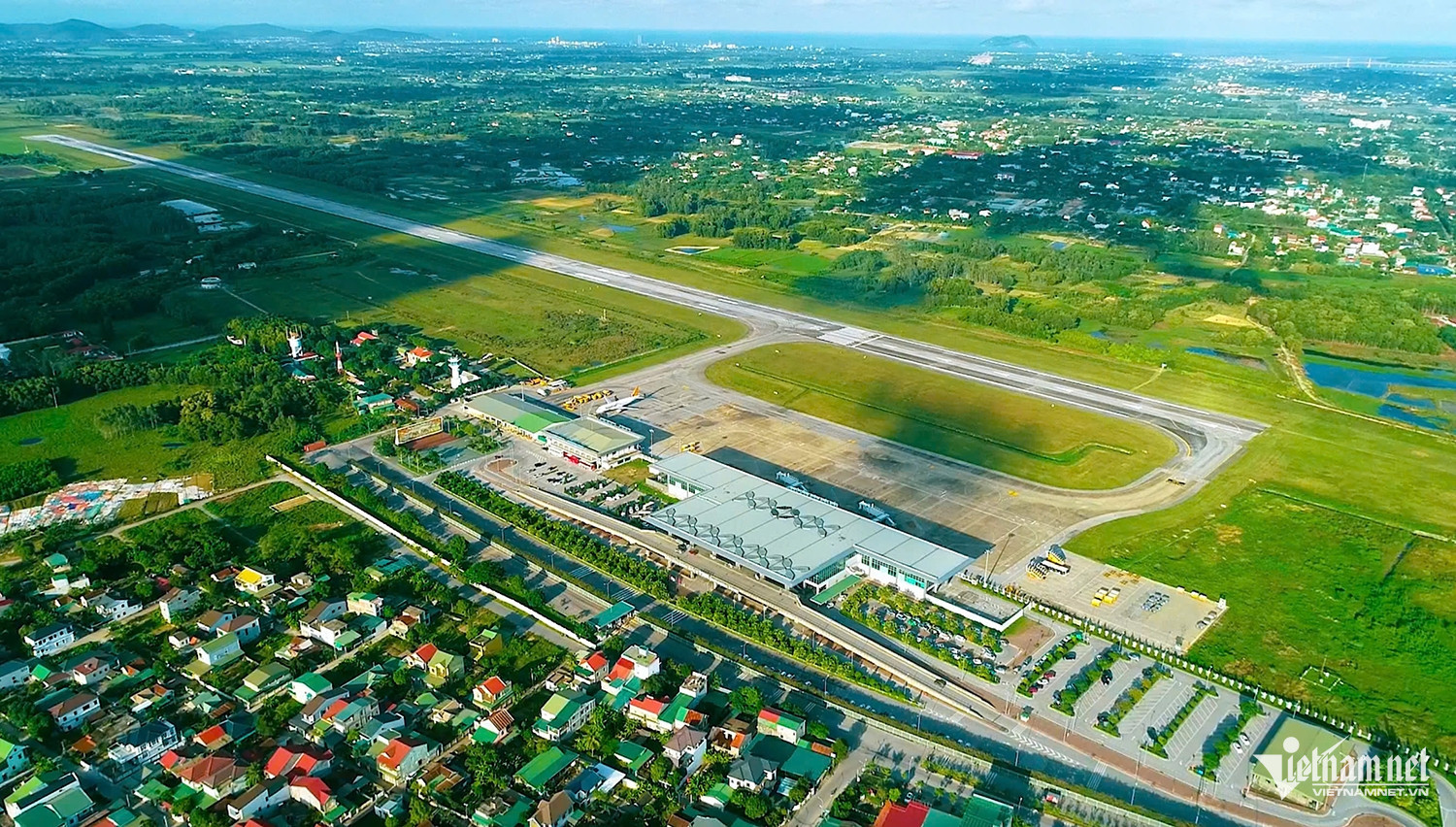
The upgrade of Terminal T2 and the expansion of the runway at Vinh International Airport will transform the facility into a modern aviation hub with direct connections to major economic centers both domestically and internationally.
The province also continues to capitalize on its deep-water port advantages. Under the development plan through 2030, Nghe An aims to build a system of nine port areas with 28 to 31 berths, totaling between 5,151 and 5,926 meters in length, capable of accommodating vessels of up to 150,000 tonnes.
Annual cargo throughput is projected to reach between 22.25 million and 26.75 million tonnes, providing a solid foundation for large-scale logistics and maritime services.
Among these projects, Cua Lo Deep-water Port is being upgraded to receive vessels of up to 100,000 DWT, paving the way for an integrated port-logistics-industrial complex. Once completed, it is expected to become a major international trade gateway for Nghe An and the wider North Central region.
Tran Tuyen
.svg)
