 Vietnamnet.vn

 Podcast



As the largest ethnic minority community in western Nghe An Province, the Thai people possess a rich cultural legacy shaped over hundreds of years. They are also the only ethnic group in the region with four cultural practices recognised as National Intangible Cultural Heritage.
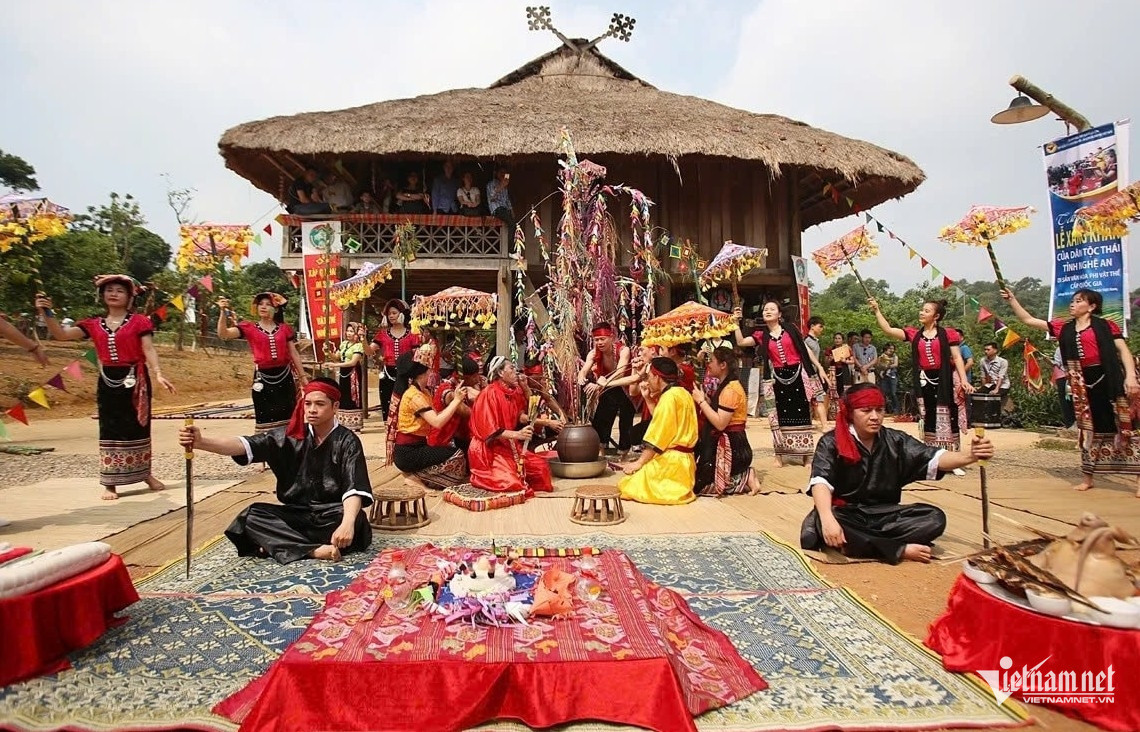
The Xang Khan ritual of the Thai people in western Nghe An. Photo: T.H
Along the mountain slopes of western Nghe An, stilt houses tucked against hillsides, the echo of the khene flute during festivals and the graceful Lam dance remain enduring symbols of Thai cultural identity.
Over generations, the Thai community has built a highly developed village culture, preserving a rich system of customs, rituals, folk knowledge and performing arts. Among this cultural treasure are four heritage elements officially recognised as National Intangible Cultural Heritage: the Xang Khan ritual, the Den Chin Gian Festival, brocade weaving and the Thai writing system.
Among them, brocade weaving is often regarded as the “cultural language” of Thai women. From a young age, girls are taught by their mothers and grandmothers how to spin thread, dye fabrics, weave cloth and embroider patterns.
On simple wooden looms beneath stilt-house roofs, each thread is woven into images of mountains, forests, birds, rivers and the community’s worldview of the universe.
Each brocade textile is not merely a handicraft product but also a vessel carrying collective memory. Traditional skirts, scarves, bags and mats appear in daily life, weddings, housewarming ceremonies and spiritual rituals.
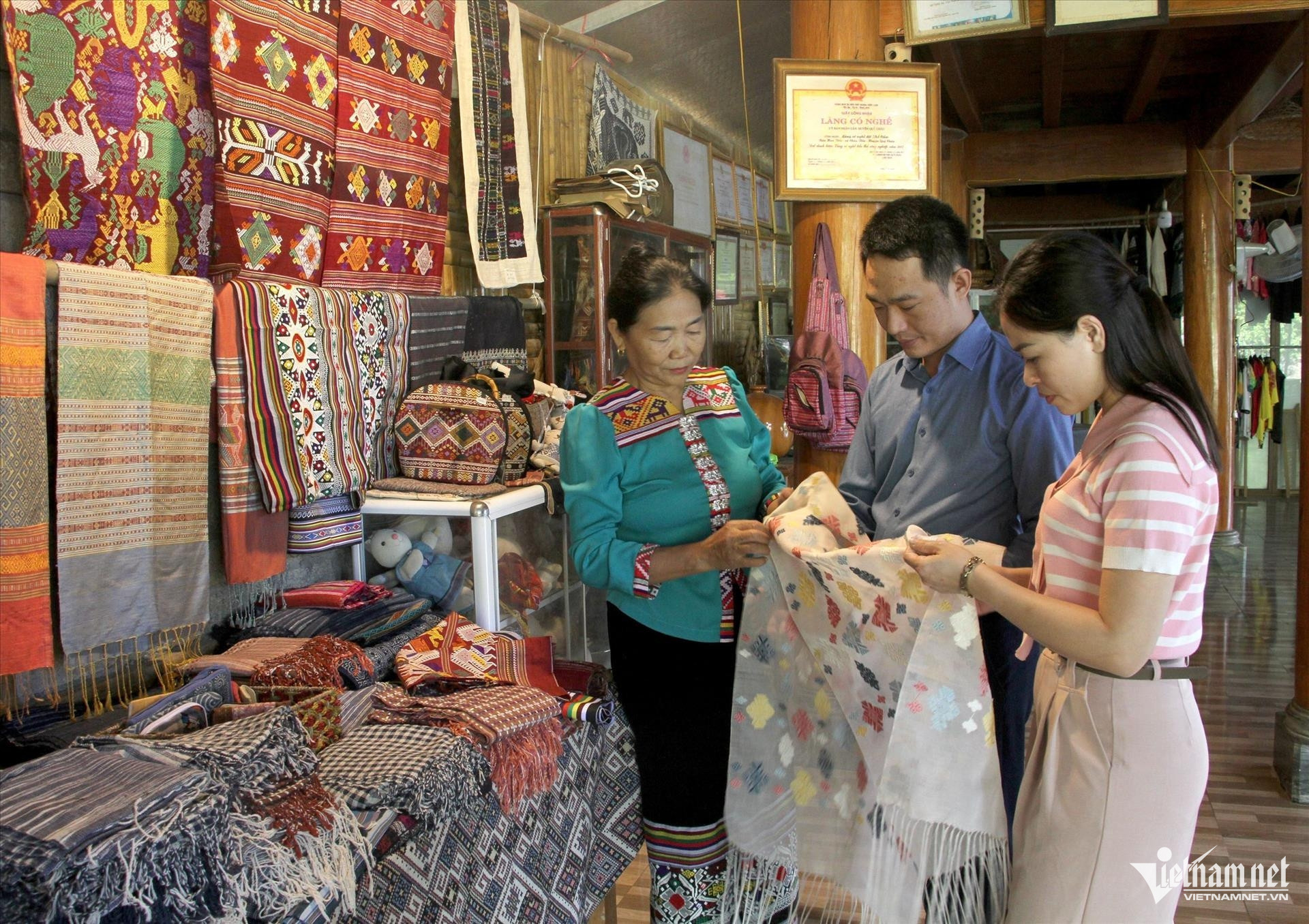
Visitors explore brocade weaving products at Hoa Tien Brocade Craft Village Cooperative in Chau Tien Commune. Photo: T.H
If brocade reflects the beauty of material life, the Xang Khan ritual reveals the spiritual depth of the Thai people. This distinctive folk ceremony is linked to the worship of ritual masters and the spiritual world of the villages.
At the centre of the ritual stands the sacred “xang tang” flower tree, accompanied by offerings, ritual chants, gong music, dances and folk performances. Embedded within each chant are epic stories, legends of village founding, folk knowledge and the Thai people’s cosmology.
For this reason, the Xang Khan ritual is often described as a “living museum” of highland folk culture.
Alongside it, the Den Chin Gian Festival has long become a spiritual and cultural symbol of the Thai community in western Nghe An.
The temple, built in the 14th century atop Pu Cho Nhang Mountain, is associated with sky worship, guardian deities and the founding contributions of Tao Lo Y. Each chamber of the temple symbolises one of the ancient muong settlements of the Thai people in Nghe An.
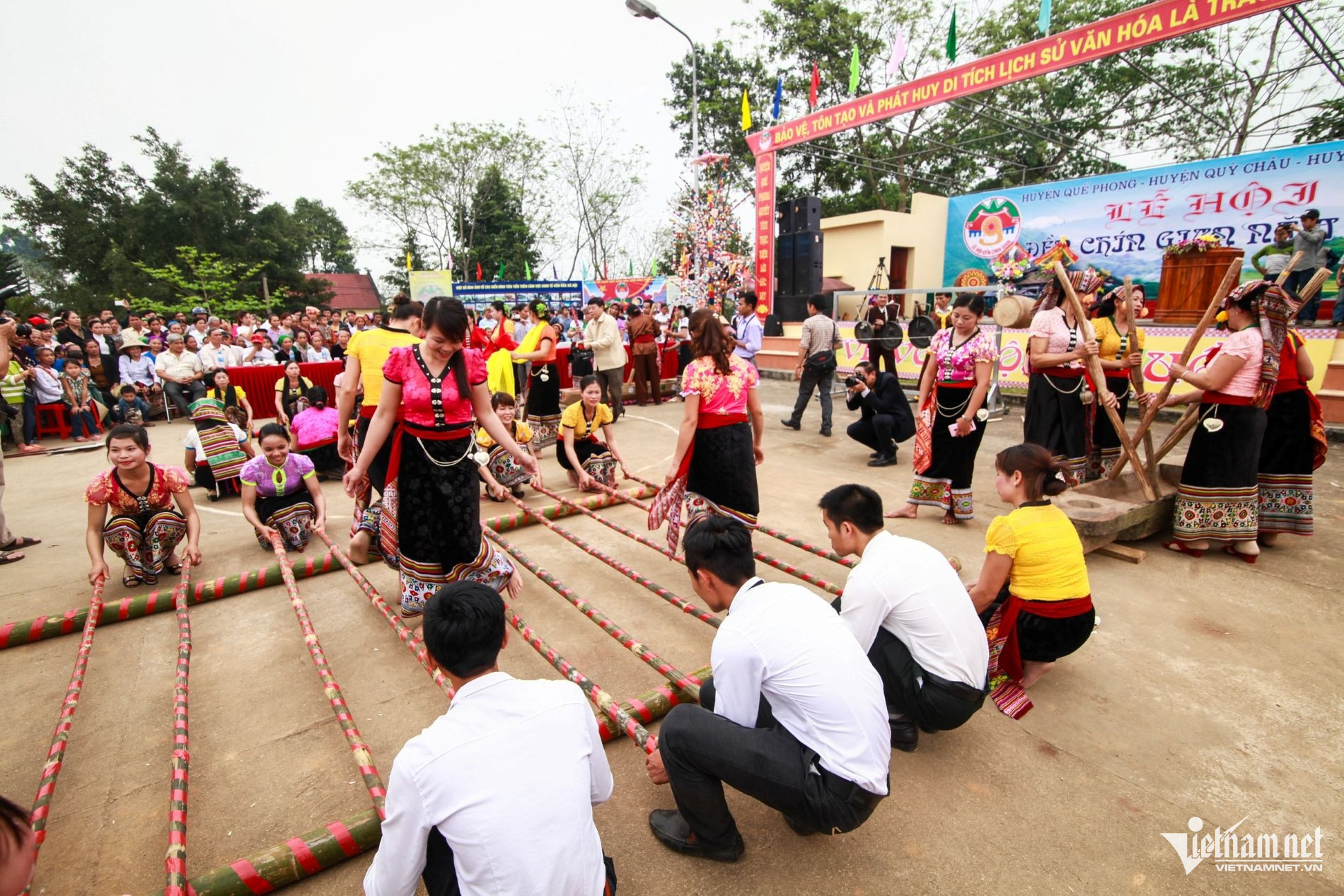
Folk culture is vividly expressed during the Den Chin Gian Festival. Photo: T.H
Every year during the second lunar month, Thai people from many areas return to offer rituals, participate in folk games, perform songs and dances, play gongs and engage in cultural exchanges. The festival is not only a spiritual event but also a major community gathering for the Thai people of the former Phu Quy region.
Notably, the recognition of the Thai writing system in Nghe An as National Intangible Cultural Heritage marked an important milestone in preserving ethnic identity.
For the Thai people, writing is not simply a communication tool but also a repository for folktales, epics, customary laws, folk songs and traditional ritual texts. The inclusion of the Thai Lai Tay script in Unicode 17.0 in 2025 has further opened opportunities for the script to enter the global digital space.
These cultural treasures do not exist as static museum artefacts but continue to live within the daily life of the community. That enduring presence is what gives Thai culture in western Nghe An its unique vitality.
Preserving cultural identity in modern life
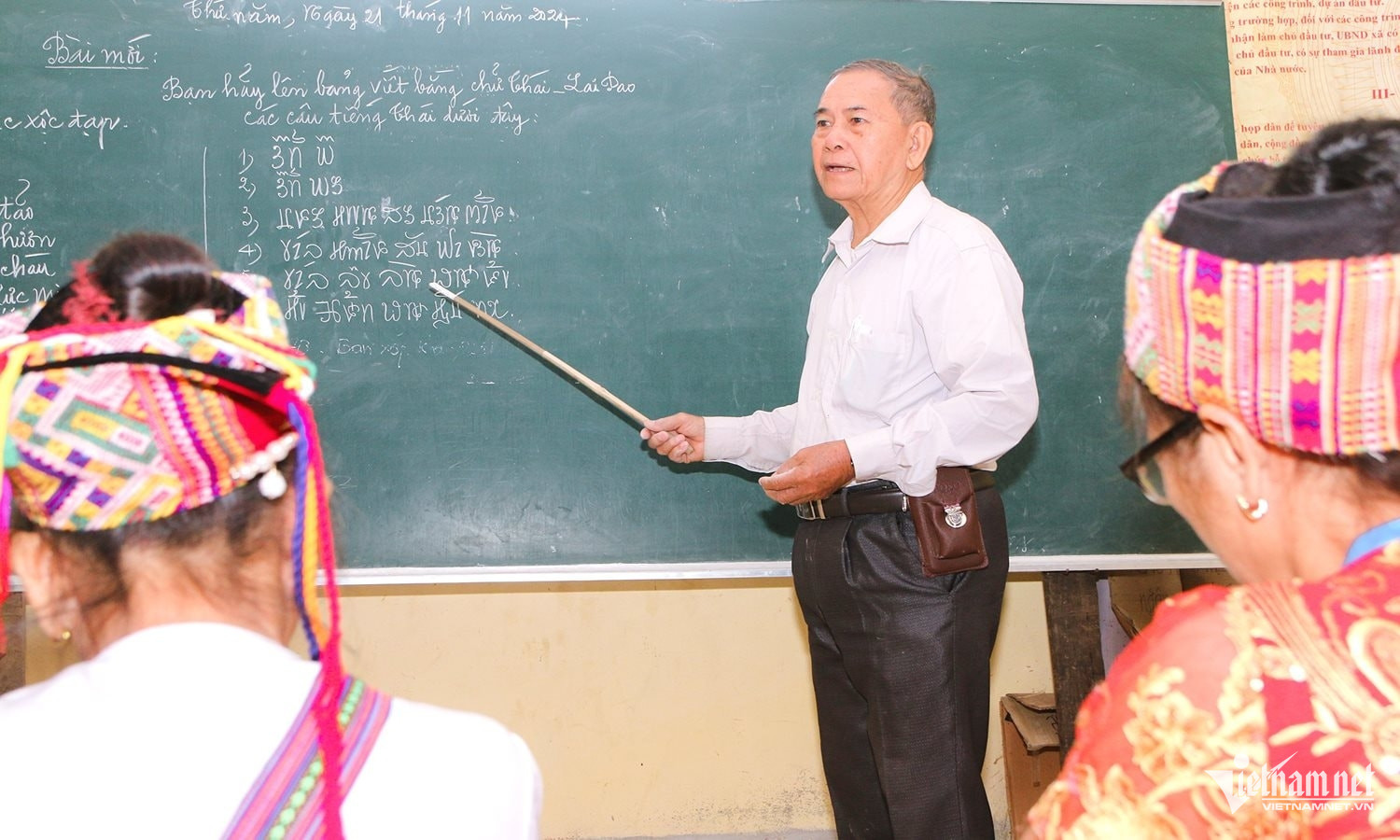
Vi Kham Mun has spent many years researching and compiling materials to teach the Thai Lai Pao language. Photo: Dinh Tuan
The four recognised heritage elements are not only a source of pride for the Thai people but also serve as the cultural identity of western Nghe An. However, traditional cultural values are facing the risk of fading away.
Many artisans with deep knowledge of rituals, weaving techniques and Thai script are now elderly, while younger generations are increasingly influenced by urbanisation, social media and labour migration.
As a result, many customs, folk songs and traditional crafts are gradually losing successors.
Vi Kham Mun from Xieng Lip Village in Yen Hoa Commune is among those who have devoted years to preserving the Thai Lai Pao script. According to him, teaching Thai writing is not only about literacy but also about passing down an entire cultural legacy to younger generations.
“As long as the Thai script survives, Thai culture survives,” he said.
Similarly, Sam Thi Bich, director of the Hoa Tien Brocade Craft Village Cooperative, said products such as blankets, clothing and scarves were once entirely handmade. But as the market economy expanded and industrial products became cheaper and more abundant, brocade weaving entered a period of decline.
In recent years, however, the craft has begun to revive with the participation of younger generations. One pioneer is Sam Thi Tinh, who brought the “Hoa Tien Brocade” brand to Hanoi and promoted products through e-commerce platforms, trade fairs and cultural exhibitions.
Experts say heritage preservation today cannot stop at recognition and celebration alone but requires a long-term strategy.
This includes expanding Thai language classes within communities, supporting artisans in passing down their skills, integrating Thai culture into schools and community tourism, building brands for brocade products, digitising folk cultural materials and creating modern spaces where younger generations can engage with traditional culture.
After all, heritage can only truly survive when communities continue to practise and use it in daily life.
As long as the sound of looms still echoes beneath stilt-house roofs, Thai language classes remain lit in remote villages and Lam melodies continue to resonate during festivals, the cultural lifeblood of the Thai people will continue flowing through generations.
And preserving that cultural soul will require many more hands and generations working together to ensure the deep cultural layers of western Nghe An endure over time.
Thanh Hai
.svg)
