 Vietnamnet.vn

 Podcast



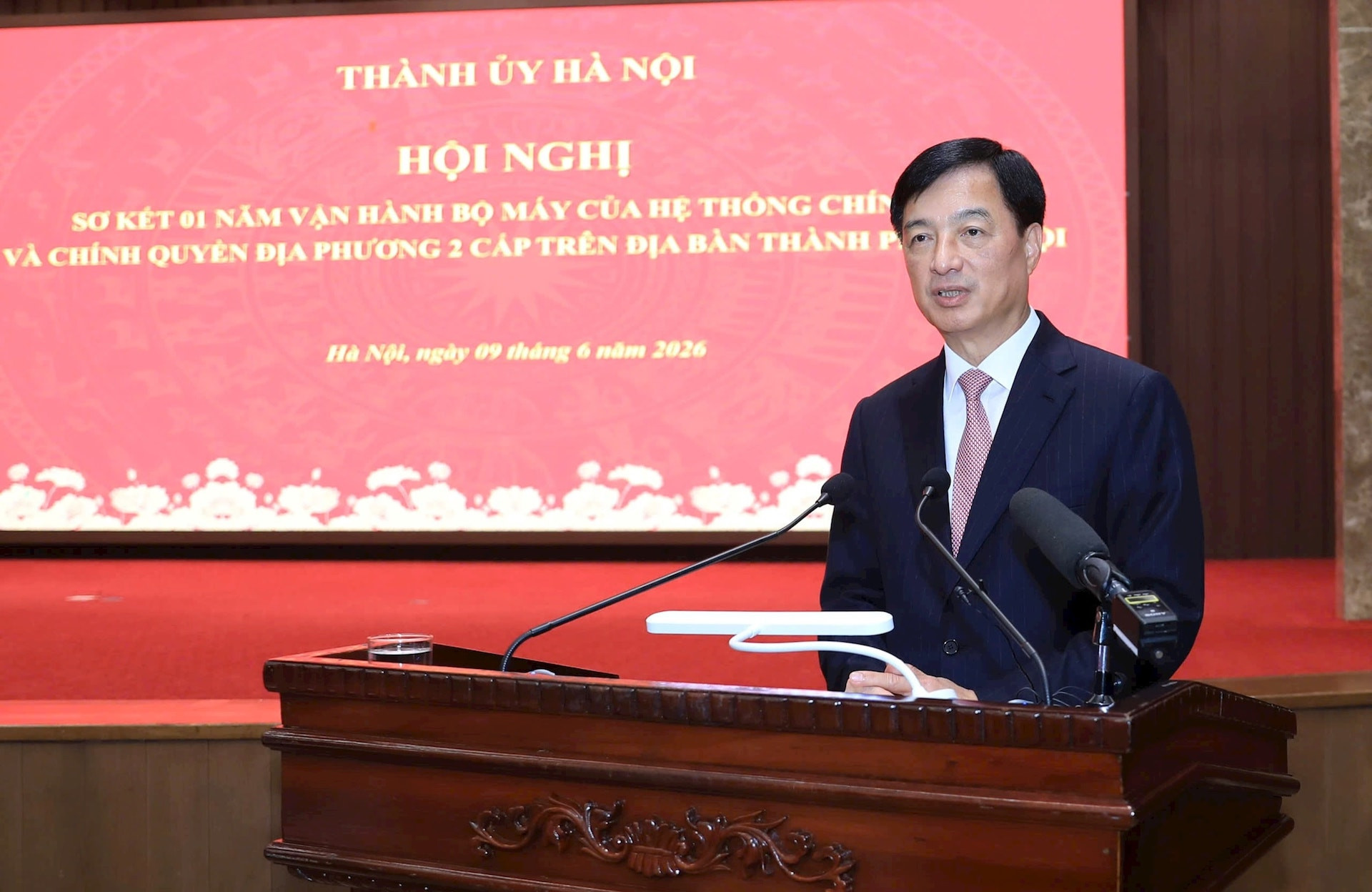
Speaking at a review conference marking one year of operating the political system in Hanoi, Ngoc said the city has stabilized its political system and two-tier governance, and
Hanoi's commune-level apparatus has deployed many important tasks that are unprecedented.
He said that within a short period, Hanoi has designed multiple mechanisms to propose that the National Assembly issue Resolution 258, deploy key development projects in the Capital, and prepare conditions to implement the Politburo’s Resolution 02 and the Law on the Capital after being passed by the National Assembly.
Hanoi has researched and built an urban development model under new circumstances, identifying immediate and long-term complex issues to accompany and resolve them. The city has also generated consensus among the people and the entire political system, contributing to maintaining social stability and promoting tourism and socio-economic development.
Ngoc believed that the commune-level political system has stabilized, the positions and tasks of cadres are clearly assigned, and responsibilities are tied to authority and resources, creating conditions for localities to handle practical emerging issues.
Along with these experiences, lessons regarding inspection and supervision work need to be added. With major, difficult tasks heavily decentralized to the grassroots level, inspection and supervision work do not aim at mere compliance, but also accompany localities, detecting good models to replicate and untangling arising difficulties and bottlenecks.
He requested Hanoi City to continue reviewing and clearly separating contents within the authority of the commune level, department/sector level, and city level. Hanoi needs to strongly promote local proactivity.
“Matters delegated to local authorities must be decided, implemented, and borne by local authorities themselves. Hanoi already has the Capital Law, special mechanisms, and is continuing to develop resolutions to exercise the powers entrusted to it,” he emphasized.
Many localities are studying Hanoi’s model to learn from its experience. Hanoi is viewed as one of the localities implementing the two-tier local government model in a relatively systematic, coordinated, and effective manner.
Ngoc also stressed that Hanoi must continue to play a pioneering role in reforming organizational structures and developing the two-tier political and local government model.
“Hanoi should continue making active contributions to the improvement of the national political system’s organizational model in the new era,” he said.
He suggested studying criteria and standards to ensure effective operational space for commune-level governments, including area, population size, economic conditions, culture, society, and national defense and security requirements that match Hanoi’s status as a special urban center.
One issue that Ngoc particularly emphasized was building a cadre corps capable of meeting the capital’s development requirements in the new era.
Hanoi should lead reforms in personnel management, developing officials with strong political resolve, innovative thinking, modern governance capabilities, and the courage to think independently, take action, and assume responsibility for the common good.
He noted that Hanoi is implementing performance evaluation mechanisms based on work outcomes through models such as OKRs and KPIs. Practical reviews indicate that officials can be divided into three groups: those who perform well, those who require further training and development, and those who fail to meet job requirements.
“Standards for officials at each position and level must be clearly defined. Officials who innovate, create, dare to think, dare to act, and dare to take responsibility should be protected and given opportunities to develop,” he said.
The ultimate goal of the two-tier local government model, he said, is to build an administration that is closer to the people, more proactive, and more effective. Hanoi should continue refining the functions and responsibilities of each level and sector, while improving decentralization mechanisms alongside stronger oversight to ensure power is properly controlled.
Nguyen Duy Ngoc supported the principle that “If local authorities can perform a task well, it should be entrusted to them,” thereby reducing intermediate layers and improving services for citizens and businesses.
Tran Thuong
.svg)
