 Vietnamnet.vn

 Podcast



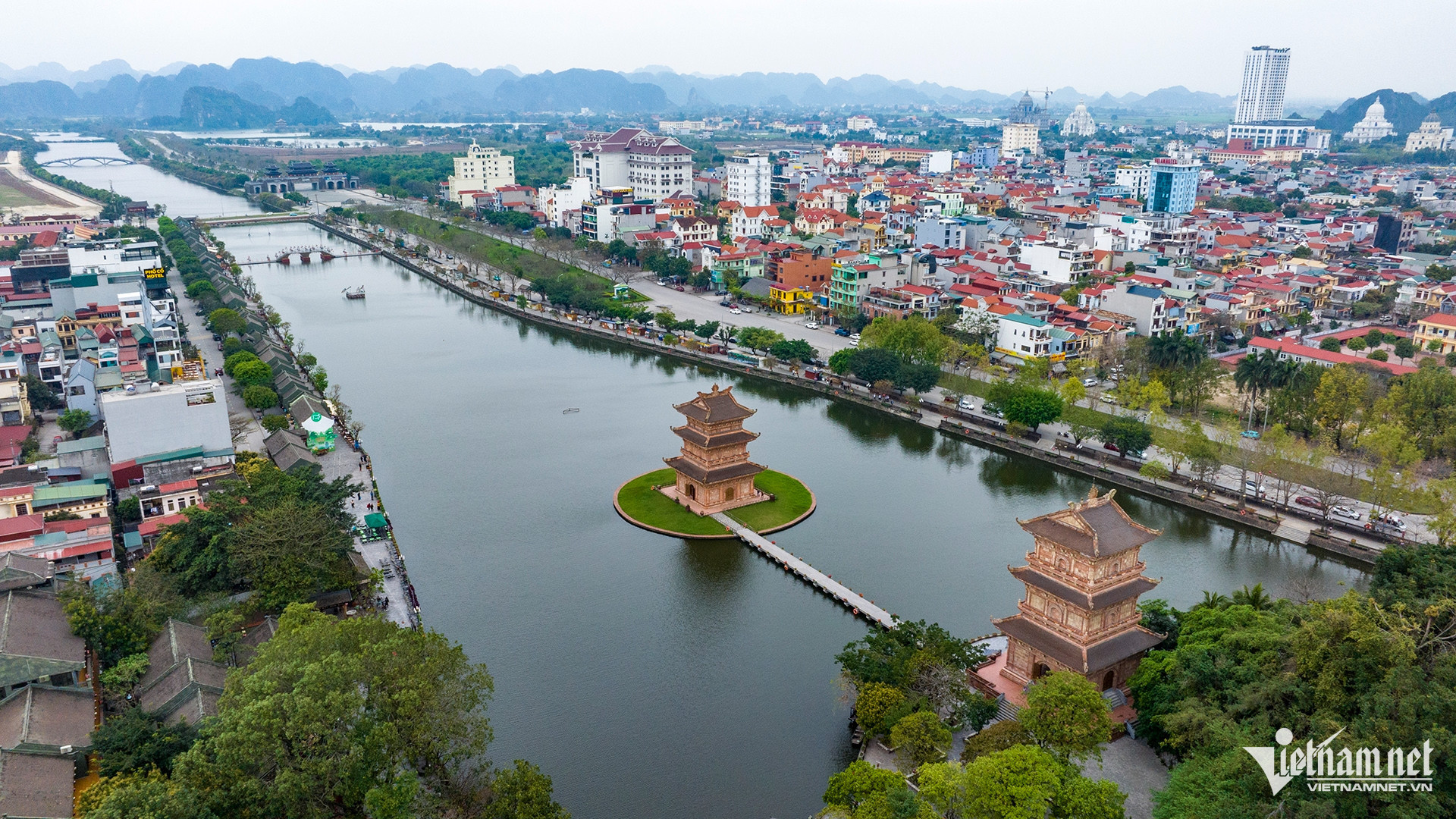
Deputy Prime Minister Nguyen Van Thang has instructed Ninh Binh Province to prepare a proposal for becoming a centrally governed city by 2030, with the defining characteristic of a millennium heritage city.
The Government Office issued a notice conveying the Deputy Prime Minister's conclusions following his working session with provincial leaders.
The Deputy Prime Minister instructed Ninh Binh to review its economic growth scenario for the second half of 2026 and implement comprehensive measures to achieve a gross regional domestic product (GRDP) growth rate of at least 11% for the year.
He noted that Ninh Binh has exceeded its projected growth target and should strive for an even stronger performance, contributing more to state budget revenue and the country's overall economic growth.
The Deputy Prime Minister also called for closer supervision of projects already under construction and urged authorities to proactively identify and resolve obstacles facing individual businesses and investment projects.
Ninh Binh was instructed to resolve long-delayed key projects involving land and planning issues so they can be put into operation as soon as possible to support economic growth.
The Deputy Prime Minister also directed the province to maximize all available resources for development while improving the efficiency of investment attraction and capital utilization, with greater emphasis on investment quality rather than quantity.
He instructed the province to effectively implement the adjusted Ninh Binh Provincial Master Plan for 2021-2030, with a vision to 2050. As part of this process, the province should prioritize preparing a proposal for Ninh Binh to become a centrally governed city by 2030, characterized as a millennium heritage city.
The province was also asked to study plans for additional key economic zones and marine economic areas, while prioritizing investment in high-speed rail, a deep-water seaport linked to a coastal urban area and tourist seaport, and digital infrastructure.
Ninh Binh should expand connections among the province's major cultural heritage areas, including Trang An - Bai Dinh - Tam Chuc and Hoa Lu - Phu Day - Tran Temple - Phat Diem - Xuan Thuy. Tourism development should be accompanied by environmental protection and the diversification of tourism products.
The province was also encouraged to strengthen links with growth centers and industrial localities across the Red River Delta through industry clusters and value chains.
In addition, Ninh Binh was instructed to address challenges in operating the two-tier local government system and review the feasibility of implementing decentralized responsibilities while aligning resource allocation and staffing with actual workloads and clearly defining individual accountability.
The Deputy Prime Minister assigned the province to develop and implement a competency framework for commune- and ward-level officials and complete a KPI-based evaluation system for assessing public officials.
Regarding administrative reform, he instructed the province to continue simplifying administrative procedures through data-driven governance, with the goal of reducing both processing times and compliance costs by 50% in 2026 compared with 2024.
The Deputy Prime Minister also urged Ninh Binh to continue effectively implementing its rental housing development program.
Tran Thuong
.svg)
