 Vietnamnet.vn

 Podcast



It was a day just before the 2026 Tet holiday. The front yard of Hoa’s family in Cay village was filled with various wooden goods; some products were polished, others were waiting to dry. Right next to the house was the production workshop, where wood cutting and planning machines ran without rest.
Hoa said: “As Tet approaches, there are many orders to fulfill, so everyone in the workshop has to work overtime.”
He invited visitors to taste his tea, harvested from the hill in front of the house.
“It sold out long ago at a high price. I only kept a little for personal use,” he said about the tea.
His achievement has been due to a new stable power source, Mr. Hoa said. Recalling the days before 2022, his family struggled to live with electricity shortages, even though the power lines ran right in front of the gate.
“Back then, we always had to time our cooking. Some days the voltage was so weak that at mealtime, when we opened the rice cooker, it was still just rice and water: it simply wouldn’t cook. As for electric fans, they barely worked,” he recalled.
During peak hours, even energy-saving LED bulbs flickered and failed to provide steady light for children to study.
Electricity was insufficient even for daily living, let alone for production. As a result, he and his wife had to leave home year-round to seek temporary work elsewhere, living an unstable life away from their hometown.
That changed when the commune received a new and stable power supply.
“Son Duong Power invested in and installed a new transformer station at the entrance of the village. Since then, the power has been stable. People can use televisions, refrigerators, air conditioners and other appliances without worry,” he said.
Reliable electricity has enabled Hoa’s family to organize production, invest in machinery, open a traditional woodworking workshop, and create jobs for local workers, something he could not have imagined three years ago.
Each worker at the workshop earns VND350,000 per day. In 2025, Hoa estimates his income at nearly VND200 million.
In addition, after installing an automatic irrigation system, the family’s tea hill has seen productivity increase two to three times compared to previous years. The quality of the tea has also improved significantly, allowing for higher selling prices.
Rural economy grows
Electricity is a top prerequisite for economic development. Since stable power has been ensured, Hoa’s family and many other households in Minh Thanh commune have returned to develop their local economies instead of seeking work far from home.
Do Truong Giang, Deputy Director of Tuyen Quang Power Company, said that in recent years the company has worked with provincial authorities to implement rural development programs, eliminate electricity “blind spots,” and ensure stable, quality power supply for residents’ daily life and production activities.
Electricity of Vietnam (EVN) and local power units have invested in many power generation and transmission projects to ensure supply for Tuyen Quang province.
“Annually, we invest VND700 million-1 trillion in power sources and grids, equivalent to about 60-70 projects to supply power to villages and improve voltage quality,” Giang said.
Notably, in Son Duong, during the new rural construction phase (2022 - 2025), Tuyen Quang Power developed 15-20 projects worth about VND200 billion each year to bring strong power to every village.
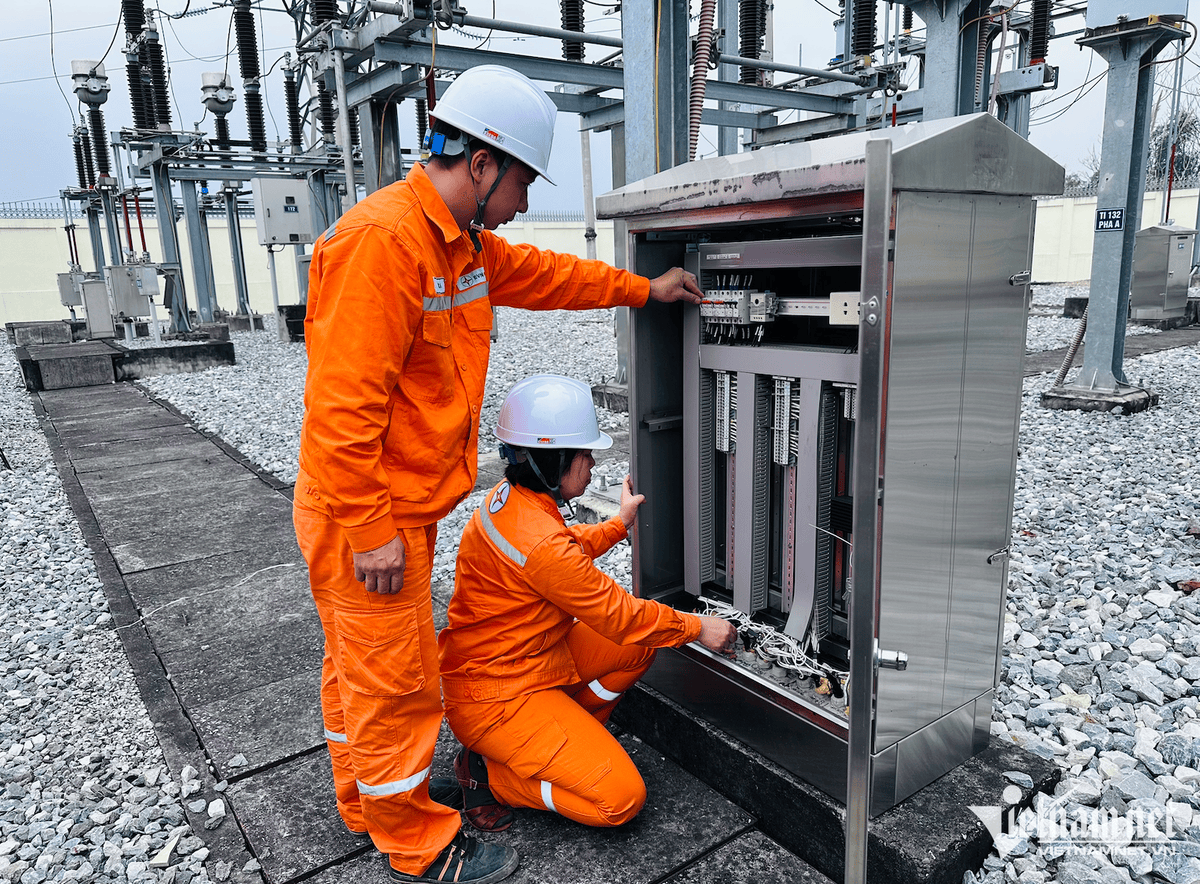
Tuyen Quang Power Company is in charge of developing power generation and transmission line to ensure power supply to the high land.
Nguyen Thị Hue, a worker at the company, told VietNamNet that the 2026 Tet holiday is more special for her, because it was the last Tet shift before her retirement.
“In the past, Tet shifts were much harder than now because there were no Mobile Operation Teams and no remote control centers. Now, with the remote control center, mobile duty is less strenuous,” she said.
Tam An
.svg)
