 Vietnamnet.vn

 Podcast



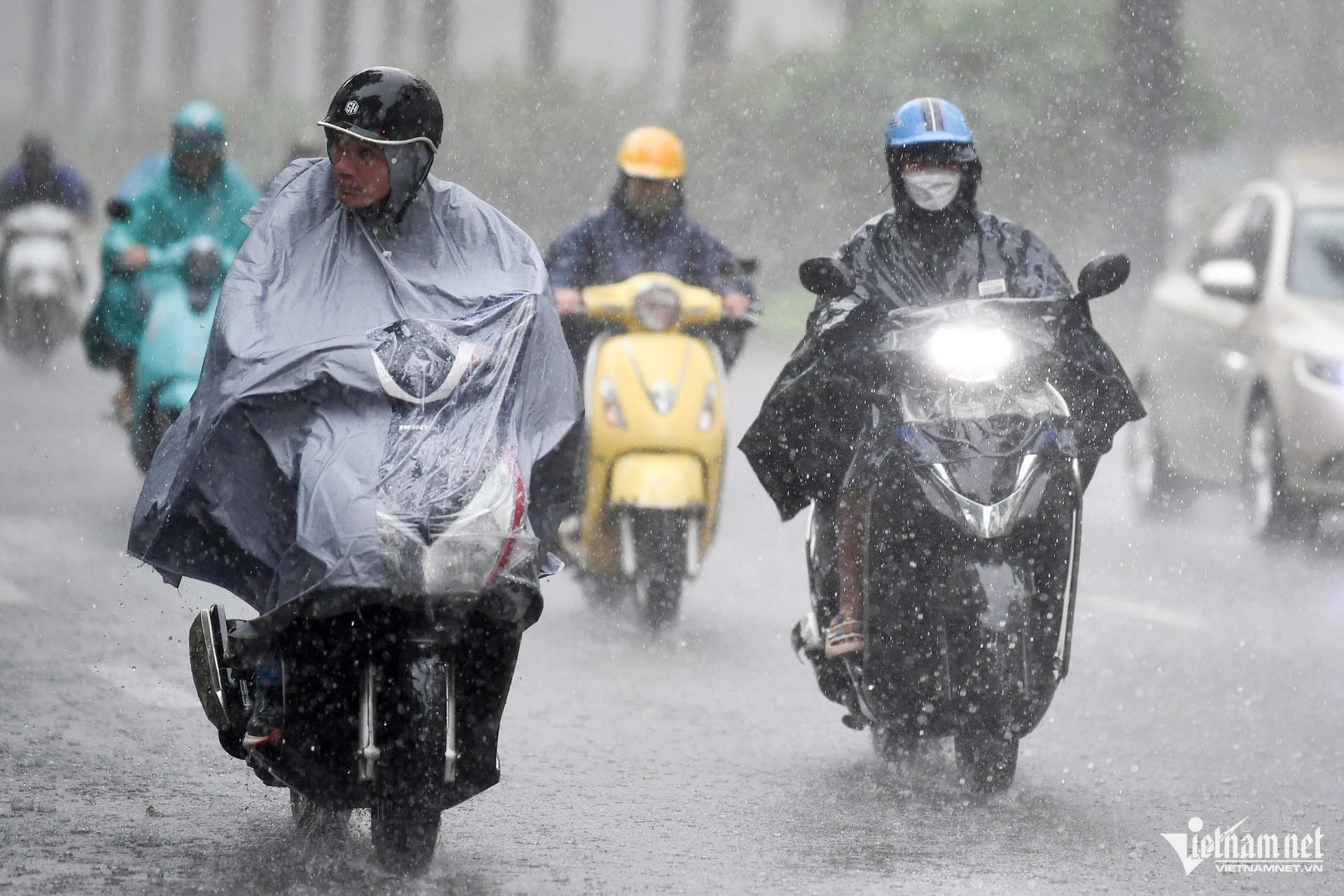
Weather forecaster Le Thi Hong Van of the center's Weather Forecast Department said the rainfall event will begin on the afternoon of August 4 and continue through August 6, affecting most northern provinces as well as the area stretching from Thanh Hoa to Ha Tinh.
Rainfall could exceed 300 mm
Total rainfall during the three-day period is forecast to reach 100-200 mm across much of the affected region, while isolated locations may receive more than 300 mm.
The heaviest downpours are expected during the late afternoon, evening, overnight and early morning hours.
Forecast rainfall includes:
Afternoon of August 4 through August 5: 40-80 mm, with isolated totals above 130 mm and rainfall intensity exceeding 100 mm within three hours.
Night of August 5 through August 6: 60-120 mm, with isolated areas receiving more than 170 mm.
Photo caption: Heavy rain is forecast to affect large parts of northern Vietnam. Photo: Hoang Minh.
Ten provinces face the highest risk
Forecasters identified 10 provinces and municipalities as having the highest likelihood of experiencing heavy rainfall: Quang Ninh, Hai Phong, Ninh Binh, Phu Tho, Son La, Dien Bien, Lai Chau, Tuyen Quang, Thanh Hoa, Nghe An.
Before the main weather system arrives, scattered thunderstorms and locally heavy rain are expected from the evening of August 3 through the morning of August 4 across northern Vietnam, Thanh Hoa and Nghe An.
Rainfall during that period is forecast to range from 10-35 mm, although some locations could receive more than 100 mm, particularly in Phu Tho, Son La, Dien Bien, Lai Chau, Lao Cai and Tuyen Quang.
Flooding and landslide threats
The national weather agency warned that thunderstorms may be accompanied by lightning, hail, strong wind gusts and localized severe weather.
Intense rainfall over short periods could trigger urban flooding in low-lying districts, industrial zones and densely populated areas.
Mountainous communities have also been urged to remain alert for flash floods along small rivers and streams, as well as landslides on steep slopes.
Bao Anh
.svg)
