 Vietnamnet.vn

 Podcast



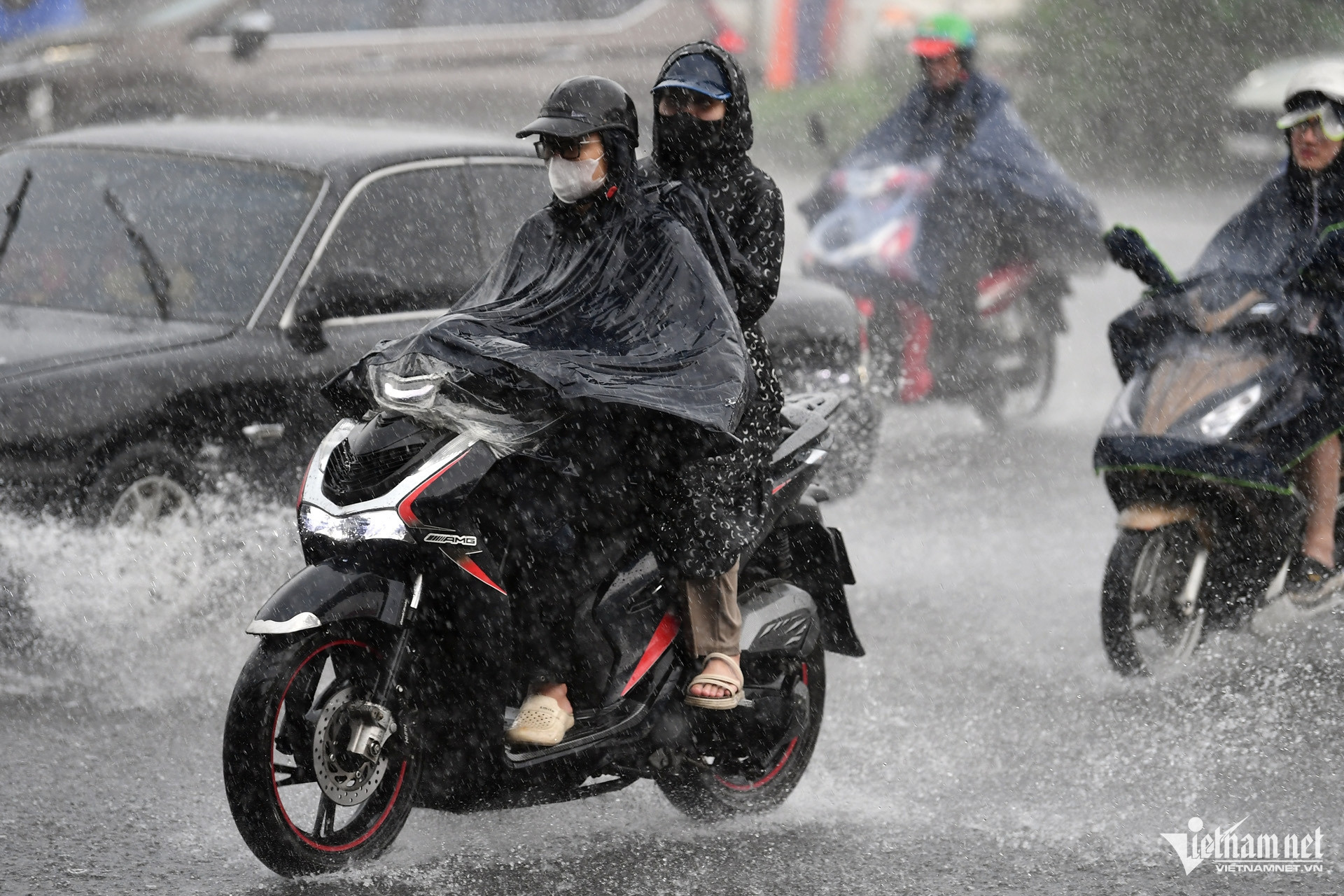
According to the National Center for Hydro-Meteorological Forecasting, as of April 23, cold air has affected the northeastern region and Thanh Hoa. Across the North, showers and thunderstorms have been recorded, with some areas experiencing heavy to very heavy rainfall. Temperatures have dropped by around 6-9 degrees Celsius. In the Gulf of Tonkin, northeast winds are at level 5, gusting to level 6; inland winds are at level 2-3, increasing to level 3-4 in coastal areas.
Forecasts suggest that by this evening and overnight, the cold air will continue to influence other parts of the north-central region and some areas in the northwest.
The northeastern region and north-central provinces are experiencing cooler conditions. The lowest temperatures during this cold spell are expected to range from 20-23 degrees Celsius in the northeast, dropping below 20 degrees in mountainous areas, and from 21-24 degrees in the north-central region.
In Hanoi, from this evening through the morning of April 24, there will be scattered showers and thunderstorms, with generally cool weather. The lowest temperatures are expected to range from 21-23 degrees Celsius.
Heavy rain spreads into central regions
Due to the influence of weak cold air combined with upper-level wind convergence, the northern and north-central regions have experienced showers and scattered thunderstorms, with localized heavy to very heavy rainfall. Recorded rainfall between 7am and 3pm reached over 90mm in some locations, including Phong Coc (Quang Ninh) at 160mm, Dong Son (Ninh Binh) at 128.4mm, Tan Phong (Hai Phong) at 122.4mm, and Ha Trung (Thanh Hoa) at 93.4mm.
Meteorological authorities reported that from this evening into the night, the northern region will continue to see scattered showers and thunderstorms, with rainfall ranging from 10-20mm and some areas exceeding 50mm.
From this evening through April 24, the north-central region will experience moderate rain and scattered thunderstorms, with rainfall between 20-40mm and some locations exceeding 90mm.
From this evening through April 25, thunderstorms are expected to extend into the central central region, with rainfall of 10-30mm per 24 hours and localized totals exceeding 70mm, mainly in the late afternoon and evening.
Notably, the interaction between the cold air mass and the hot, humid air mass over the northern and central regions is expected to generate strong convection, increasing the risk of tornadoes, hail, and strong gusts through April 24.
High-risk areas for extreme weather include the midland and mountainous regions in the North, as well as western mountainous areas of provinces from Thanh Hoa to Hue.
Two more rain spells expected before month’s end
Looking further ahead, meteorological authorities say that after the current rain spell, rainfall in the North will decrease from midday tomorrow.
However, from April 26 to 28, the northern region is expected to see another round of scattered showers and thunderstorms. This will be followed by additional rain from April 29 to 30, with localized heavy rainfall possible. From May 1 to 3, there may still be scattered showers and thunderstorms, with sunny conditions during midday and afternoon.
Meanwhile, the south-central region, Central Highlands, and southern Vietnam will continue to experience sunny conditions, with some areas facing heat. Showers and thunderstorms are expected in the late afternoon and evening. From April 25 in the Central Highlands and from April 28 in the South, scattered evening storms are likely.
From April 30 to May 3, central and southern regions will see occasional evening showers and thunderstorms, while daytime conditions remain sunny, with some areas experiencing heat.
Meteorological authorities warn that thunderstorms during the seasonal transition often come with dangerous phenomena such as tornadoes, lightning, hail, and strong winds.
Bao Anh
.svg)
