 Vietnamnet.vn

 Podcast



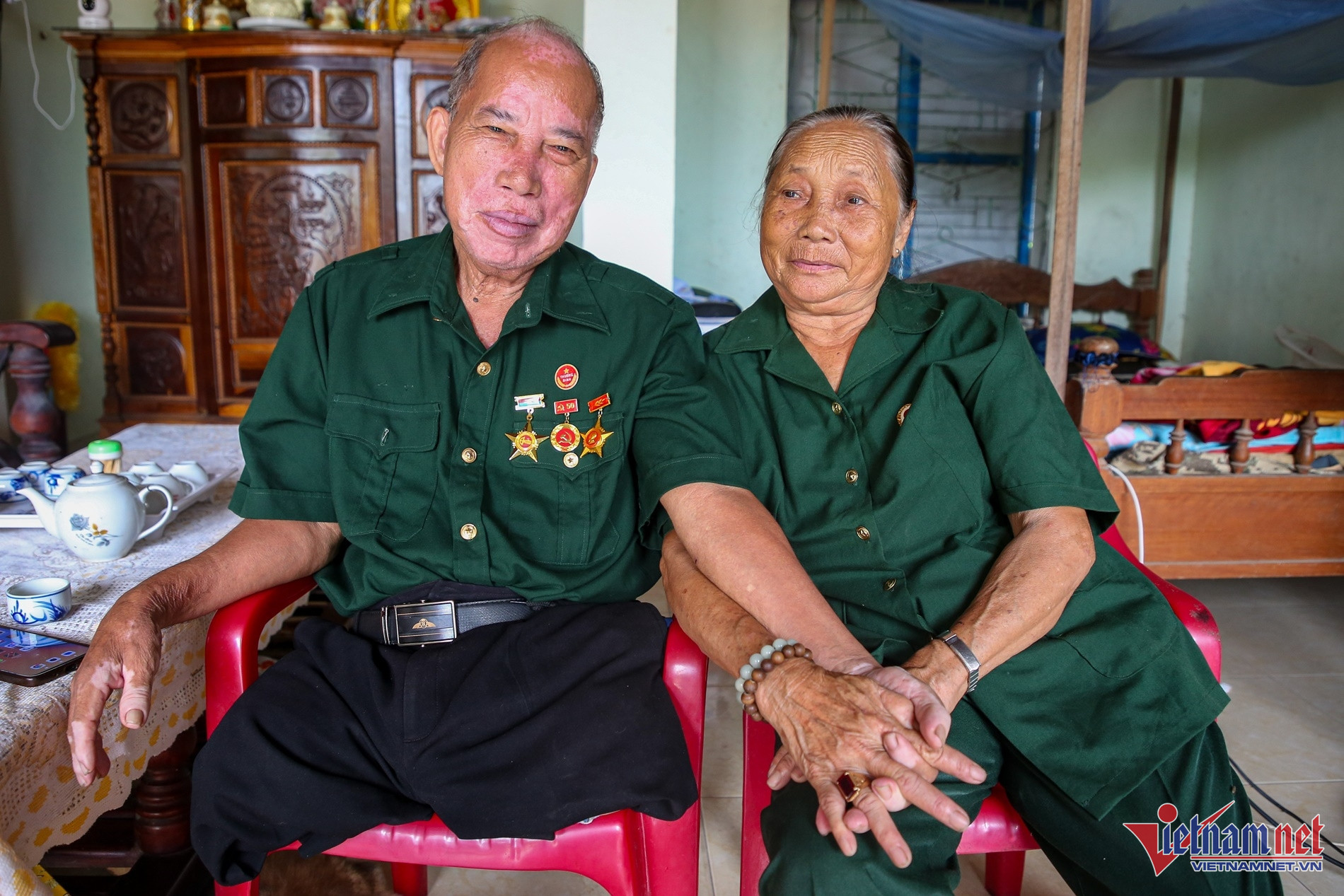
In the waning days of summer, the sweltering Central Vietnam weather rekindled the pain of war wounds on veteran Huynh Duc Nua, born 1950, residing in Dien Ban Dong ward, Da Nang City.
Each time her husband tossed and turned in pain, Cao Thi Hoa, born 1947, his devoted partner of nearly half a century, patiently sat by his side, massaging his amputated legs and feeding him spoonfuls of thin porridge.
In their modest single-story home, the image of the old soldier enduring pain and his devoted wife quietly caring for him has become a familiar sight. All people who witness it can’t hold back their emotions.
Few know that behind the gentle smile of the legless soldier and the quiet devotion of his wife lies a love story ignited amid the smoke and fire of war.
Nua joined the guerrillas at 14, later assigned to the District 3 special forces unit in Da Nang. Hoa, a girl from Duy Xuyen, served as a nurse in Unit 70C, Quang Da Front.
In late 1973, while receiving treatment in the North, Nua met Hoa. Sharing ideals and hometowns, their love blossomed naturally.
“Back then, we made a simple promise: If one fell, the other would visit the grave to light incense; if both survived, no matter the distance between the South and the North, we would find each other,” Nua recalled.
On the night of March 10, 1975, during an attack to the Phuoc Lam base (Tien Phuoc, former Quang Nam), Nua was injured by a mine, requiring the amputation of both legs. The devastating news reached Hoa, but as she was serving in a campaign, she couldn’t visit Nua.
After the country was unified, she searched through hospitals across central Vietnam. Upon learning he had been transferred to the North, she cycled nearly 50 km to Dien Ngoc to meet Nua’s parents and ask information about him, but found no clues.
Knowing Hoa was still tirelessly searching for him, Nua, feeling burdened by his disability, wrote her a letter encouraging her to find new happiness. But he failed to do this. The letter only deepened her belief that nothing could change the love they shared.
Hardship, happiness in old age
In late 1976, after countless trials, their simple wedding was held. Despite criticism, Hoa stood by her husband, returned from military services to shoulder household responsibilities and support him.
Their early years were marked by scarcity. On an old wheelchair, Nua took their children to school daily, helping his wife earn their living. The single-story home provided by the government in 1986 became a haven for their laughter and tears.
The couple has three children, two daughters and one son. Tragedy struck when their only son, affected by chemical toxins, fell chronically ill, was abandoned by his wife, and left two young children. The elderly couple took on the burden of raising their grandchildren.
“There were moments we thought we couldn’t go on, but looking at our innocent grandchildren, we told ourselves to persevere. We survived war and bombs; we could overcome everyday hardships,” Hoa shared.
Time rewarded their efforts. Now, their grandchildren are grown. One is in university, the other is a chef, giving the couple renewed strength to live joyfully and healthily.
Beyond their family, the couple devoted themselves to their community.
Hoa served for years as head of the local Women’s Union; Nua, as deputy head of the Veterans’ Association, tirelessly participates in recovering comrades’ remains and delivers meeting notices door-to-door on his three-wheeled motorbike.
To their neighbors, they are a shining example of the spirit: “Disabled but not defeated.”
Over half a century, Nua has been a Party member for 54 years, Hoa for 52. Numerous medals and commendations honor their lifetime of sacrifice and contribution.
From a promise made amid bombs to a peaceful old age, their love has remained unchanged for more than 50 years.
For Nua and Hoa, happiness is not just walking together through storms, but continuing to serve, living like a small flame - warm, resilient, and shining bright in everyday life.
Ha Nam
.svg)
