 Vietnamnet.vn

 Podcast



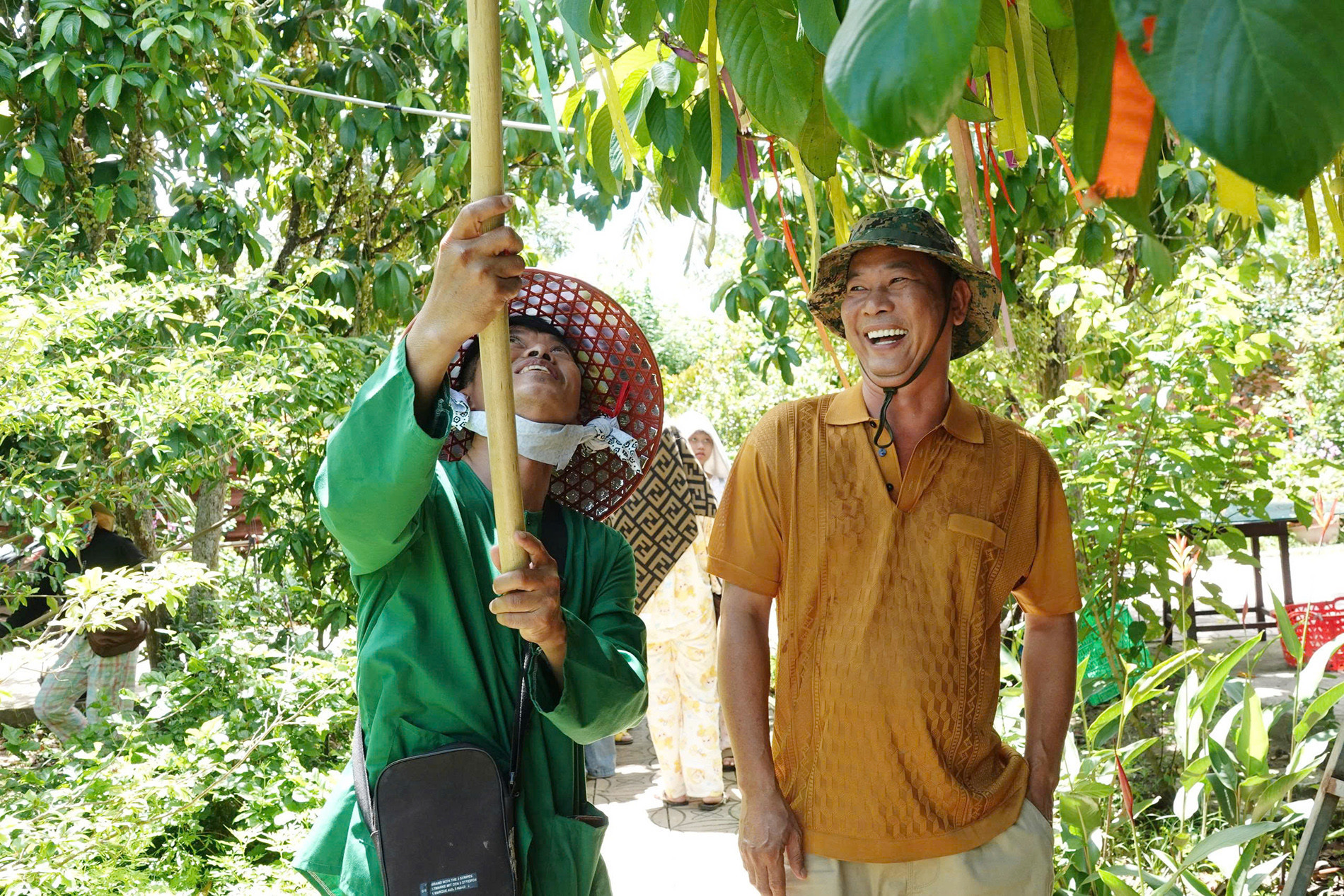
Nestled among the cool, green canals of Nhon Ai commune in Can Tho City, Khoi's eco-orchard spanning over 3 hectares is packed with visitors, particularly during weekends. Beyond sightseeing, many visitors get to hand-pick fruits, enjoy them right in the orchard, and buy them to take home.
Khoi, 51, has dedicated more than 15 years to fruit trees. In 2010, he invested in growing durian, later expanding the area and cultivating specialty crops of the Mekong Delta.
The garden now has nearly 300 durian trees of different varieties, from Ri6, Musang King, to Monthong; more than 100 star apple trees; over 100 rambutan trees; plus many others like mangosteen, Ha Chau strawberry, jackfruit, mango and longan.
When the fruit trees grew and created a cool green space, Khoi realized the garden could serve not only production but also become an experience spot for tourists.
In 2023, he began investing in eco-tourism. After nearly two years of infrastructure development, by 2025 the garden had stable harvests and became a familiar destination for many tour groups.
The difference is that the garden does not charge an entrance fee. Visitors are guided on tours, introduced to each type of tree, taught how to choose good fruit, then pick and enjoy it on the spot.
On peak days, the place welcomes more than 500 visitors, mainly tour groups from HCMC, Da Nang, and other localities. Thanks to direct sales to visitors, on peak days the garden can sell up to a ton of fruit.
Amid times when durian prices on the market plunged, Khoi said the garden’s product still holds at about 60,000 VND per kg.
“Durian here is grown organically and only harvested when ripe on the tree, so the flavor is different. I mainly sell to visiting tourists and customers who order via social media,” he said.
He said that pursuing clean farming means both costs and care are higher. The family does not use herbicides but clears weeds manually. Fruit is bagged to limit pests and reduce dependence on pesticides.
“Farming clean is harder and more costly, but in return the fruit quality is good and we gain customer trust. When customers are satisfied, they come back and refer friends,” he shared.
Besides durian, intercropping many types of fruit trees also helps the garden reduce seasonal risk and have products to serve customers almost year-round.
Experiencing fruit picking at the garden for the first time, Tran Thi Thanh Huyen, 38, from HCMC, said the trip felt completely different from buying fruit at a supermarket.
“I got to pick fruit myself and hear the owner share the care process, so it was very interesting. Knowing exactly how the fruit is grown makes me feel more assured when enjoying it,” she said.
Traveling with his family, Nguyen Minh Duc, 42, HCMC, said the garden is especially suitable for city children.
“My kids have few chances to engage with agriculture. Coming here, they get to pick fruit, feed fish, and try making grilled snakehead fish. These are practical lessons that books can hardly provide,” he shared.
Besides touring the orchard, visitors can also enjoy countryside dishes and experience the distinctive garden landscape of the river region.
According to Khoi, the garden will continue to invest in infrastructure, make paths more convenient so elderly people or wheelchair users can enter the orchard to experience it, and add more rest huts for guests.
In addition, selling via TikTok, Facebook, and YouTube helps the garden’s produce reach more customers, expanding outlets amid a volatile market.
He said that combining agricultural production with tourism not only raises the value of fruit but also creates more jobs, contributes to sustainable economic development, and promotes the special features of Can Tho’s orchards.
Hoai Thanh
.svg)
