 Vietnamnet.vn

 Podcast



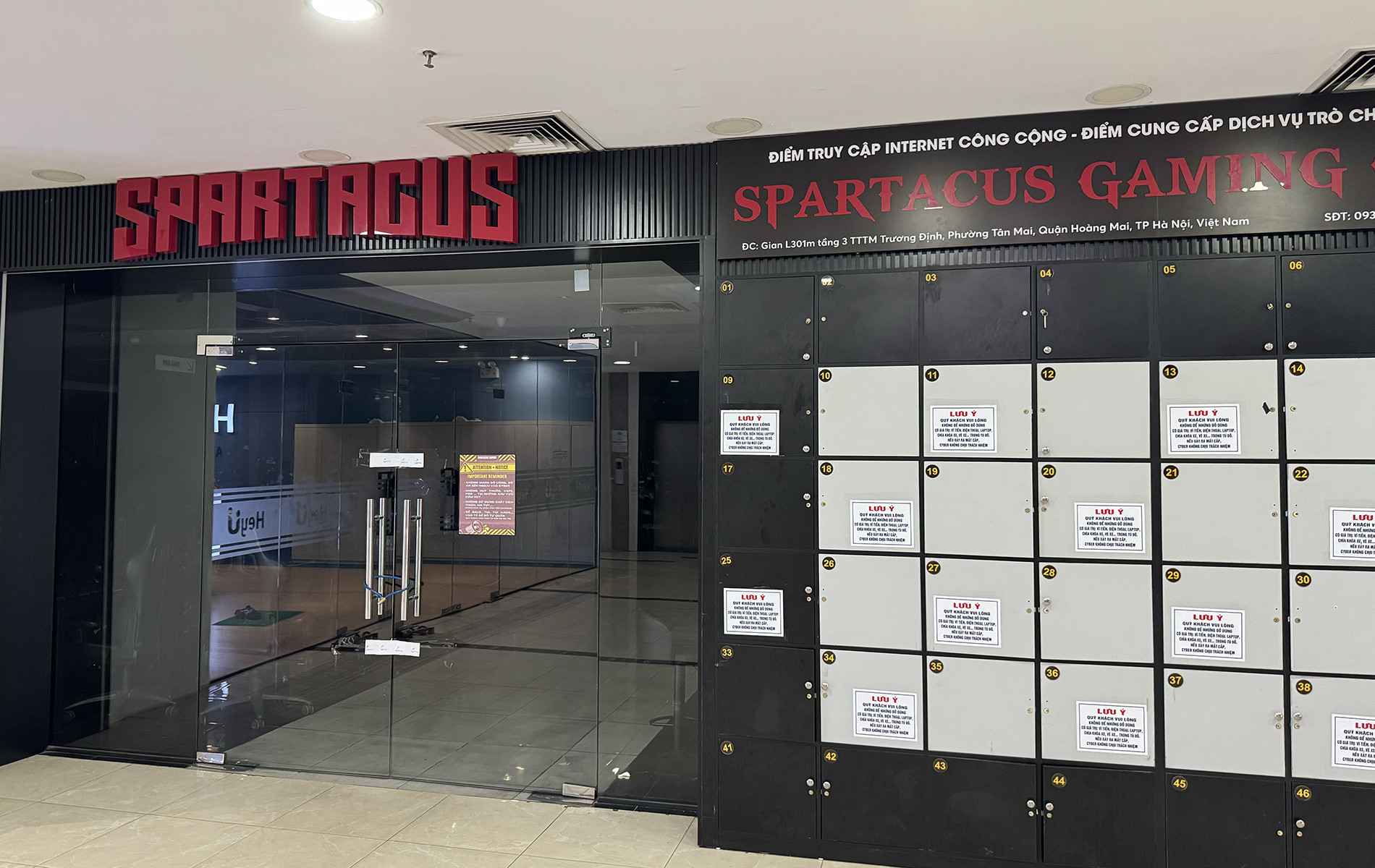
Just a few years ago, large gaming cafés were packed every night. Venues equipped with hundreds of high-performance PCs served not only as places to play games but also as hosts for esports tournaments. Today, however, that picture has changed dramatically.
A survey of areas once considered Hanoi's gaming café hubs, including Bach Khoa, Dong Da and Cau Giay, found that many internet cafés and gaming centers that previously operated around the clock have now shut their doors.
Spartacus Gaming Center, formerly one of the largest gaming cafés in southern Hanoi, has closed its venue on the third floor of Truong Dinh Plaza in Hoang Mai. The once-busy venue now sits empty, with no sign of the crowds of gamers that used to fill the space.
At Vikings Gaming on Doan Tran Nghiep Street, the shutters remain closed, with no staff or customers in sight. According to the company's website, Vikings Gaming once operated 15 locations, including eight in Hanoi. Several of its other branches have also ceased operations.
Gaming X, whose venue at 139 Cau Giay Street was once a popular destination for gamers, has also closed.
The downturn is not limited to major chains. Many smaller internet cafés with 30 to 50 PCs have also shut down, putting their computers, monitors and other equipment up for liquidation.
Under current regulations, public electronic gaming services are classified as a conditional business. In recent months, authorities have stepped up inspections to ensure compliance with fire safety requirements, operating licenses, permitted business hours and public security regulations.
The tighter enforcement has strengthened oversight of the sector while forcing many operators that fail to meet regulatory requirements to suspend or permanently cease operations.
Since July 1, 2026, public gaming cafés have only been allowed to operate between 8 am and 10 pm each day. Businesses that remain open or serve customers outside those hours face fines ranging from VND10 million to VND15 million.
Industry enters difficult period
Many gaming café owners say the new operating-hour restrictions are only part of the problem. The bigger challenge is that investment costs continue to rise while customer numbers keep falling.
Nguyen Xuan Duong, a longtime gaming café operator, said the industry is currently facing its toughest period. In the past, owners could recover their investment relatively quickly simply by purchasing gaming PCs. Today, they must cope with rising costs, stricter regulations and changing consumer demand.
He said hourly gaming fees are no longer the primary source of profit. After paying for electricity, internet services, staff wages and equipment depreciation, little profit remains.
Previously, overnight customers, especially at cafés that previously operated 24 hours a day, once accounted for a significant share of total revenue. With late-night gaming no longer permitted, profits have fallen sharply.
Meanwhile, monthly rents still range from tens to hundreds of millions of Vietnamese dong, and operators must continually upgrade their hardware to meet the requirements of newly released games.
Gamers' habits have also changed considerably. The widespread availability of personal gaming PCs, high-speed internet and online multiplayer platforms allows many players to enjoy games from home. At the same time, the rapid growth of mobile gaming has significantly reduced demand for traditional gaming cafés, with many popular games now optimized for smartphones.
Luu Duc Anh from Ninh Binh closed his gaming café late last year. He said many people assume that daily revenue equals profit, when in reality much of it goes toward equipment depreciation. Daytime revenue is relatively low because most customers are at school or work. Exiting the business early allowed him to avoid heavy capital investment, legal risks and steadily rising operating costs.
He believes the contraction of the gaming café market is part of a trend already seen in many developed countries. Small and medium-sized gaming cafés are likely to gradually disappear, leaving room for two business models with better long-term prospects: integrated entertainment complexes combining esports, food and beverage services, and cafés; and premium gaming venues targeting customers willing to pay higher prices.
Within gaming café communities, some operators have explored concepts such as gaming hotels, sleepboxes equipped with gaming PCs, or repurposing their computer systems for other commercial uses. However, these ideas face significant hurdles, including legal restrictions, high investment costs and uncertain commercial viability.
Duy Anh
.svg)
