 Vietnamnet.vn

 Podcast



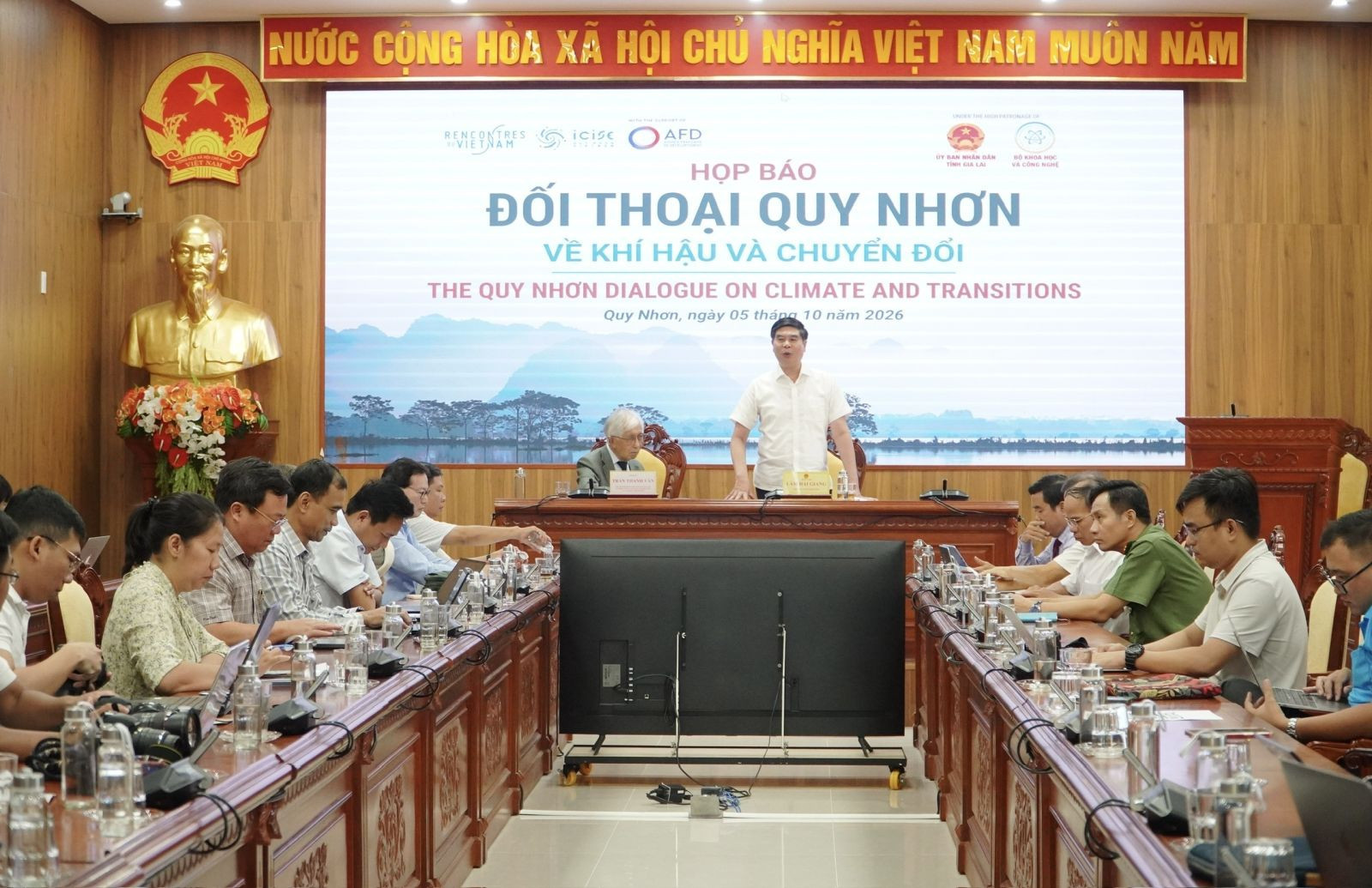
The Quy Nhon Dialogue on Climate and Transition will take place on October 10-11 at the International Centre for Interdisciplinary Science and Education (ICISE) in Gia Lai province.
The event is organized by the Rencontres du Vietnam Association and ICISE, with support from the French Development Agency (AFD) and under the auspices of Vietnam's Ministry of Science and Technology and the Gia Lai provincial People's Committee.
Held for the first time, the event is expected to bring together more than 100 senior participants, including representatives of policymaking agencies, international organizations, financial institutions and businesses, as well as scientists.
The 2026 dialogue has been designated the inaugural "Zero Version," intended to lay the groundwork for an annual event in the years ahead.
Connecting science, policy and finance
According to the organizers, discussions will focus on climate science, energy security, decarbonization, transition finance, value chains, climate risks and resilience, as well as economic policy, investment and related financial instruments.
The sessions are designed to connect science, policymaking, finance and implementation, with the aim of identifying new opportunities for cooperation in responding to climate change.
Speaking at a press conference on the afternoon of October 5, Gia Lai Vice Chairman Lam Hai Giang said the event was significant not only for the province but also at the national and Southeast Asian levels, reflecting Vietnam's commitment to addressing climate change.
Giang said that despite being an inaugural pilot edition, the event had received support from the government and central ministries and agencies. This provides a foundation for refining the model and eventually developing an annual dialogue with a voice in the region.
For Gia Lai, the event provides an opportunity to gain access to scientific evidence and practical experience, attract resources and expand international cooperation for sustainable development and climate action.
It is also expected to strengthen connections among Vietnam, Southeast Asia and international partners on climate, finance and transition issues.
Building a voice from Quy Nhon
Professor Tran Thanh Van, president of the Rencontres du Vietnam Association and director of ICISE, said the initiative builds on an ambition the association and ICISE have pursued for nearly 20 years: developing Quy Nhon into a meeting place where international scientists can exchange ideas.
According to Van, the growing challenges posed by climate change mean that dialogue must extend beyond the scientific community to connect science with policymaking, finance, business and society.
Climate change, he said, is no longer solely an environmental issue. It is directly connected with energy, food, employment, health and people's daily lives.
The Quy Nhon Dialogue on Climate and Transition aims to build three bridges: between science and policy; between climate, finance and development; and toward a stronger Southeast Asian voice in discussions on climate change.
"We hope that a constructive voice from Vietnam and Southeast Asia will emerge from Quy Nhon, grounded in science, centered on people and oriented toward action," Van said.
According to the ICISE director, the dialogue's success will not be measured by whether every problem can be solved in two days, but by its ability to generate new ideas, partnerships and alliances in areas such as climate finance, adaptation, energy, technology and research.
Binh An
.svg)
