 Vietnamnet.vn

 Podcast



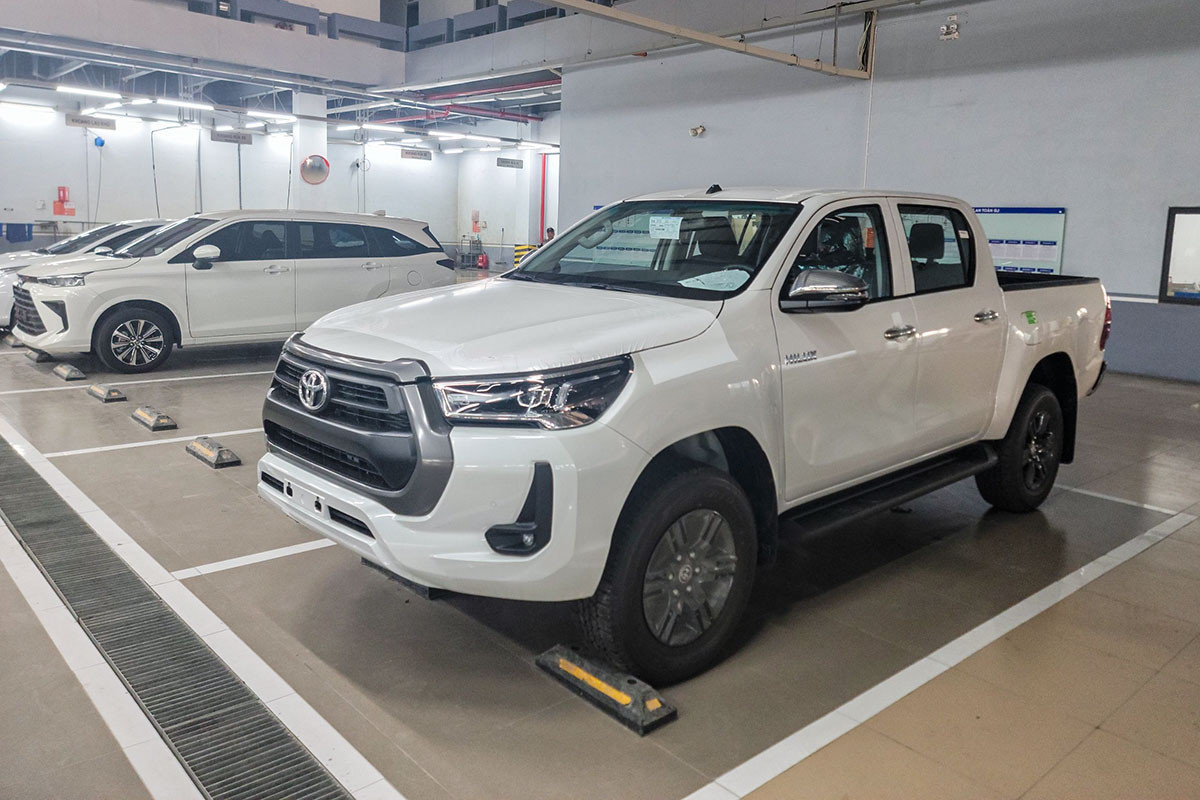
Since mid-January 2026, Hanoi has enforced new regulations restricting trucks in inner-city areas under Decision No. 01/2026/QD-UBND.
Trucks with a total payload under 2 tons are banned from operating within Ring Road 3.5 and inward during peak hours (6.00–9.00 and 16.00–19.30). For trucks of 2 tons or more, circulation is even more tightly restricted, allowed only from 21:00 to 6:00 the following morning.
The newly issued regulation has placed one type of vehicles in a difficult position - pickup trucks. The question now is: should pickup trucks be classified as passenger cars or trucks?
On March 19, the Traffic Police Department (Ministry of Public Security) clarified the classification method: determining whether a pickup truck falls under passenger cars or trucks will be based on technical specifications stated in the Certificate of Technical Safety and Environmental Protection or the inspection certificate. In other words, official documents are the sole legal basis.
The problem is that there always is difference between a legal document and legal practice, leaving many drivers anxious whenever they take the wheel.
Voices from behind the wheel
On major automotive forums and groups such as Otofun, Otosaigon, OFFB, and various pickup truck owner clubs, one can easily find posts expressing confusion and frustration.
Tran Van Hoan (Cau Giay, Hanoi), a Ford Ranger owner, complained: “Previously, under QCVN 41:2019/BGTVT, pickup trucks with a permitted cargo load of under 950kg were considered passenger cars. But now suddenly they are classified as trucks restricted from entering inner-city areas. Regulations keep changing, and users cannot keep up like this forever.”
Nguyen Quoc Binh, administrator of the OFFB forum, raised concerns regarding irrational tax and fee policies. Pickup trucks currently incur Special Consumption Tax (luxury tax) and a registration tax equal to 60 percent of that for passenger cars (equivalent to 6–9 percent of the vehicle value), while standard trucks only pay a 2 percent registration tax and no Special Consumption Tax.
"If pickups are treated as trucks during circulation, taxes and fees should be adjusted accordingly," Binh said.
There was a time when pickup trucks were considered a “hybrid” vehicle with great advantages, enjoying preferential special consumption tax and registration fees to encourage their versatility.
Later, pickup trucks were gradually subjected to tax and fee levels closer to passenger cars with fewer than 9 seats.
Circular 53/2024/TT-BGTVT is now catching importers and distributors of pickup trucks off guard in their business plans, while service garages are also left in a reactive position.
“What is most concerning is consumers. I know many people who have just spent billions of VND to buy a pickup truck and now regret it, as their vehicles are banned from entering inner-city areas during peak hours and face speed restrictions,” Binh said.
To develop appropriate management policies, it is first necessary to define what a pickup truck is. First and foremost, it is a multi-use personal vehicle.
Pickup trucks are not designed to replace heavy-duty trucks in professional logistics chains. Instead, their towing capacity and small rear cargo bed make them a good fit for household businesses, serving the transport of light and compact goods.
Under Vietnam’s traffic infrastructure, pickup trucks demonstrate clear advantages. In major cities, their high ground clearance helps drivers navigate flooded roads during the rainy season.
In midland and mountainous areas, pickup trucks serve as “workhorses” for farmers during harvest seasons. They are also ideal for family trips or disaster relief efforts. Pickup trucks can perform many roles, except functioning as specialized cargo trucks.
Binh believes that if the new standards are strictly applied, up to 99 percent of current pickup trucks would fall under restricted circulation, and if penalties are imposed in accordance with regulations, the fines would not be minor.
Meanwhile, a user named NTG1080 on the Otofun forum questioned: “Why don’t authorities simply classify double-cabin pickups as passenger cars? That would resolve confusion for users.”
Many people purchase pickup trucks for family use, daily commuting, and carrying of light goods. Now, they worry that their billion-VND vehicles may suddenly be banned during peak hours due to minor discrepancies in registration documents or inconsistent enforcement.
Pickup trucks in Vietnam have long had a dual nature, serving both as personal vehicles and light transport tools. When laws require clear classification while road signs, lanes, and enforcement guidelines remain inconsistent, uncertainty is inevitable.
Vu Diep
.svg)
