 Vietnamnet.vn

 Podcast



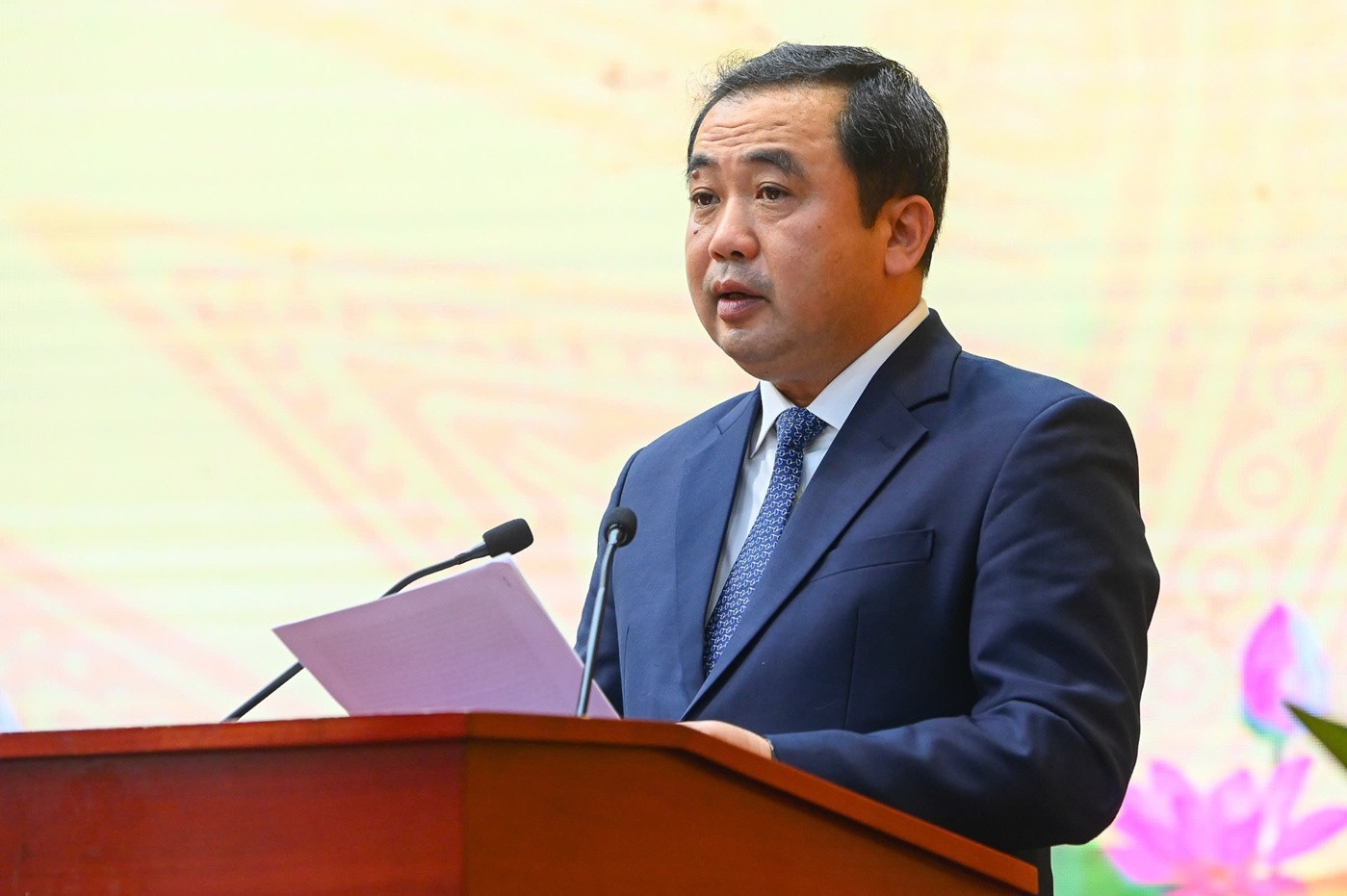
Speaking at the year-end conference reviewing the ministry’s work in 2025, as well as its 2021–2025 progress and 2026 mission planning, the minister described the past year as exceptionally difficult for the sector.
Internationally, global instability was marked by trade wars and reciprocal tax policies from the United States. Domestically, Vietnam faced extreme natural disasters - back-to-back storms and floods - while the entire political system was focused on administrative streamlining and structural reform.
Despite these pressures, the sector pushed forward under its guiding motto: “Discipline and responsibility, proactivity and timeliness, streamlining and effectiveness, acceleration and breakthrough.” The ministry reported broadly positive and comprehensive results.
According to Minister Thang, immediately after the government issued Decree No. 35/2025, the ministry swiftly restructured its apparatus, ensuring uninterrupted administrative procedures for both citizens and businesses.
The ministry also actively addressed overlapping regulatory jurisdictions and took on new responsibilities in managing national poverty reduction efforts.
Following restructuring, the ministry underwent significant streamlining: a 45.45% reduction in general department and department-level units, a 24.36% cut in public service units, and over 20% fewer office divisions.
In 2025 alone, under the Prime Minister's directive, the ministry reduced 30 out of 80 public service units - a 37.5% cut.
Additionally, the ministry issued 15 circulars to refine institutional functions, staffing frameworks, and policy regimes. Local governments have also proactively reorganized their own agriculture and environment departments to align with the two-tiered local governance model.
Notably, decentralization and delegation of authority have been implemented aggressively. The ministry reviewed over 1,000 valid legal documents, delegated 381 tasks, and clarified 232 responsibilities across local governments. It also proposed the reduction or simplification of 265 business conditions and 468 administrative procedures.
Strong growth and exports exceeding $70 billion
Minister Thang reported that the sector’s growth rate for 2025 was estimated between 3.7% and 3.92%.
The agriculture, forestry, and fisheries sectors remained stable, ensuring national food security and reaffirming their role as the economic backbone.
Total export turnover reached an estimated $70.09 billion, with a trade surplus of $20.7 billion. Specifically, agricultural exports stood at $37.25 billion, forestry products at $18.5 billion, and seafood at $11.32 billion.
Alongside production growth, rural development, poverty reduction, and social welfare programs received sustained attention.
Resource management saw gradual improvement. Integrated efforts were made to protect water and air environments and to manage household solid waste.
Forecasting, disaster preparedness, green transition, emission reduction, and climate adaptation measures were all strengthened.
International relations in the agriculture and environment fields shifted from expansion to strategic cooperation frameworks, aligning with goals for food and water security, resource protection, energy transition, and green economic development.
Persistent weaknesses in environmental response
Despite these achievements, Minister Thang acknowledged several shortcomings.
Policy forecasting and reaction to emerging issues were sometimes passive. Several initiatives lacked decisiveness and failed to meet practical needs.
Legal frameworks in some areas remain overlapping, administrative procedures are overly complex, and policy coordination is still inconsistent - particularly in mobilizing resources for rural and agricultural development.
Discipline and administrative integrity in some agencies remain weak.
The minister emphasized that air pollution continues to evolve in complex ways and has not been effectively controlled. Vietnam’s disaster response and climate adaptation capabilities remain underdeveloped.
Infrastructure for agriculture, rural development, environmental protection, and climate resilience is still inadequate and lags behind the demands of large-scale, internationally competitive production.
Looking ahead to 2026 and the 2026–2030 period, Minister Thang stressed the sector's focus on enhancing resource management, environmental protection, climate adaptation, and maximizing resources for sustainable development.
Key priorities include continued organizational streamlining, legal reform for growth and export support, investment in agricultural and rural infrastructure, efficient land and water resource management, workforce quality improvement, international cooperation, technological advancement, digital transformation, and development of a green, circular economy.
Vu Diep
.svg)
