 Vietnamnet.vn

 Podcast



The exhibition, titled “Nguyen Thi Binh – The intellect, courage and dignity of Vietnamese women in the Ho Chi Minh era,” was launched in collaboration with the Ho Chi Minh City Peace and Development Foundation (HPDF), the Vietnam Women’s Museum, and the Southern Women’s Museum.
Unable to attend in person, former Vice President Nguyen Thi Binh shared her reflections through a recorded message. She expressed deep emotion as the event coincided with the 53rd anniversary of the signing of the Paris Peace Accords, which took place on January 27, 1973.
“On the morning of January 27, 1973, the Kléber conference hall was glowing under the lights. Outside, thousands of people - Vietnamese expatriates, French citizens, and international friends - waved flags to welcome us. I stepped into the hall, feeling anxious. At 10 a.m., four foreign ministers sat down at the table and signed 32 copies of the Agreement.
With deep emotion, I placed my signature on the Paris Peace Accords. At that moment, I felt I was representing the people and revolutionaries of southern Vietnam - those who had fought on the frontlines and in prison cells - raising the flag of victory,” she said.
Madam Binh noted that the purpose of this exhibition is not only to tell her personal story but also to highlight the experiences of an entire generation that lived through war with a deep longing for peace, independence, and happiness.
She emphasized that hers was not the journey of a single woman but of many, particularly the female faces of the Provisional Revolutionary Government delegation at the Paris talks, who demonstrated the resilience and conviction of Vietnamese women during pivotal historical moments.
Through this exhibition, she hopes that younger generations will understand that peace must be constantly protected and nurtured by the entire nation to ensure progress and happiness.
“Entering a new era, I hope young people, especially women, will believe in themselves, cherish the values of our history, and contribute to the future with intellect and capability,” she said.
The exhibition, running until April 30, is structured into four thematic sections:
Part 1 – From family legacy to revolutionary ideals: This section introduces Nguyen Thi Binh’s early life as a schoolgirl at Saint Cœur de Marie and the granddaughter of nationalist Phan Chau Trinh. It traces her awakening to revolutionary ideas and her commitment to the struggle for national liberation.
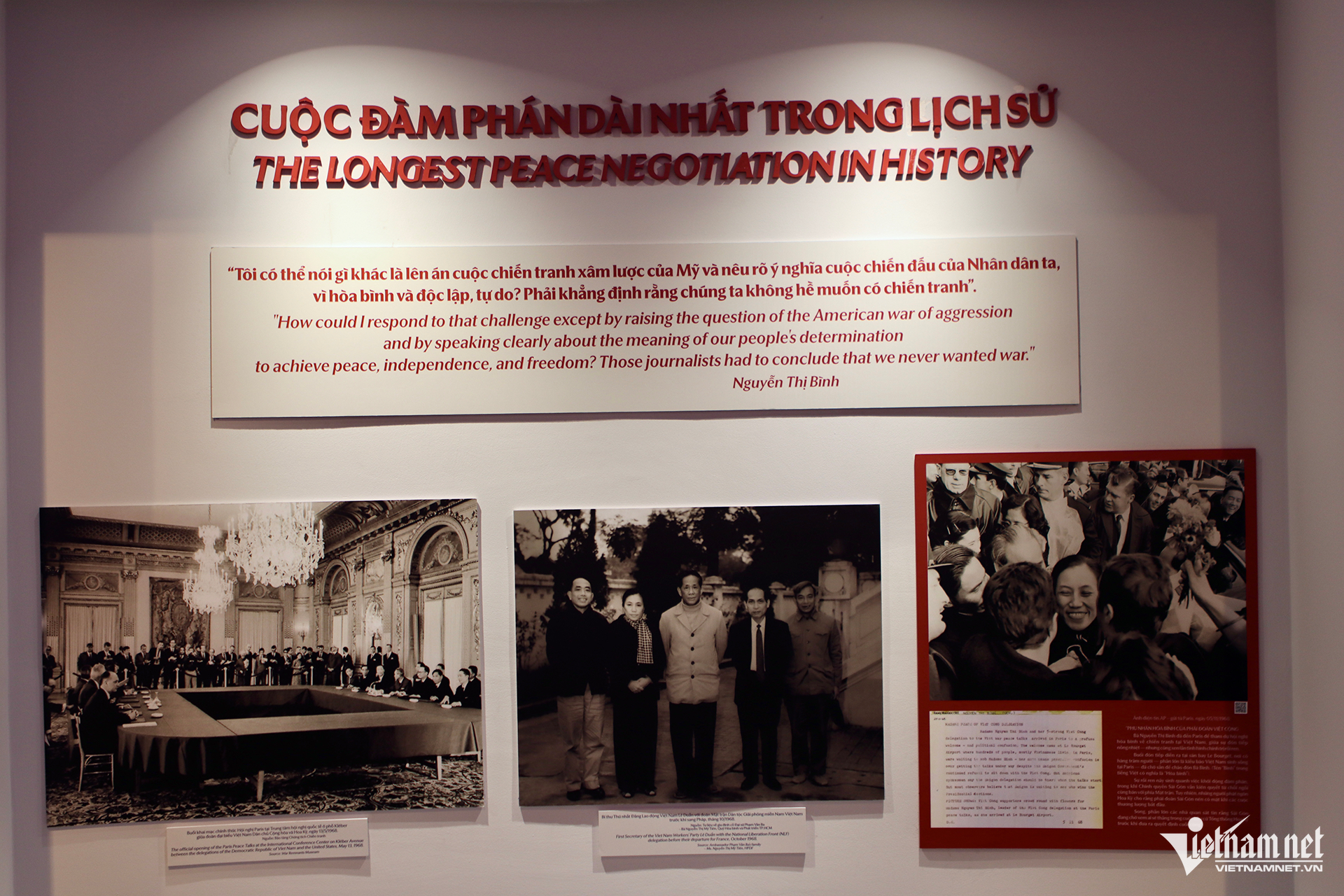
Part 2 – Madame Binh: The intellect and resolve of Vietnamese diplomacy: Visitors are taken through the historic Paris Peace Accords (1968–1973), where Binh, the only woman among the signatories, became a symbol of diplomatic strength with her poised, persuasive, and humane approach.
Part 3 – A life of service: This section highlights Binh’s contributions to education, diplomacy, health, culture, and social affairs during her time as Minister of Education (1976–1987), Deputy Head of the Party’s External Relations Commission, Chair of the National Assembly's Foreign Affairs Committee (1987–1992), and Vice President of Vietnam (1992–2002).
Part 4 – Enduring legacy: The final section presents a portrait of Binh in her everyday life - modest and compassionate - while also showcasing her leadership in peace, cultural, and educational foundations.
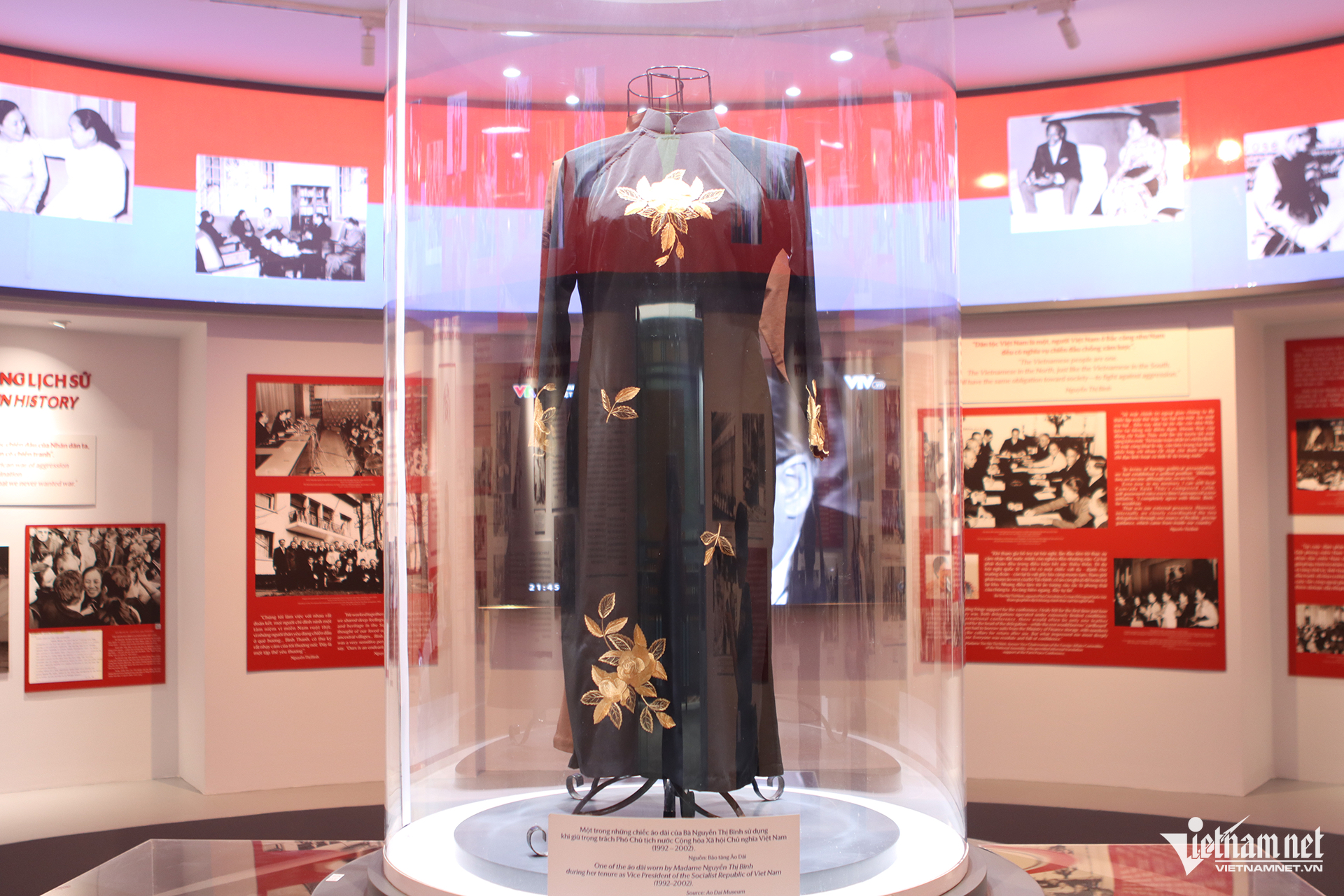
Among the featured artifacts are her visa application documents, reflecting the challenges of international travel during wartime, and the áo dài she wore as Vice President - a reminder of her grace and strength in representing Vietnam on the global stage.
The exhibition also includes photos of Madam Binh with President Ho Chi Minh, moments from the Paris negotiations, and her participation in the World Federation of Democratic Youth Congress in the Soviet Union in July 1962.
A notable section invites visitors to “Live like her,” using interactive technology, archival film, and QR codes to immerse in her story.
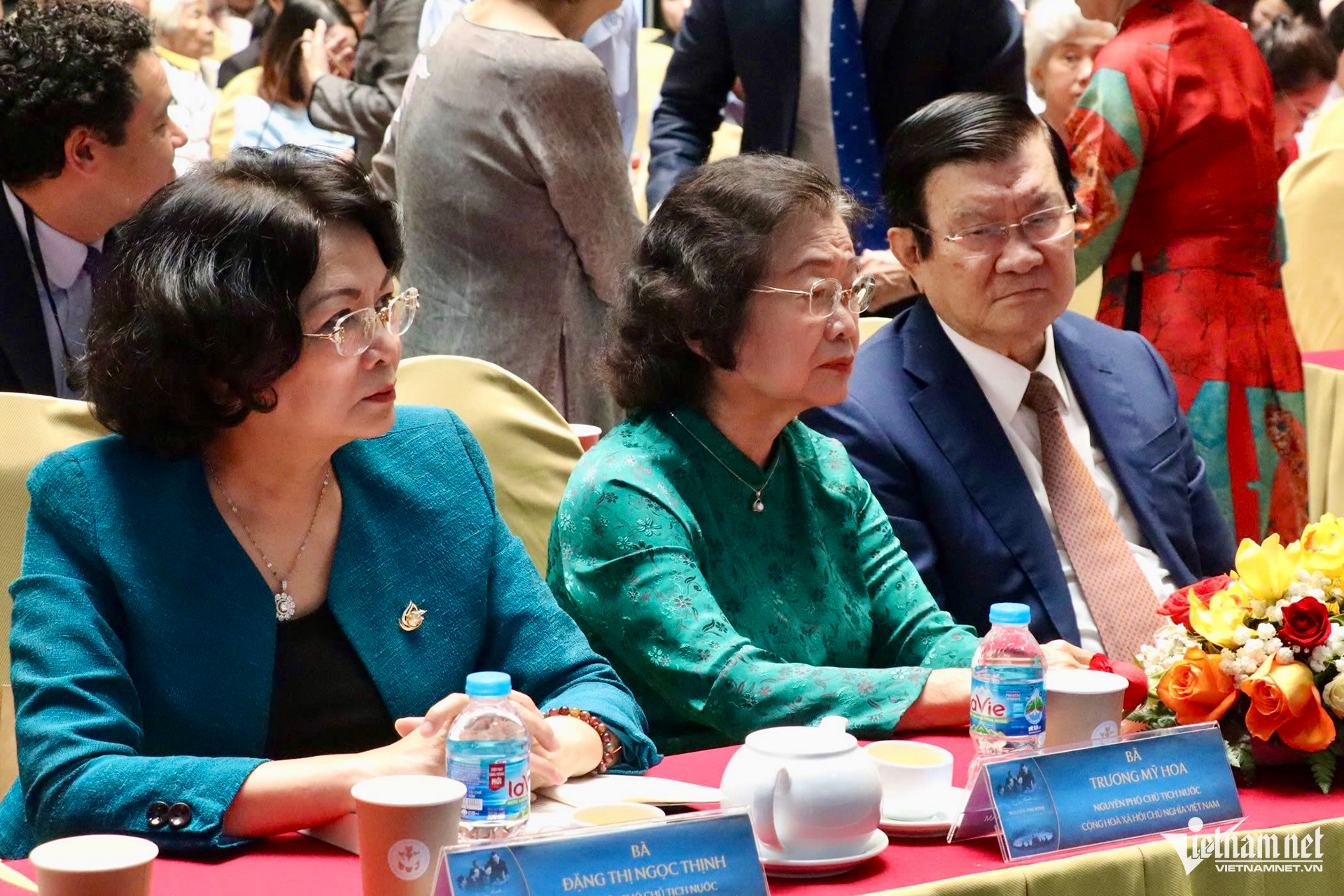
Attending the opening ceremony were former President Truong Tan Sang, former Vice Presidents Truong My Hoa and Dang Thi Ngoc Thinh, among other dignitaries.
The exhibition sends a clear message, especially to young women and intellectuals: “Knowledge is the foundation of freedom and progress. Courage is the anchor of belief. Character is the source of strength and credibility.”
In today’s fast-changing world, the life of Madam Nguyen Thi Binh reminds us that Vietnamese women can make their mark globally - with intellect, courage, and integrity - when given the trust, opportunity, and support they deserve.
As the only woman to sign the Paris Peace Accords, Binh became an enduring symbol of Vietnam’s struggle for peace. Her voice and presence left a lasting impression not only in the 1970s but for generations of diplomats and patriots to come.
Her journey, rooted in wartime diplomacy, remains an emblem of Vietnam’s resilience - fighting for independence and peace, and striving for development and happiness with conviction and heart.
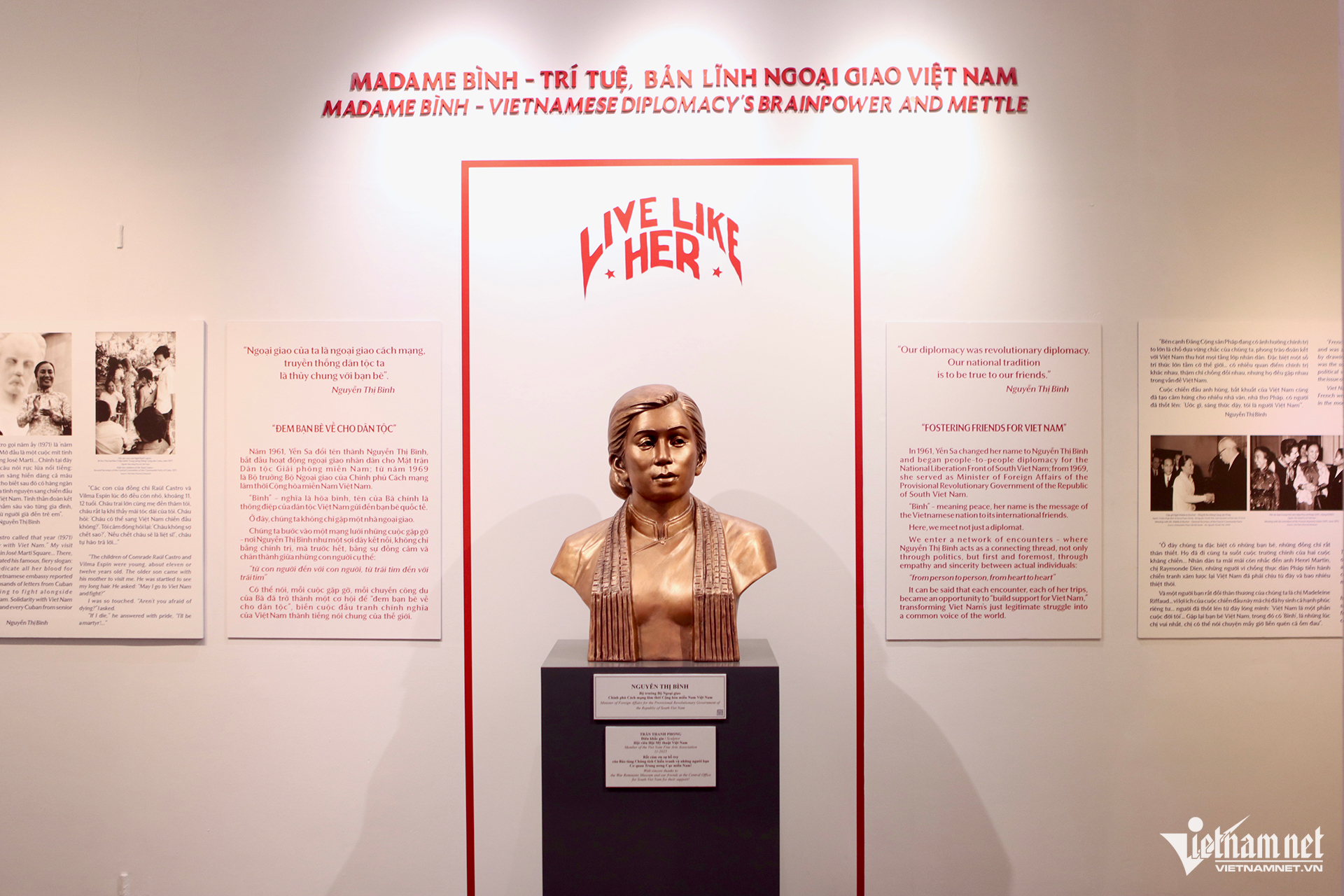
The exhibition is open until April 30, a symbolic milestone in Vietnam’s journey to national unity.





Ngan Anh & Phuoc Sang
.svg)
