 Vietnamnet.vn

 Podcast



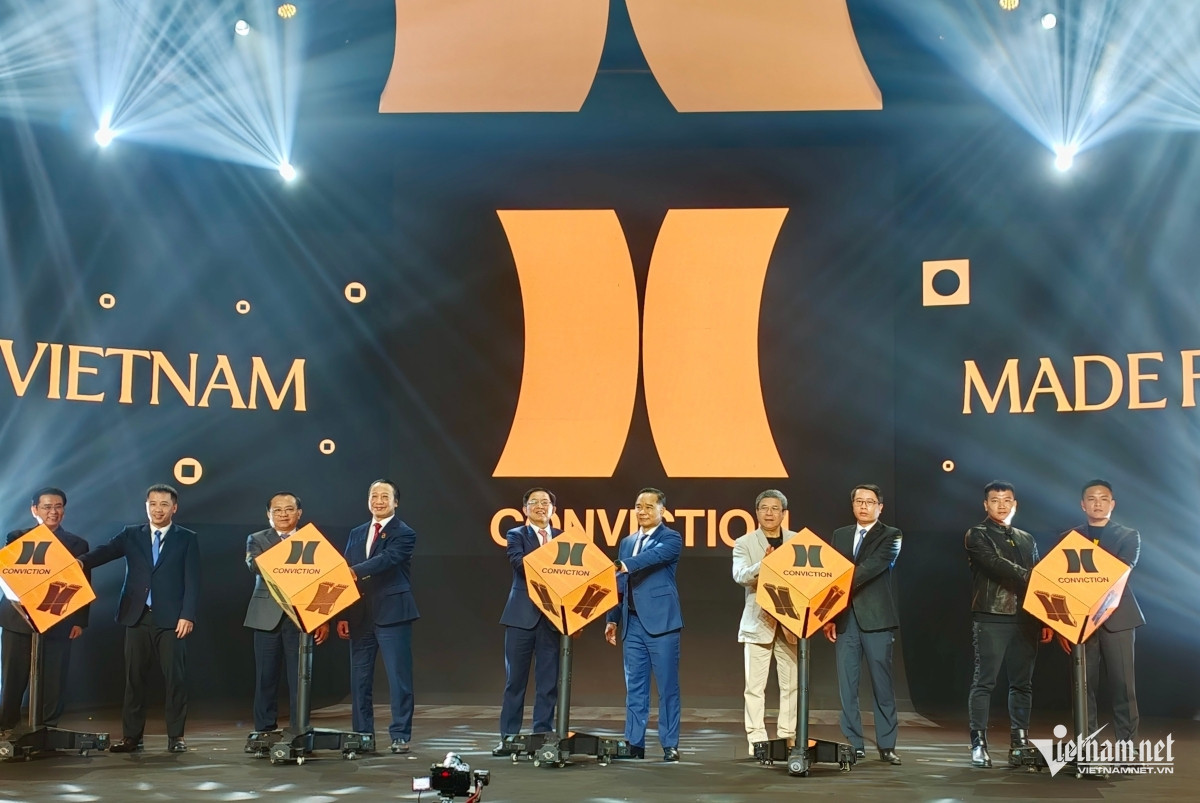
That assessment was made by lawyer Phan Vu Tuan, Standing Vice Chairman of the Ho Chi Minh City Electronic Communications Association, at the Ho Chi Minh City technology event Conviction 2026 on the morning of August 14.
According to Tuan, with annual digital asset-related flows exceeding $100 billion, Vietnam has an enormous pool of digital resources.
However, legal barriers, together with penalties due to take effect on September 1, are creating difficulties for many companies and could even force them to “export their legal entities” overseas.
Drawing on four real-world case files, he outlined the broader picture and proposed five groups of solutions to unlock these resources.
A market that ‘grew before the law’
Vietnam has consistently ranked among the world’s top five countries for digital asset adoption and even ranked No. 1 globally in both 2021 and 2022, according to Chainalysis. An estimated 17 million Vietnamese people own digital assets, with related annual flows exceeding $100 billion.
Seven of the world’s leading blockchain companies currently have Vietnamese founders. Ten Vietnamese-founded blockchain companies have achieved market capitalizations of more than $100 million, while the country has also produced its first Web3 unicorn. Sky Mavis was valued at nearly $3 billion in 2021, while its game Axie Infinity reached 2.8 million daily users.
However, the legal framework for the sector is only beginning to take shape. Resolution No. 05, which established a pilot framework for the crypto asset market, was issued in September 2025. The first exchanges are now undergoing appraisal, while Decree No. 284, governing administrative penalties in crypto assets and the crypto asset market, is due to take effect on September 1, 2026.
According to industry assessments, these regulations could create legal risks for domestic digital technology projects.
Based on his legal practice and advisory work, Tuan identified four of the most common legal bottlenecks currently facing the crypto asset market.
Definitions are too broad and lack clear technical distinctions: Article 7.4a of Decree No. 284 provides for fines of approximately $6,900-$7,700, along with mandatory removal of software, for providing services related to crypto assets without a license.
However, the phrase “related to” has yet to be clearly defined, making it extremely difficult for companies to determine how their own services should be classified.
One example involves a company developing a non-custodial wallet with more than 10 million users worldwide.
Although the software merely provides a technical tool allowing users to hold their own private keys and does not custody customer assets, the company remains concerned that it could be classified as providing a “financial service.” It is therefore preparing to disable the feature for users in Vietnam before September 1 as a proactive compliance measure.
“Exporting legal entities” and the risk of brain drain: In some cases, legal advisers in Vietnam are recommending that technology startups establish their operating entities overseas to ensure greater legal certainty and satisfy requirements from international investment funds.
As a result, Vietnam loses tax revenue and high-quality jobs, while Vietnamese talent may face risks from uncertain working environments overseas, even when the underlying technology was created by Vietnamese people.
Vietnamese companies are forced to “live overseas”: Vietnam has world-class blockchain companies that continue to operate and grow strongly.
Yet many have one thing in common: their operating entities and revenue remain overseas, while their teams in Vietnam serve primarily as “engineering hubs.”
Intellectual property in Vietnam is being “trapped twice”: First, there are no standardized valuation methods or unified guidelines for using blockchain data as evidence in legal proceedings or as collateral for bank loans, even though Decree No. 277 recognizes digitized data as having equivalent value to original records.
Second, when companies digitize assets, such as electronic tickets or product-origin authentication, they may have to redesign their technical architecture to avoid being classified as crypto assets or services related to crypto assets. This can force changes to their business structures and make it harder to reach users.
Five proposals for Vietnam’s digital asset sector
To address these bottlenecks, Tuan, in his capacity as Standing Vice Chairman of the Ho Chi Minh City Electronic Communications Association, proposed five groups of coordinated solutions for regulators.
Clearly distinguish the technical sphere from the financial sphere: Authorities should issue guidelines establishing the principle that financial regulations apply only to financial activities, such as trading, brokerage, third-party custody and fundraising, rather than purely technical activities such as self-custody software, open-source software and node infrastructure.
Vietnam should introduce a list of “safe activities,” drawing on experience from the European Union’s MiCA framework and the US FinCEN approach, while prioritizing warnings and corrective action before imposing penalties. The meaning of “related to” under Decree No. 284 should also be clarified.
Bring licensed exchanges into operation soon: Exchanges that passed preliminary assessments in early 2026 should be allowed to begin official operations. At the same time, authorities should establish listing appraisal mechanisms for qualified Vietnamese projects, including Vietnamese projects already listed on international exchanges.
Develop intellectual property as a pioneering asset class: Vietnam should recognize blockchain records as admissible evidence in legal proceedings, introduce intellectual property valuation standards for borrowing and capital contributions, and allow intellectual property to serve as an underlying asset under Article 5.2 of Resolution No. 05. Mechanisms should also make it easier for intellectual property assets to be listed on domestic exchanges.
Upgrade and connect regulatory sandbox mechanisms: Procedures for entering regulatory sandboxes in Da Nang under Resolution No. 136 and Ho Chi Minh City under Resolution No. 98 should be simplified. Sandboxes should also be expanded to cover applied blockchain products, including electronic tickets and product-origin authentication, while successful trials should be connected directly with formal licensing procedures.
Unlock bank financing and use cultural-industry assets as a starting point: Authorities should issue guidelines enabling commercial banks to open accounts and provide credit to legally operating technology companies. Cultural-industry and intellectual property assets could be selected as the first class of “real-world assets” for pilot programs.
“Vietnamese technology startups are not asking for regulatory leniency or special privileges. What they need most right now is clarity and a mechanism that allows intellectual property to develop. That would be the greatest incentive to retain talent, attract investment and strengthen Vietnam’s technological standing on the global map,” Tuan emphasized.
Le My
.svg)
