 Vietnamnet.vn

 Podcast



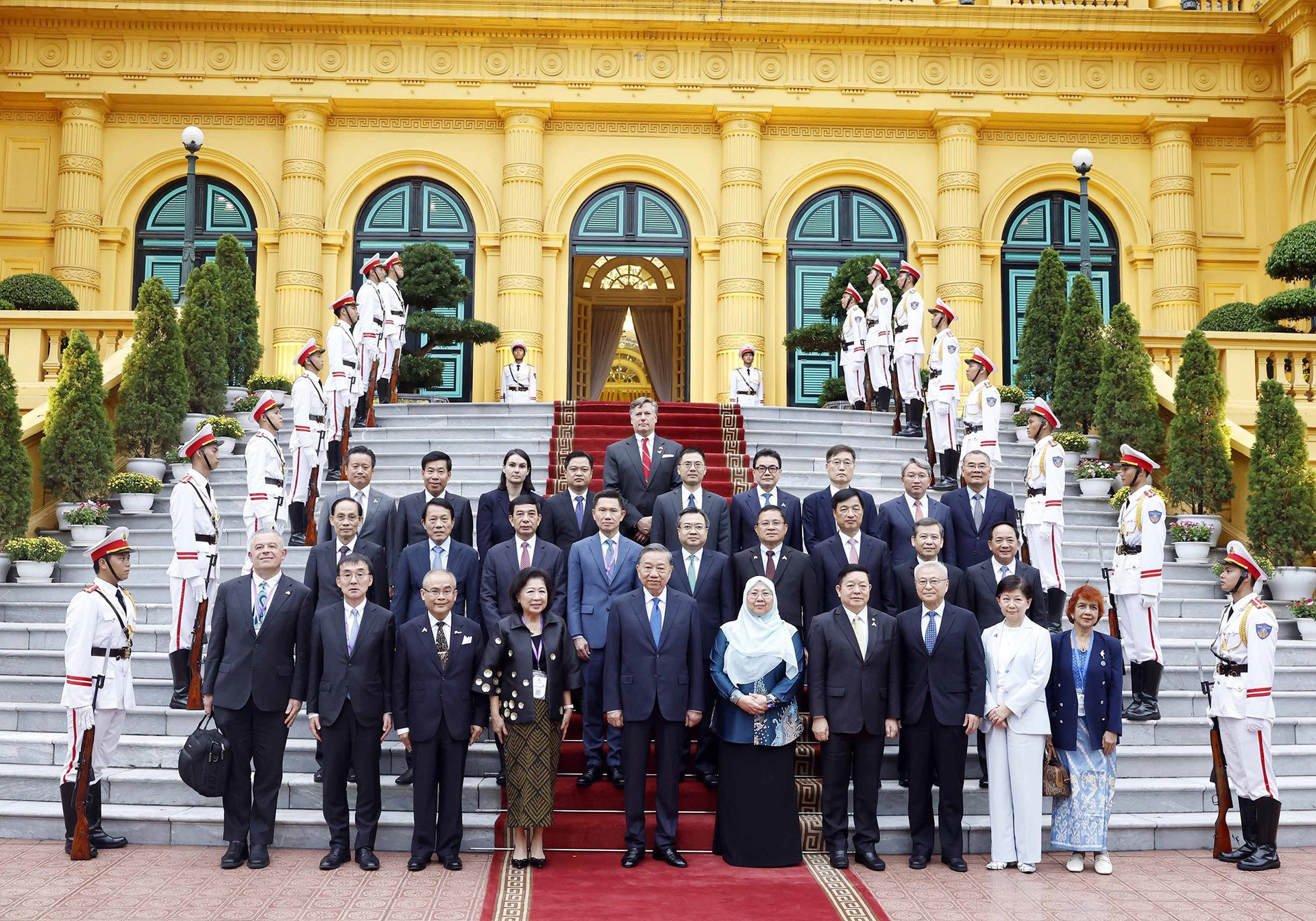
On the afternoon of June 9, General Secretary and President To Lam met with heads of delegations, experts, scholars and representatives of international organizations visiting Vietnam to attend the ASEAN Future Forum 2026 (AFF).
To Lam welcomed the continued strong interest and broad participation in the forum from ASEAN member states, partners and international friends.
The large number of participants reflects a shared interest in ASEAN's future, as well as a common desire to exchange ideas, share perspectives and contribute to shaping the region's development trajectory in a new era.
ASEAN must safeguard its strategic assets
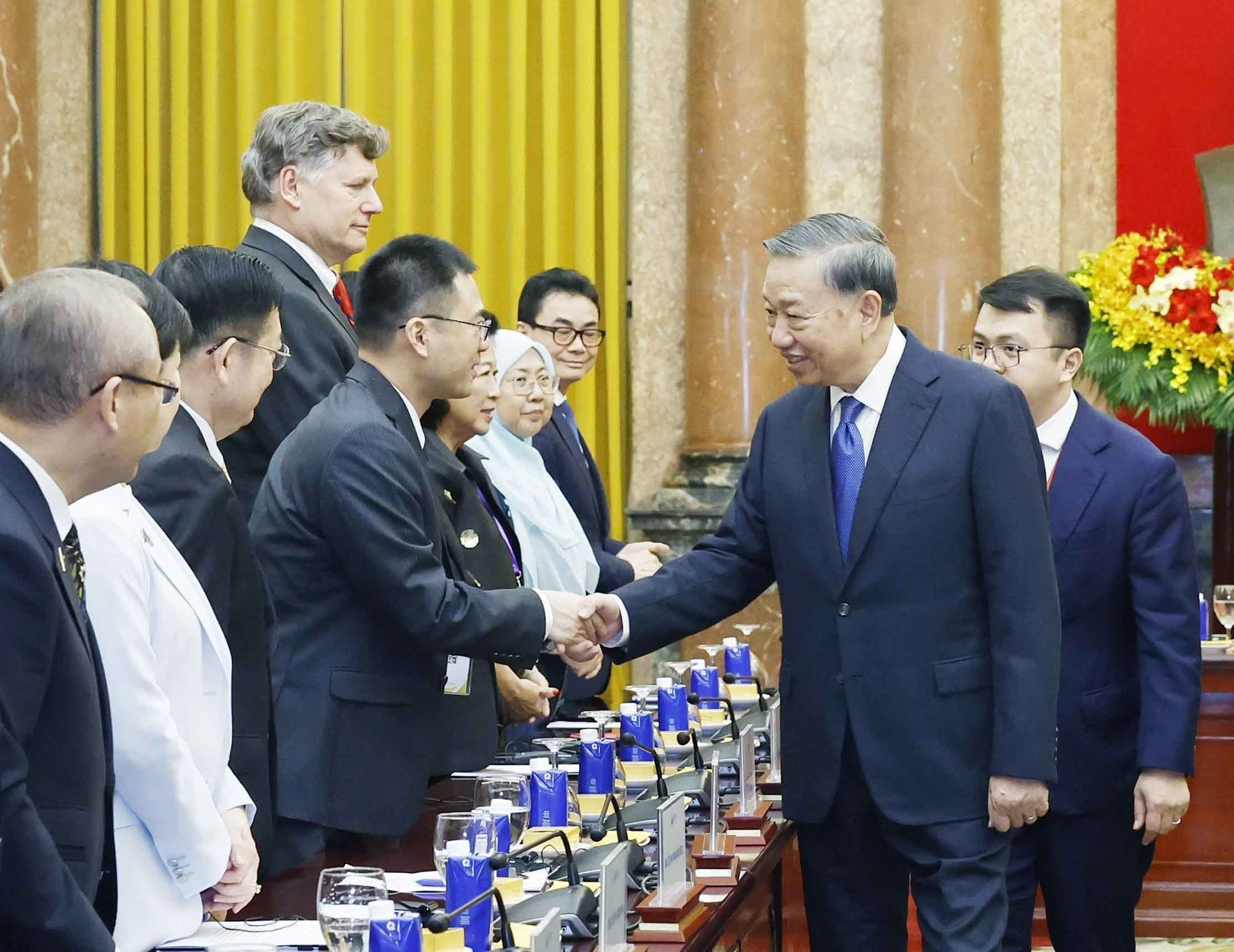
The General Secretary and President noted that ASEAN is entering the first year of implementing the ASEAN Community Vision 2045, bringing with it new expectations as well as greater demands for proactiveness, effectiveness and substantive action. He said this was also the message he conveyed at the recent Shangri-La Dialogue.
According to To Lam, the world is entering a period of profound transformation. Traditional development advantages no longer generate the same momentum as before, and many familiar approaches are no longer sufficient to meet emerging challenges. Population size, natural resources and capital remain important, but competitive advantage increasingly depends on innovation, adaptability and preparedness for new development trends.
He said this reality is particularly relevant for ASEAN. Opportunities become advantages only when the region has the capacity to seize them, the determination to innovate and the resilience to maintain a stable environment for development.
The General Secretary and President stressed that ASEAN must preserve its strategic assets while also renewing its operating methods.
"ASEAN's strategic assets are the result of a long process of building trust, maintaining dialogue, conducting consultations, managing differences and seeking consensus among member states," he said.
With the ASEAN Community Vision 2045, the bloc has clearly defined its direction for the coming decades. However, To Lam emphasized that this is only the starting point. Success, he said, will depend on ASEAN's ability to pursue two tasks simultaneously.
On one hand, ASEAN must continue to protect and strengthen the strategic assets accumulated over decades - unity, ASEAN centrality, and the principles of consensus and unity in diversity.
On the other hand, it must fundamentally renew its "value-based thinking" so that these assets can be transformed into adaptive capacity, operational capability and effective implementation.
In the new phase, ASEAN's central role can only remain meaningful if the bloc maintains unity, strategic autonomy, an inclusive approach, and the ability to coordinate and shape the region's common agenda.
To Lam argued that ASEAN's value-based thinking must evolve through more flexible and effective mechanisms that can better respond to new demands.
"First, we need to move from process-oriented thinking to results-oriented thinking, ensuring that commitments in documents are translated into reality. We need to move beyond consultation as the primary objective toward more substantive coordination, enabling cooperation mechanisms to respond more quickly to cross-sectoral challenges. And we need to move from consensus in awareness to consensus in action, so that our common voice is reflected in concrete programs, concrete resources and concrete outcomes," he said.
Development is not merely an economic goal

Against a backdrop of intensifying competition, To Lam warned that moving too slowly could mean losing opportunities. ASEAN, he said, must strengthen its proactive spirit.
This means being strategically proactive in identifying trends early and shaping priorities; proactively adapting to seize new opportunities and respond effectively to emerging challenges; and proactively contributing to the development of regional norms and cooperation frameworks.
"Many of today's challenges do not emerge in isolation. Technological transformation is linked to employment and governance. Green transition is tied to energy, food security and livelihoods. The information space is connected to public trust and governing capacity. If ASEAN can identify these trends earlier, it will be better prepared," he said.
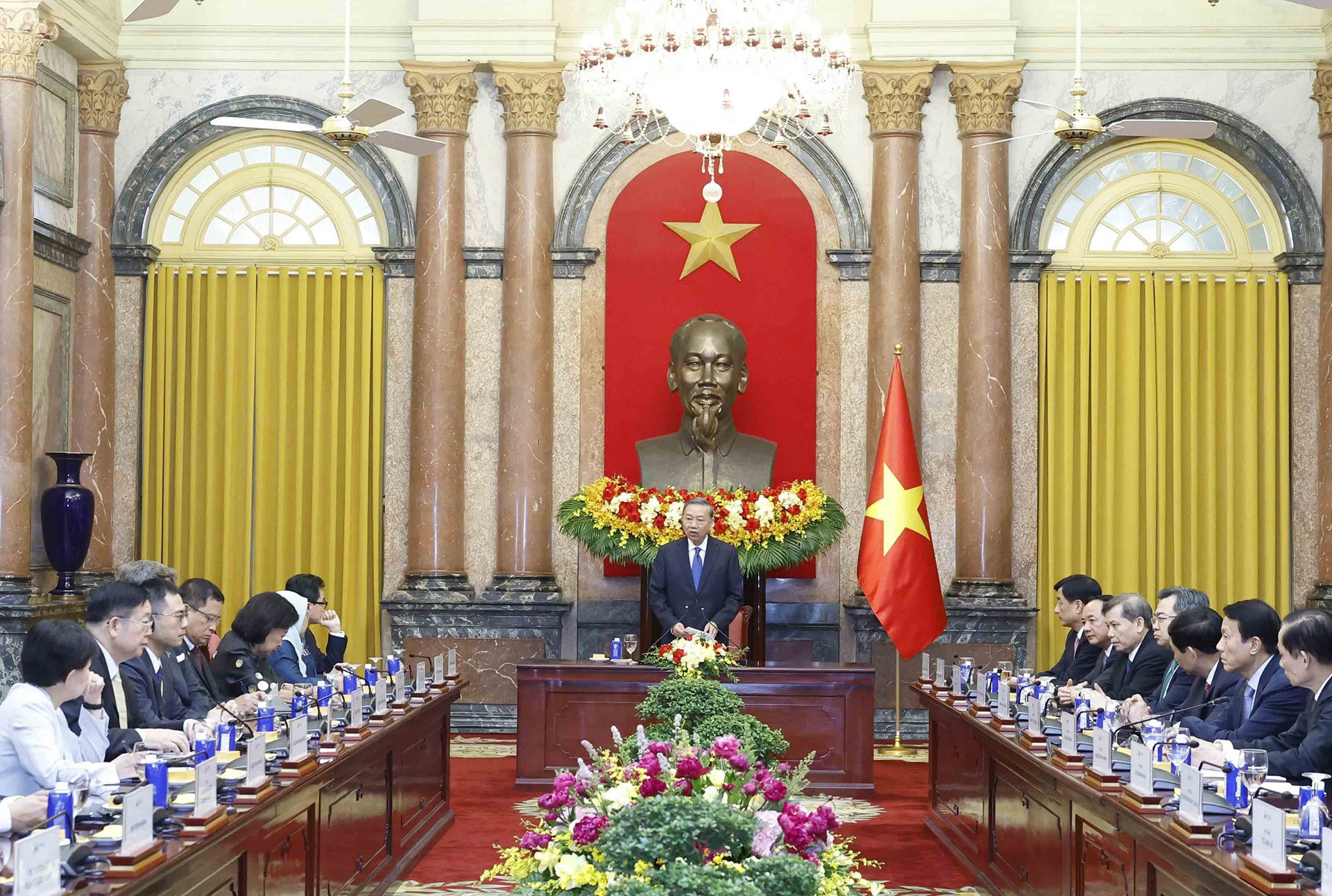
The General Secretary and President affirmed that the ASEAN Future Forum complements ASEAN's existing cooperation processes and can continue serving as an open, candid and substantive platform for discussing the region's long-term issues.
The forum can help strengthen connections among policymakers, scholars, research institutions and businesses. It can also focus more on generating practical and highly applicable ideas.
Regarding Vietnam's contribution, To Lam said the country remains committed to working closely with fellow ASEAN members to build a united, resilient and sustainable community while preserving ASEAN's central role in the regional security architecture.
"The challenges facing ASEAN are also the challenges facing Vietnam," he said, referring to the need to maintain peace and stability, safeguard major macroeconomic balances and achieve rapid, sustainable development while enhancing competitiveness.
According to To Lam, the prevailing spirit today is one of more decisive action, faster implementation and a stronger focus on practical outcomes.
"Being on the right path is important. But in today's context, being on the right path while moving too slowly can still mean missing opportunities," he said.
Vietnam is currently focused on removing bottlenecks, unlocking resources, advancing strategic and digital infrastructure, developing a highly skilled workforce and creating a more favorable environment for citizens, businesses and local authorities.
For Vietnam, development is not merely an economic objective. It is also the foundation for strengthening social stability and improving people's lives. This, he noted, is also a key requirement facing ASEAN as a whole.
ASEAN remains a strategic priority in Vietnam's foreign policy. Vietnam is committed to working wholeheartedly with fellow ASEAN members to preserve unity, strengthen ASEAN's central role in practical terms, and uphold rules, dialogue and cooperation.
Representatives attending AFF 2026 praised Vietnam's initiative in organizing the forum, describing it as a reputable, open, inclusive and constructive platform that contributes positively to shaping ASEAN's long-term development directions.
Delegates also commended Vietnam's foreign policy approach, reflected in To Lam's consistent messages delivered at the Shangri-La Dialogue, Tsinghua University and the ASEAN Secretariat in 2025. They said these demonstrated Vietnam's proactive and positive contributions to regional peace, dialogue and cooperation.
Participants expressed hope that the ASEAN Future Forum would continue serving as a bridge connecting leaders, policymakers, scholars, businesses, youth representatives and other stakeholders, while promoting frank and substantive exchanges on strategic regional issues.
Tran Thuong
.svg)
