 Vietnamnet.vn

 Podcast



On June 17, Party General Secretary and State President To Lam chaired a working session with the standing committee overseeing the review of 100 years of Party leadership of Vietnam’s revolution, the orientation for national development over the next century (2030-2130), and the review of 40 years of implementing the Platform for National Construction during the Transition to Socialism.
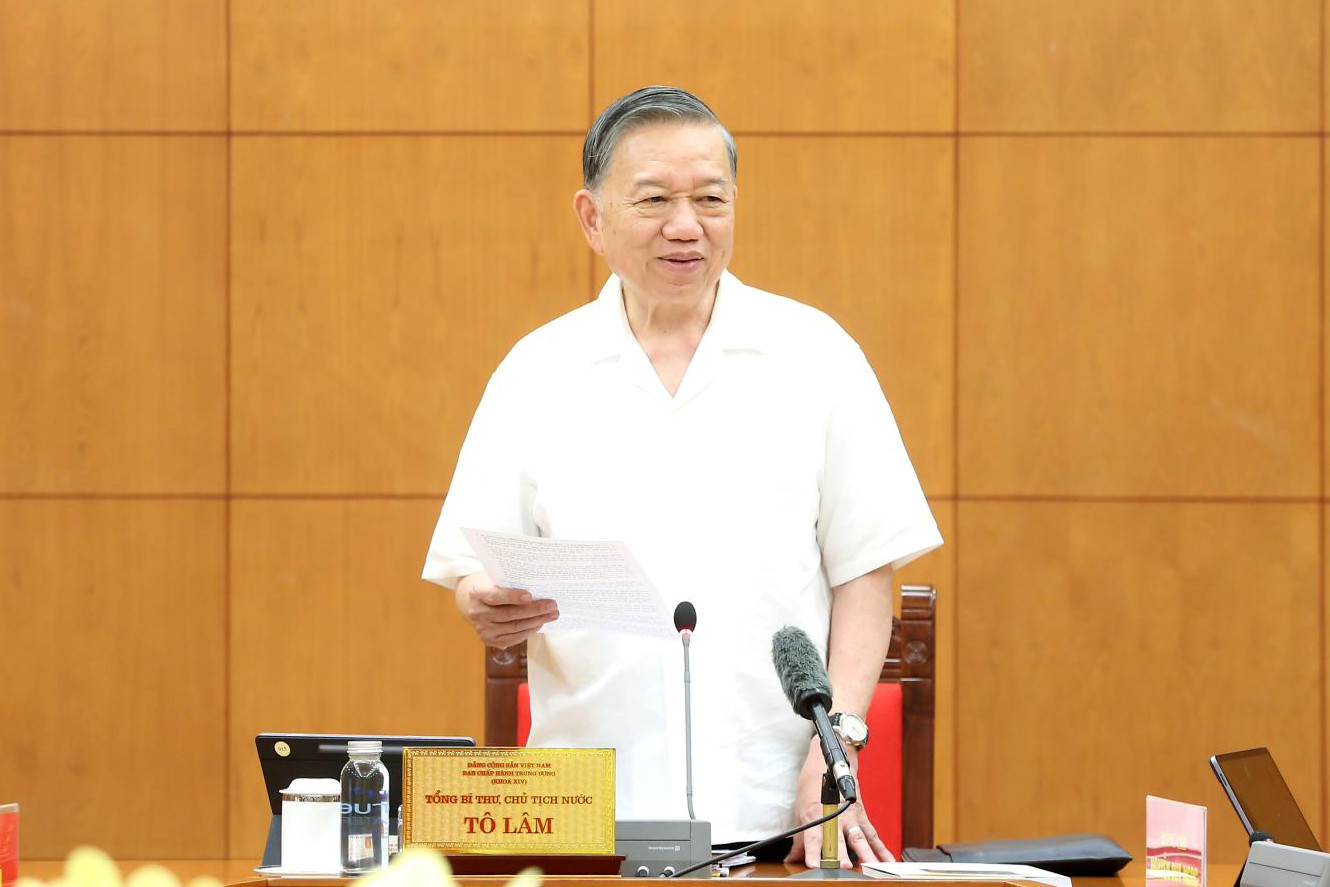
Concluding the meeting, Party Chief and President To Lam urged the drafting team to fully absorb and seriously consider all opinions and quickly revise and finalize the documents with a spirit of openness, scientific rigor and responsibility. He stressed the need to confront difficult issues directly rather than being satisfied with initial results.
The Party chief emphasized the importance of firmly grasping the guiding principles, objectives and methodology of the review process.
He said reviewing 100 years of Party leadership is a task of exceptional significance. The process must remain grounded in historical truth, respect history and draw lessons from history. However, it should not simply recount events or compile a chronological record.
More importantly, the review must distill major conclusions, lessons and enduring patterns from history, helping to clarify Vietnam’s revolutionary path, the Party’s leadership role, the strength of the people, national unity and the country’s future development trajectory.
According to To Lam, the review must generate new value, fresh contributions and deeper understanding beyond previous assessments.
He said the exercise should answer key questions, including how the Party’s theoretical understanding has evolved over the past century, how the country’s development path has become clearer, what lessons can be elevated to a higher level of generalization, what theoretical issues require further innovation and development, and what strategic vision should guide Vietnam over the next 100 years.
He also called for a clearer understanding of the relationship between the review of 100 years of Party leadership and the review of 40 years of implementing the national development platform during the socialist transition period.
These are two major undertakings that are closely connected but not identical, he said. They should neither be treated as completely separate nor merged in a way that obscures the core focus of each report.
The review, he stressed, must highlight the historic achievements made under the Party’s leadership over the past century and explain their historical significance, theoretical value, practical impact and contribution to transforming the nation’s destiny, enhancing Vietnam’s standing and strengthening public confidence.
At the same time, it must candidly address shortcomings, limitations, unresolved issues and bottlenecks that continue to require solutions.
To Lam said the review should identify the core themes and enduring lessons that have shaped 100 years of Vietnam’s revolutionary development. Lessons learned should be distilled and elevated to the level of theoretical guidance rather than remaining broad and familiar observations lacking strategic value.
He particularly stressed the need to formulate a vision and development orientation for the next century based on sound theory, practical evidence, scientific analysis, forecasting methods and long-term strategic thinking.
The vision for the next 100 years, he said, must embody the nation’s aspirations for development.
To Lam suggested that the review should answer several major questions: What kind of developed country does Vietnam want to become in the next century? Which foundations must remain intact? What new drivers of development are required? What breakthroughs must be pursued? What risks must be anticipated? And what values must be protected and promoted?
The vision, he said, must combine the height of national aspirations with the depth of theory, remain closely linked to domestic realities and global trends, and strengthen implementation capacity.
Regarding implementation, To Lam instructed the various review teams to begin work immediately rather than waiting for one another or proceeding in a rigid sequential manner.
He also emphasized the importance of documentation, data, historical witnesses and valuable information sources, noting that a review of 100 years cannot rely solely on administrative reports.
The Party chief stressed that historical issues that have already been clearly established should be affirmed decisively, while matters that remain subject to differing interpretations should be carefully researched and thoroughly analyzed.
He underscored that conclusions must be based on strong evidence and rigorous preparation. Difficult issues should not be avoided, but neither should conclusions be rushed, simplistic or subjective.
Historical conclusions, he said, must be grounded in evidence, methodology and responsibility, serving to unify understanding, strengthen confidence and safeguard the Party’s ideological foundation.
Tran Thuong
.svg)
