 Vietnamnet.vn

 Podcast



The railway sector officially opened its Tet ticketing system at 8am on September 5 through its website, e-wallet apps and banking apps. Even so, many passengers had arrived at Saigon Station between 3am and 5am, hoping to secure some of the first queue numbers.
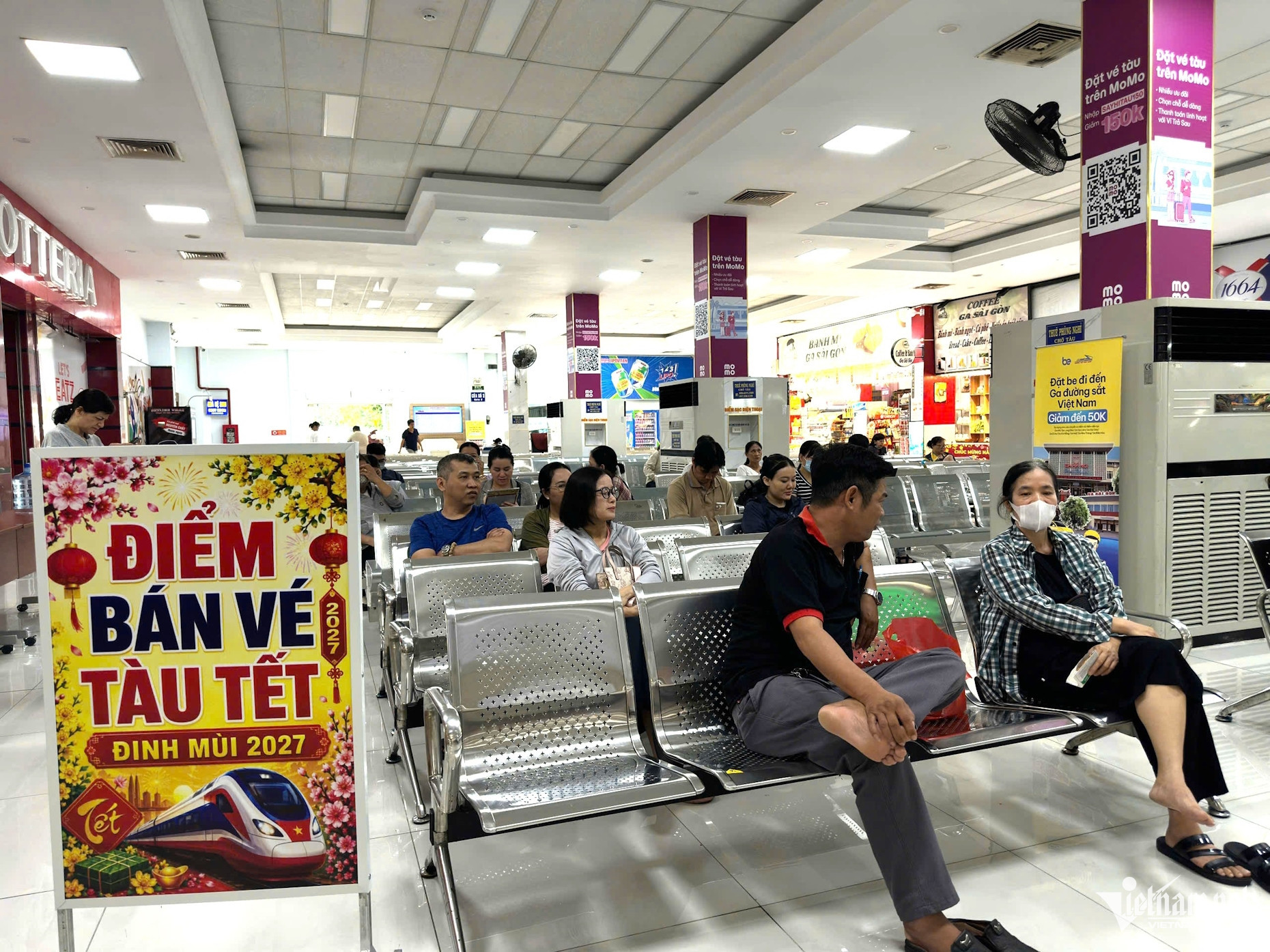
Unlike the crowded scenes of previous years, the waiting hall at Saigon Station was orderly this morning, with early arrivals simply taking seats until it was their turn to collect a queue number. Many workers and elderly passengers said that although they knew tickets could be booked online, they still preferred to come to the station, where staff could help them with the process and where having a paper ticket in hand gave them greater peace of mind.
Le Thi Lan, 43, who lives in Dong Thanh Commune, Ho Chi Minh City, said she arrived at the station at 3am to wait for a queue number so she could buy a pair of round-trip tickets to Thanh Hoa.
“I’m not used to using a smartphone, so I came straight to the station to make sure I could get the tickets. This year, the waiting hall is spacious and there’s none of the exhausting jostling we had before. The process is very quick,” Lan said.
Nguyen Van Binh, 56, a native of Quang Tri, shared the same sentiment and took a ride to the station shortly after 4am.
“The kids at home kept telling me they could book the tickets on a computer because it would be faster, but I’m getting old and I’m not good with those things. Here, I can just sit and wait for my number. Buying the tickets is quick and there’s no crowding at all,” Binh said.
57 trains and more than 800 carriages mobilized


This year’s peak Tet travel period will run from January 23 to February 25, 2027, corresponding to the 16th day of the final lunar month through the 20th day of the first lunar month, with around 300,000 long-distance tickets available. To curb bulk buying and resale, each passenger may book no more than 10 outbound and 10 return tickets.
The railway sector will mobilize 57 trains with more than 800 carriages. The North-South route will maintain seven pairs of Reunification Express trains, from SE1/2 to SE11/12 and SE23/24, along with two additional pairs, TN3/4 and TN5/6.
In addition, 11 pairs of regional trains will operate daily on routes including Hanoi to Phu Ly, Vinh and Da Nang; Tho Loc-Hue; Hue-Da Nang; and Saigon to Da Nang, Quy Nhon, Nha Trang and Phan Thiet. Extra trains will also be added on high-demand routes from Saigon Station to Vinh and Quang Ngai. From the first through the third day of Tet, additional regional trains will operate to serve passengers traveling during the holiday.
This year, passengers booking long-distance journeys of more than 900km at least 10 days in advance will receive discounts of 5-20%; students will receive discounts of 10-20%; group bookings will be discounted by 2-12%; and round-trip passengers will receive a 5% discount on the return journey. Each adult may also travel with one child under six free of charge.
To prevent ticket hoarding, cancellation fees during the peak Tet period have been tightened to 30%. The fee applies to even-numbered trains from January 29 to February 8, 2027, corresponding to the 22nd day of the final lunar month through the third day of Tet; odd-numbered trains from February 9 to 17; odd-numbered trains from Hanoi to Phu Ly-Dong Hoi from January 31 to February 5; and even-numbered trains from Dong Hoi-Phu Ly to Hanoi from February 9 to 14.
During the peak period, individual passengers must return tickets at least 24 hours before departure, while groups must do so at least 48 hours in advance. On regular days, the fee for changing an individual ticket is 5%, while cancellation fees range from 10-20%, depending on how far in advance the request is made.
Notably, boarding passes no longer display ticket prices. Passengers who want to check how much they paid can consult the railway sector’s electronic invoices or verify the information through its online system to ensure their tickets are valid before heading to the station.
Tuan Kiet
.svg)
