 Vietnamnet.vn

 Podcast



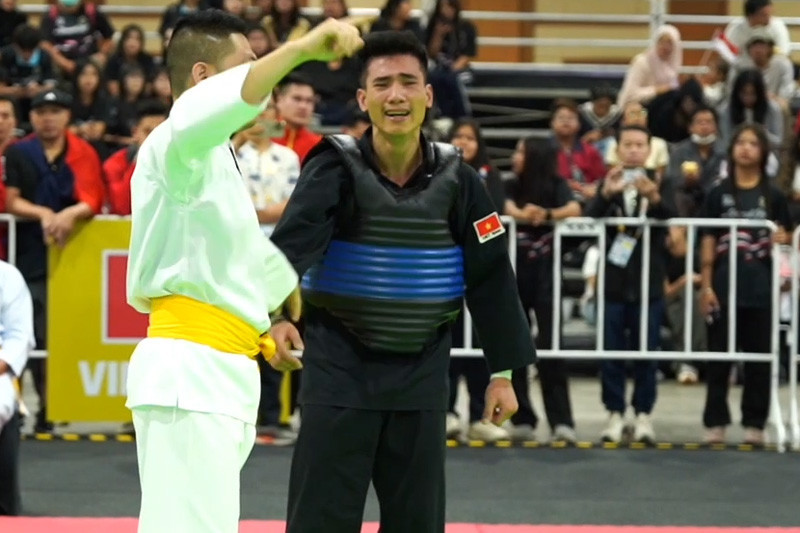
The controversy surrounding the pencak silat event left two unforgettable images: an eruption of rage from Malaysia and quiet tears from Vietnam.
Pencak silat is a sport rooted in discipline and control.
But those principles quickly unraveled when officiating came under fire for perceived inconsistencies, unclear point scoring, and what many interpreted as a familiar host-nation advantage.
During a match between athletes from Malaysia and Thailand, frustration escalated beyond formal protest.
When the result was announced, members of the Malaysian delegation charged toward the referee panel, creating chaos in the arena.
It was an outburst from a team that felt stripped of fairness - cornered and powerless in a system they no longer trusted.
Meanwhile, in a quieter corner of the same venue, Vietnam’s Vu Van Kien experienced a different kind of devastation.
He had been leading 52–34, with only four seconds left on the clock.
In a last-ditch move, the Thai opponent leaned his face forward - an apparent ploy to draw a foul.
Kien’s kick didn’t connect, but medical staff were called, and the referee penalized the Vietnamese fighter.
Vietnam’s reaction was strikingly different.
There were no shouts, no confrontations.
Just tears.
Both responses were rooted in the same feeling: injustice.
Vietnam entered SEA Games 33 as a powerhouse in pencak silat, with a legacy of consistent results.
The athletes are technically sound and mentally prepared.
But paradoxically, despite that strength, Vietnam’s typical response to controversial officiating has always leaned toward restraint.
Vietnamese athletes understand that one uncontrolled reaction could bring harsh penalties and risk the entire team’s chances.
So when faced with decisions that feel unjust, they often choose quiet acceptance over open defiance.
And in many cases, tears become the only release.
These differing responses reflect not just national character but deeper cultural attitudes toward competitive sport.
Malaysia, also a pencak silat giant in the region, entered the Games believing their voice deserved to be heard.
When that belief shattered, their reaction was fierce and public.
Vietnam, though equally skilled, chose discipline and image over confrontation.
What these incidents raise is a larger question - not just for the teams involved, but for the SEA Games itself:
How can referees fulfill their true role as fair arbiters of the sport, rather than being seen as the source of disruption?
When belief in fairness fades, no form of reaction - rage or resignation - feels like a victory.
The events in pencak silat on December 16 were not just about martial arts technique.
They were about trust.
And in the clash of fury and silence, what was most damaged was the image of regional sport.
The spirit of fair play was deeply shaken.
Ngoc Huy
.svg)
