People-centered policies are helping build stronger communities while reinforcing social cohesion in the Southwest.
“Whether Kinh, Tho, Muong, Man, Gia Rai, E De, Xe Dang, Ba Na or any other ethnic minority group, all are descendants of Vietnam and brothers and sisters of the same family. We share life and death, happiness and hardship, and help one another through times of hunger and need.”
President Ho Chi Minh’s message in a letter sent to the Congress of Southern Ethnic Minorities in Pleiku on April 19, 1946, remains deeply relevant today, particularly as hostile forces continue to exploit ethnic and religious issues in attempts to sow division and weaken national unity.
From the perspective of ethnic minority communities in Southwest Vietnam, VietNamNet presents the series “Safeguarding the Party’s ideological foundation from Southwest Vietnam” in the current context.
Vinh Chau Ward, a coastal area of Can Tho City, is home to a large ethnic minority population, with Khmer people accounting for more than 56 percent of residents.
While many households struggled with difficult living conditions just a few years ago, the local landscape has changed significantly thanks to resources provided through the National Target Program for Socio-Economic Development in Ethnic Minority and Mountainous Areas.
The story of Thach Soc, a Khmer resident of Vinh Binh Hamlet, illustrates the impact of policies that align government priorities with people's needs.
His family received support in the form of four breeding pigs and livestock feed. Local authorities also assigned agricultural officers to provide technical guidance, helping the livestock thrive and creating an additional source of income for the family.
More importantly, Thach Soc gradually learned how to manage an effective household economic model. After gaining access to preferential loans, he confidently leased farmland to cultivate onions and chili peppers in rotation. Following each harvest, the family was able to cover expenses, build savings and reinvest in production.
Thanks to support programs, the family of Thach Soc, a Khmer resident of Vinh Binh Hamlet in Vinh Chau Ward, escaped poverty in 2026.
With support of VND60 million (US$2,300) from a housing assistance program aimed at eliminating temporary and dilapidated homes, combined with the family's own contribution, a new house was built to replace their deteriorating home.
A stable home provided the foundation for economic stability. In early 2026, Thach Soc's family officially escaped poverty.
Across Vinh Chau Ward, hundreds of Khmer households are benefiting from social welfare programs, livelihood support, vocational training and development loans. The transformation is taking place day by day across this coastal community.
Nguyen Minh Chi, Vice Chairman of the Vinh Chau Ward People's Committee, said that during the 2021-2025 period, resources from the National Target Program helped improve local infrastructure and create better conditions for production and income growth.
As a result, the ward's poverty rate has fallen to just 1.23 percent.
If Vinh Chau demonstrates the effectiveness of social welfare policies linked to poverty reduction, then Cu Lao Gieng Commune in An Giang Province highlights the economic momentum generated by the National Target Program on New Rural Development.
The commune is currently reviewing and updating its status under the enhanced new rural standards, a milestone regarded as highly significant by local residents.
Today, Cu Lao Gieng's infrastructure system has been comprehensively upgraded. All inter-hamlet and agricultural roads have been paved, improving transportation, trade and production activities.
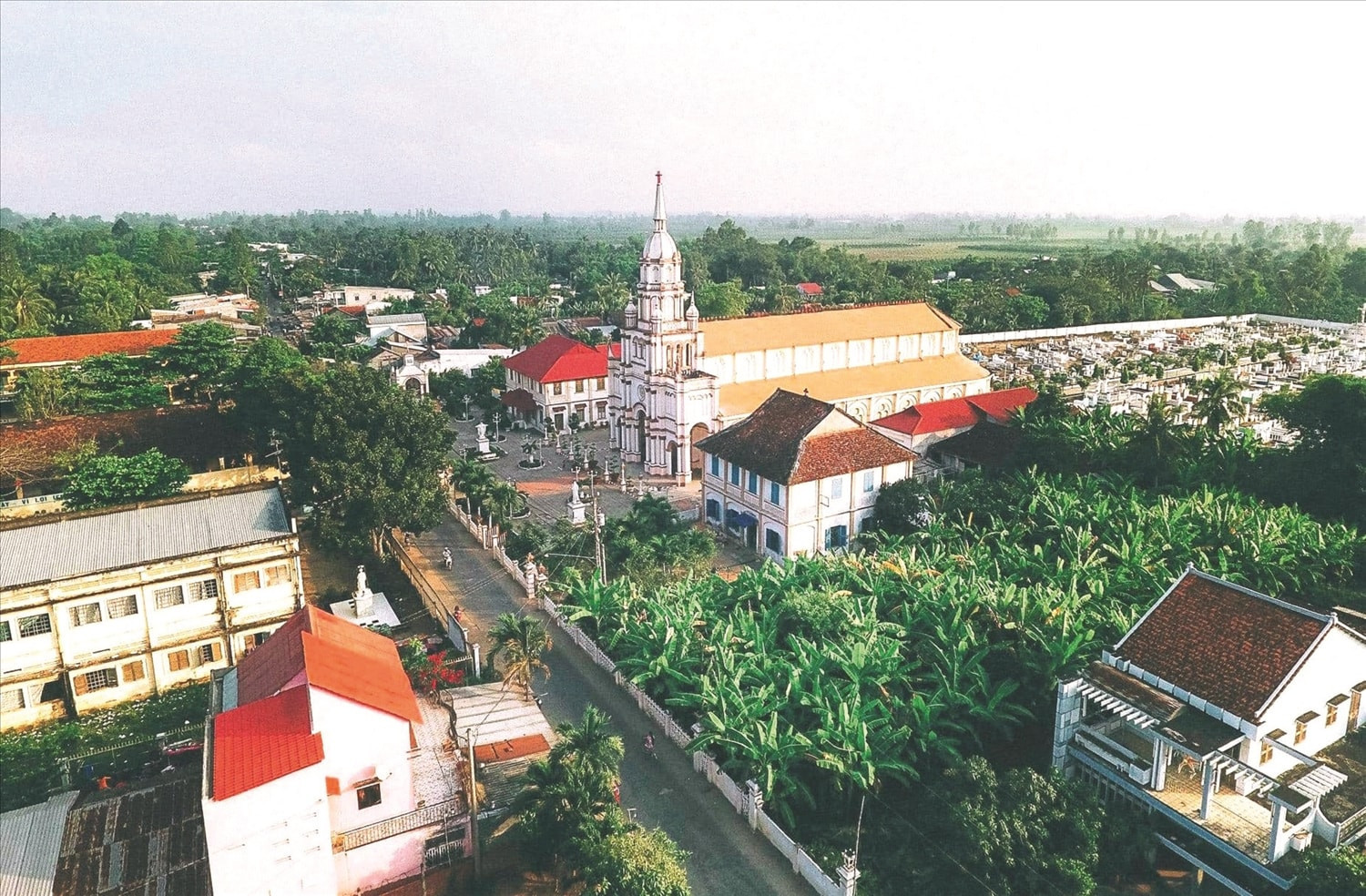
Cu Lao Gieng has been transformed through the National Target Program on New Rural Development.
Electricity networks, schools and healthcare facilities have been upgraded to national standards, helping improve quality of life. Thirteen of the commune's 14 schools now meet national standards, while all three healthcare stations satisfy national healthcare benchmarks.
The most remarkable achievement has been the restructuring of agricultural production.
Farmers have shifted away from traditional rice cultivation and increasingly invested in fruit-growing, particularly the region's specialty green-skinned giant mangoes. Fruit orchards now cover nearly 4,300 hectares, accounting for more than 98 percent of agricultural land.
Many farms have adopted VietGAP and GlobalGAP production standards, increasing average production value to more than VND330 million (US$12,700) per hectare annually.
As a result, average per capita income has exceeded VND70 million (US$2,700) a year, while the poverty rate has fallen to approximately 1.7 percent.
Cu Lao Gieng has also emerged as one of the country's leading mango-exporting areas.
Vo Minh Nang, Secretary of the Cu Lao Gieng Party Committee, said that under the principle that "new rural development has a starting point but no finish line," the commune continues improving its standards with the goal of achieving advanced and model new rural status.
By 2030, the commune aims to raise average annual per capita income to more than VND108 million (US$4,100).
The experiences of both Vinh Chau and Cu Lao Gieng demonstrate that national target programs have played a crucial role in promoting socio-economic development and improving living standards, particularly in ethnic minority communities.
More importantly, the effectiveness of these policies has fostered broad social consensus and strengthened public trust in the Party and the State.
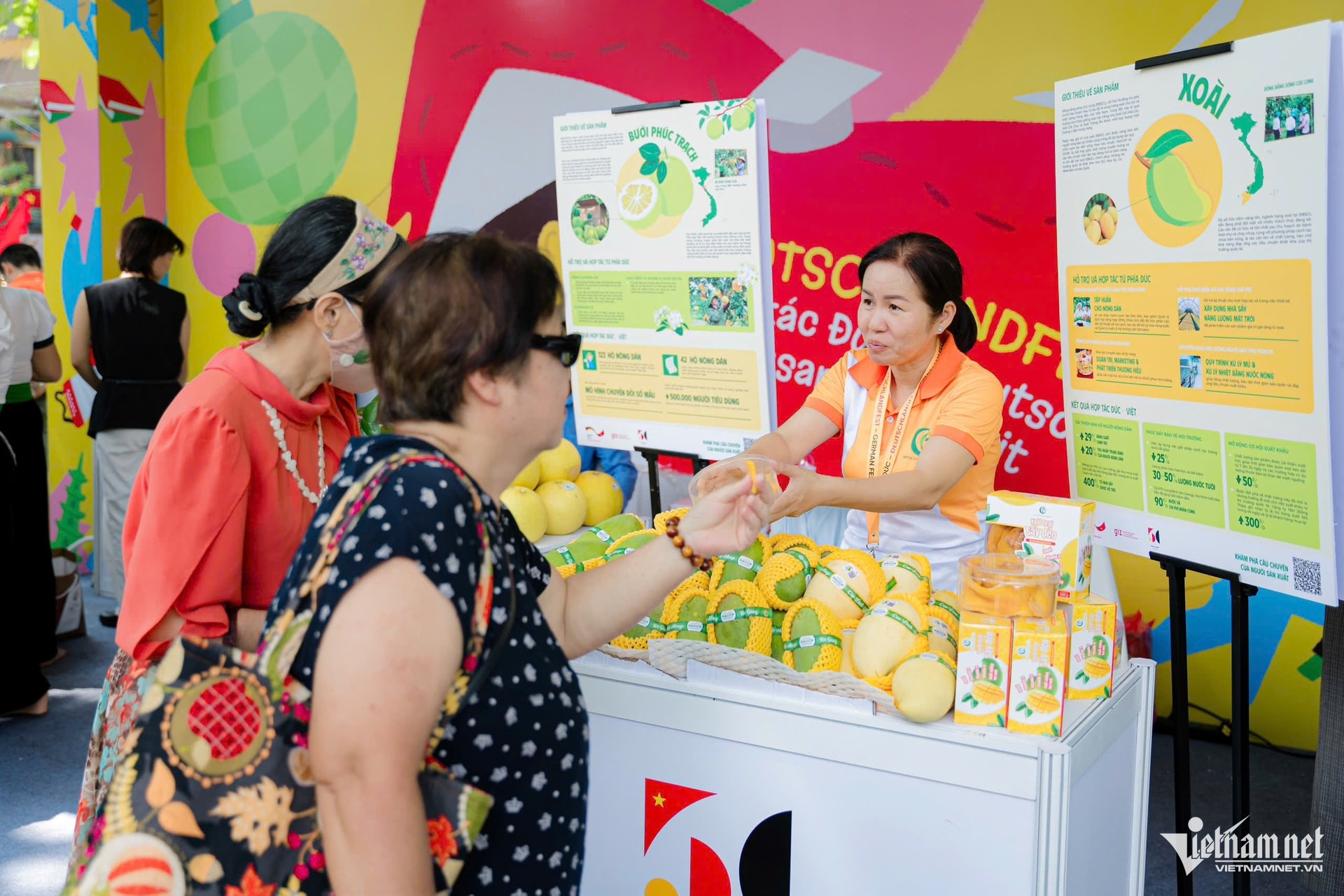
Economic restructuring has helped Cu Lao Gieng become a major center for mango exports.
Recently, Prime Minister Le Minh Hung signed Decision No. 822/QD-TTg dated May 11, 2026 establishing the Central Steering Committee for the National Target Programs on New Rural Development, Sustainable Poverty Reduction and Socio-Economic Development in Ethnic Minority and Mountainous Areas for the 2026-2030 period.
During this new phase of development, the integrated national target program is expected to generate further breakthroughs and more comprehensive progress for ethnic minority communities.
Strengthening the ideological foundation through public support and national unity
Deputy Minister of Ethnic and Religious Affairs Y Thong (fourth from left) and Can Tho Vice Chairman Nguyen Van Khoi present gifts to Khmer Theravada Buddhist monks during the Chol Chnam Thmay New Year celebration in 2026.
Across the Southwest region, the Party and the State have introduced numerous policies aimed at fostering comprehensive development in ethnic minority areas.
The implementation of Party resolutions and directives has been carried out seriously by ministries, agencies and local authorities in ways that reflect local conditions.
Among the most notable initiatives is Directive No. 19-CT/TW issued by the Secretariat on January 10, 2018, which focuses on strengthening work among Khmer communities under new circumstances.
After years of implementation, the directive has generated significant impact and contributed to visible improvements across many Khmer-populated localities.
In Can Tho City alone, between 2021 and 2025, authorities implemented 218 essential infrastructure projects in ethnic minority areas with investment totaling trillions of Vietnamese dong.
Social welfare programs, health insurance, education initiatives, support for trusted community representatives and Khmer language instruction have all been carried out in a coordinated manner.
The continued operation of Khmer language classes and the organization of traditional festivals and cultural activities not only help preserve ethnic identity but also foster community pride.
Can Tho has also focused on six key priorities: economic development and poverty reduction; education improvement; healthcare services; cultural preservation; cadre development; and maintaining security and public order.
National unity has become a powerful driver of development across ethnic minority communities in Vietnam's Southwest region.
Implementation of ethnic policies and Party directives has delivered encouraging results. Poverty rates among Khmer communities have fallen sharply, Khmer-language education has expanded and the number of Khmer Party members has grown to more than 9,500, accounting for 6.62 percent of the local Party membership.
Under its development strategy for 2021-2030, with a vision to 2050, Can Tho continues to identify ethnic affairs as a major priority closely linked to the city's broader development goals.
Areas with large Khmer populations will receive clearer strategic positioning and more targeted investment policies in the years ahead.
Venerable Ly Hung, member of the Executive Council of the Vietnam Buddhist Sangha, Deputy Head of the Can Tho Buddhist Sangha Executive Board and Standing Vice Chairman and Secretary General of the Can Tho Patriotic Buddhist Monks Association, said Party and State policies have significantly improved both the material and spiritual lives of Khmer people.
"Thanks to the attention and support of the Party and the State, Khmer pagodas, monks, respected community figures and Khmer officials have become key forces in communicating Party policies and State laws, encouraging people to preserve traditional culture, build a civilized lifestyle and strengthen national unity," Venerable Ly Hung said.
Amid the ongoing development of the Southwest region, these practical and people-centered policies are steadily building a strong frontline of public trust from the grassroots level.
That trust is an essential factor in safeguarding the Party's ideological foundation, maintaining political stability, strengthening national unity and creating momentum for sustainable development.
 Vietnamnet.vn

 Podcast






.svg)
