 Vietnamnet.vn

 Podcast



Speaking at a conference on strategic technology implementation organized by the Ministry of Science and Technology on May 18, PM Hung emphasized a major shift in policy thinking - from focusing primarily on research to developing practical products with real commercial potential and measurable contributions to economic growth.
This year’s Vietnam Science, Technology and Innovation Day was not only an occasion to honor scientists, researchers and technology enterprises, but also a demonstration of the government’s determination to make science, innovation and digital transformation new drivers of economic growth.
According to the Ministry of Science and Technology, amid increasingly fierce global technological competition, science, technology, innovation and digital transformation are becoming decisive factors shaping national competitiveness, self-reliance and global standing.
Clear output requirements
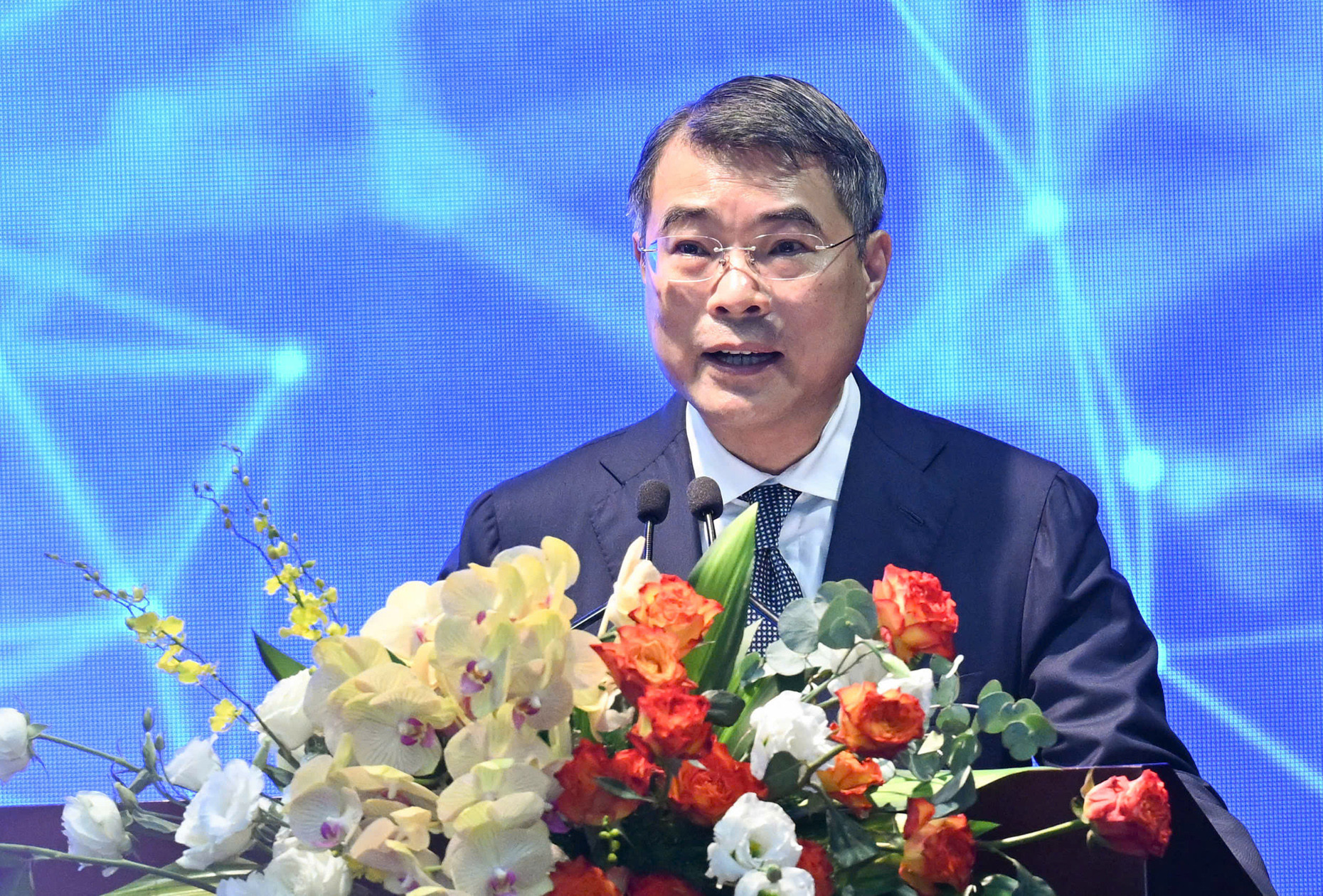
Addressing the conference, Prime Minister Hung said Vietnam’s development strategy now clearly defines science, technology, innovation and digital transformation as the country’s “leading strategic foundation, driver and breakthrough” for entering a new stage of development.
He noted that Resolution 57 of the Politburo, along with recent conclusions by the Party Central Committee, had outlined a transition toward a new growth model powered by science, technology, innovation and digital transformation, aimed at achieving double-digit economic growth in the coming years.
One of the conference’s key focuses was the implementation roadmap for Vietnam’s national list of strategic technologies and strategic technology products under Decision No. 21/QD-TTg issued by the Prime Minister.
Priority sectors include artificial intelligence, big data, cloud computing, the Internet of Things, semiconductor technology, blockchain, next-generation biotechnology, quantum technology, unmanned aerial vehicles and Make in Vietnam digital platforms.
According to the Ministry of Science and Technology, the new approach shifts away from fragmented research activities toward solving “major national challenges.”
Under this framework, strategic technology projects must clearly define expected outputs, technical standards, specific products, application targets and participating enterprises from the outset.
PM Hung stressed that strategic technologies must lead to tangible products with high added value, practical applications, strong commercialization potential and high localization rates.
“These products must make real contributions to labor productivity, national competitiveness and economic efficiency,” he said.
Businesses, universities and research institutes at the center
Another major message highlighted during the conference was that businesses must become the central pillar of Vietnam’s national innovation ecosystem.
The Prime Minister instructed ministries and government agencies to rapidly commission enterprises, research institutes and universities to develop core technologies and strategic technology products serving governance, production and business operations.
According to Hung, ministries including Agriculture and Environment, Health, Education and Training, and Industry and Trade should work closely with universities and research institutions to identify specific industry challenges and develop practical technological solutions tailored to each sector.
“Businesses, universities and research institutes must become the center of the ecosystem,” Hung emphasized, calling for clearer coordination mechanisms between government agencies, academia and industry.
Meanwhile, Minister of Science and Technology Vu Hai Quan said enterprises seeking fast and sustainable growth must invest in research and development, technological innovation and digital transformation, while also placing greater confidence in Vietnamese talent, knowledge and technology.
According to Quan, the government will continue prioritizing support for strategic sectors including AI, semiconductors, biotechnology, big data, digital infrastructure, new energy technologies and smart manufacturing.
Accepting controlled risks to achieve breakthroughs
Another notable issue raised at the conference was the need for major reforms in science and technology financing and governance mechanisms.
Prime Minister Hung argued that traditional administrative procedures would not be sufficient to support innovation-driven investment.
“The key is to commission projects, accept controlled risks and evaluate effectiveness based on final products and outputs,” he said.
He added that state funding should only be one component, alongside stronger participation from private enterprises and society to jointly invest in priority strategic products.
Hung also stressed that government financial mechanisms must become more flexible to enable effective collaboration between ministries, universities, research institutions and businesses.
“Preferential policies must be strong enough, practical and immediately applicable,” he said. “Policies must come with detailed implementation guidelines, clearly identify bottlenecks and specify authority for resolving obstacles promptly.”
The Prime Minister called for urgent reviews to remove financial barriers affecting science, technology and innovation, especially those related to strategic technologies, core technologies and technology enterprises.
He also emphasized the importance of developing Vietnam’s innovation capital market, venture capital ecosystem and startup environment.
Minister Vu Hai Quan acknowledged that innovation inevitably involves experimentation, uncertainty and the possibility of failure.
“If innovation is managed solely with a mindset of absolute safety, technological breakthroughs will never happen,” he said.
The ministry, he added, is committed to improving the institutional framework toward accepting controlled risks, expanding autonomy for science and technology organizations, reforming financial mechanisms, developing the science and technology market and strengthening intellectual property protection.
Thai Khang
.svg)
