 Vietnamnet.vn

 Podcast



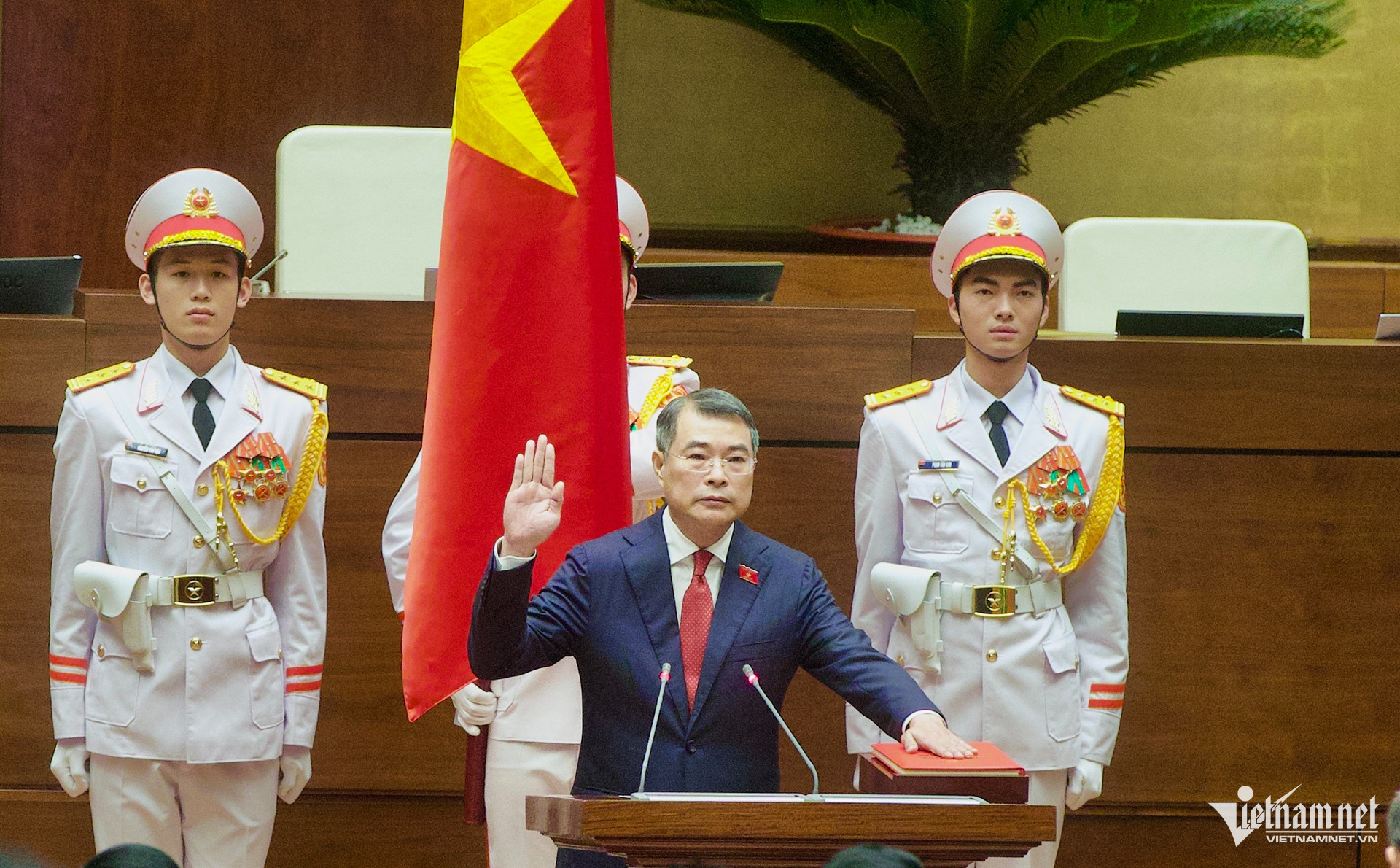
Speaking before the National Assembly on April 7, Hung said it was imperative to target average GDP growth of over 10 percent per year for 2026–2031.
More notably, the speech outlined the direction for the entire term. At its core is a commitment to building a modern, enabling government that serves the people, cuts administrative procedures, and removes bottlenecks that are holding back social resources.
At the same time, the Prime Minister made clear policy choices: placing science and technology, innovation, and digital transformation as top breakthroughs; affirming the private sector as one of the most important growth drivers; and accelerating decentralization alongside resource allocation.
Looking back at his career path, it is easy to understand why expectations for his term are so high. More than 20 years in the banking sector, along with time at the Party Central Office and the Central Organization Commission, have shaped a distinctive profile—combining strong monetary thinking with deep understanding of the system and execution discipline.
For that reason, the greatest expectation for this term may be his ability to keep the economy moving fast without veering off the track of macroeconomic stability.
Macro stability as red line for double-digit growth
The clearest takeaway from his inaugural remarks, the first socio-economic report to the National Assembly, and especially his speech on April 10, is a coherent strategic axis: firmly safeguard macroeconomic fundamentals, remove bottlenecks in resource allocation, unlock new development space, and above all, reform institutions to pave the way for high growth.
In other words, double-digit growth will not come from administrative orders or excessive expansion of investment, but from deep institutional reform, productivity gains, unlocking all social resources, mobilizing private investment and priority sectors, fostering innovation, improving human capital, and strengthening the economy’s real competitiveness.
Of course, beyond this operational framework lies a defining declaration of the term: The goal of average GDP growth of over 10 percent per year for the 2026–2031 period is a “development mandate” to realize the country’s strategic goals.
This way of framing the issue is very noteworthy. High growth is no longer just an economic indicator but has become a national development requirement: Overcoming the middle-income trap, expanding space for domestic enterprises, creating more room for social security, education, science and technology, and improving resilience against global fluctuations.
Yet this is also where the most important governing principle emerges: strong growth ambition without compromising stability.
The Prime Minister’s message is clear: “We are determined not to allow macroeconomic instability or economic crisis under any circumstances.”
He also stated on April 10: “We do not accept hot growth, high growth at the cost of macroeconomic stability.”
This is the red line for all policy decisions.
What is very noteworthy is that in the entire message at the beginning of the term, there is no signal of administratively driven monetary easing, no directive-style interest rate cuts, and no indication of tolerating higher inflation for short-term growth.
This is a prudent choice that builds market confidence.
It shows that the goal of double-digit growth this time does not follow the old path of pumping more money, forcing interest rate reductions, or expanding investment at all costs. The foundation of growth must be trust in the stability of inflation, exchange rates, interest rates, and policy predictability.
In a world full of uncertainties, from oil prices and logistics to tariffs and supply chain disruptions, economic management must first secure macro stability as a safe foundation for market development. Only when businesses trust policy stability will they invest for the long term.
High growth from opening more markets
Maintaining macro-stability is only the necessary condition. What the market expects from this term is a stronger step: Opening more new markets and returning the right of movement to resources.
Here, the message of institutional reform becomes particularly clear: in peacetime, society cannot continue to operate under an administrative command mechanism. The economy must rely on objective laws such as supply-demand, value, competition, and profit. The law must become the supreme tool to adjust behavior, protect property rights, and create a fair playing field for all economic sectors.
In other words, to achieve sustainable high growth, Vietnam does not only need more capital but also needs to develop more markets.
Lan Anh - Tu Giang
.svg)
