 Vietnamnet.vn

 Podcast



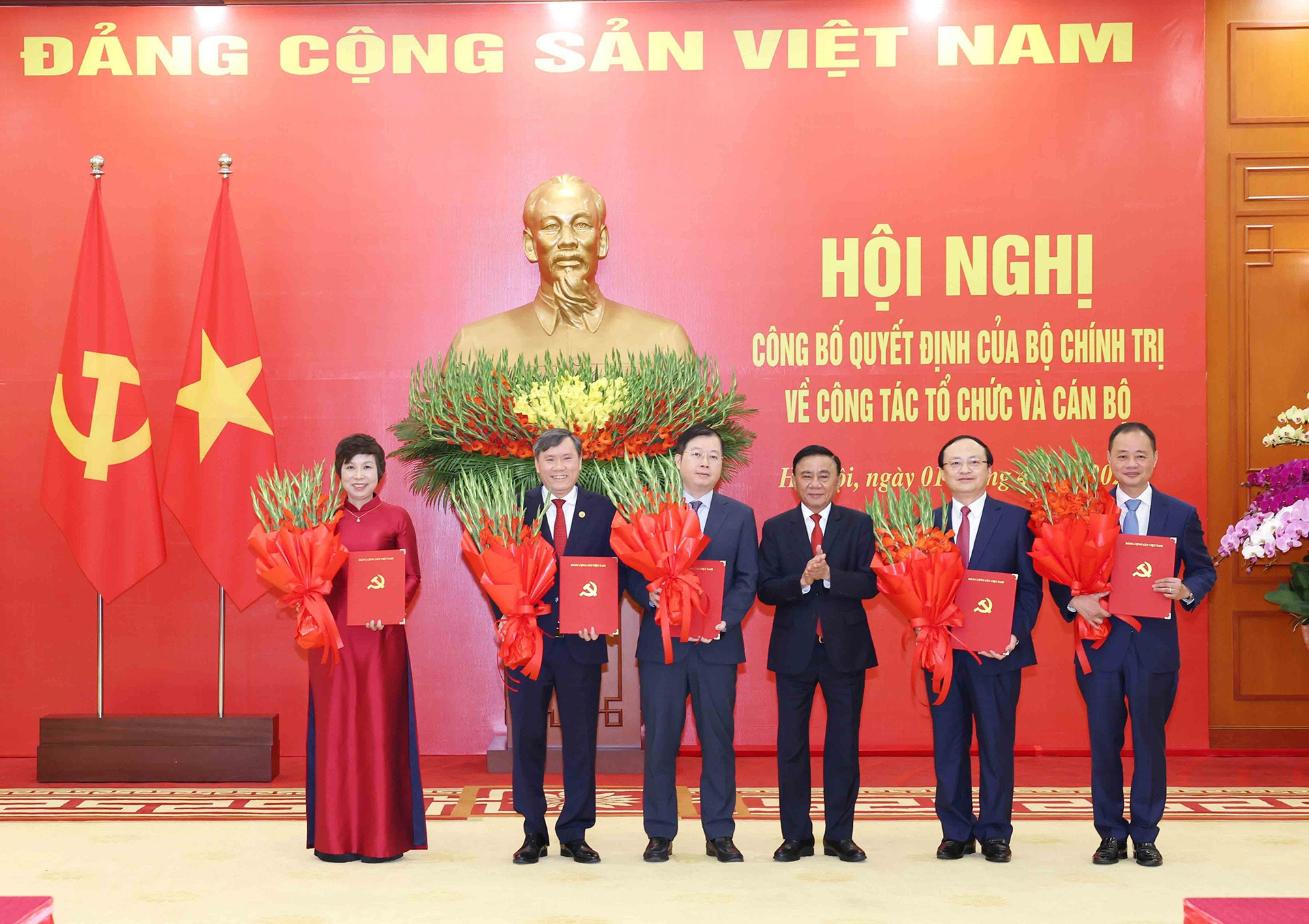
The announcement was made at a conference held on the morning of April 1, where decisions affecting Vietnam Television, Voice of Vietnam, Vietnam News Agency, the Vietnam Academy of Social Sciences, and the Vietnam Academy of Science and Technology were officially announced.
Hoang Trung Dung, Standing Deputy Head of the Party Central Committee’s Organization Commission, said that on March 30, the Politburo had issued decisions defining the functions, tasks, authority, organizational structures, and working relationships of the five institutions.
At the same time, a series of senior personnel appointments were confirmed.
Le Van Loi, a member of the Party Central Committee, was appointed President of the Vietnam Academy of Social Sciences, while concurrently serving as Deputy Head of the Party Central Committee’s Commission for Policy and Strategy, and a member of both the Executive Committee and Standing Committee of the Party Committee of central Party agencies for the 2025-2030 term.
Tran Hong Thai, also a member of the Party Central Committee, was appointed President of the Vietnam Academy of Science and Technology, holding the same concurrent roles within the Commission for Policy and Strategy and Party structures.
Nguyen Thanh Lam was appointed Director General of Vietnam Television, while also serving as Deputy Head of the Party Central Committee’s Commission for Information, Education and Mass Mobilization, alongside Party committee responsibilities.
Do Tien Sy was appointed Director General of Voice of Vietnam, with similar concurrent roles, and Vu Viet Trang was named Director General of Vietnam News Agency, also holding parallel positions within Party bodies.
On behalf of the Politburo, Tran Cam Tu, Standing member of the Secretariat, presented the decisions to the leadership of the five institutions.
A strategic shift in governance and role
Speaking at the conference, Tran Cam Tu emphasized that the transfer of these five institutions from government bodies to public service units under the Party Central Committee represents a decision of major strategic importance.
The move, he noted, reflects the Party’s vision to continue reforming leadership methods, enhancing operational efficiency, and strengthening direct and comprehensive central oversight over critical sectors such as national media and scientific research.
In the context of rapid and sustainable development, alongside the accelerating impact of digital technologies, artificial intelligence, and intensifying global competition, the expectations placed on these institutions are increasingly high.
Tran Cam Tu stressed that the transition is not merely an organizational adjustment, but a fundamental shift in position, role, and political responsibility in a new stage of national development.
Building a competitive national media ecosystem
For the three major media agencies, he called for a deeper awareness of their role as the Party’s core ideological force, tasked with guiding public opinion and countering false or hostile viewpoints with proactiveness, sharpness, and professionalism.
He urged these institutions to master new technologies, improve content quality, expand their reach, and engage more effectively with the public, particularly younger generations.
A key objective is to build a strong national media ecosystem capable of competing regionally and internationally, while also fostering a workforce of journalists with strong political integrity, ethical standards, and professional competence.
Advancing strategic research capacity
For the two academies, the directive focused on prioritizing major, long-term strategic research to support the formulation of Party guidelines and state policies.
They were also encouraged to strengthen interdisciplinary research, bridge social sciences with natural sciences, and connect fundamental research with practical applications to serve the country’s rapid and sustainable development.
In addition, both institutions are expected to deepen international integration and enhance the global standing of Vietnamese science.
The decisions underscore a broader effort to realign key institutions with national strategic priorities, reinforcing both governance capacity and the country’s ability to navigate an increasingly complex global environment.
Tran Thuong
.svg)
