 Vietnamnet.vn

 Podcast



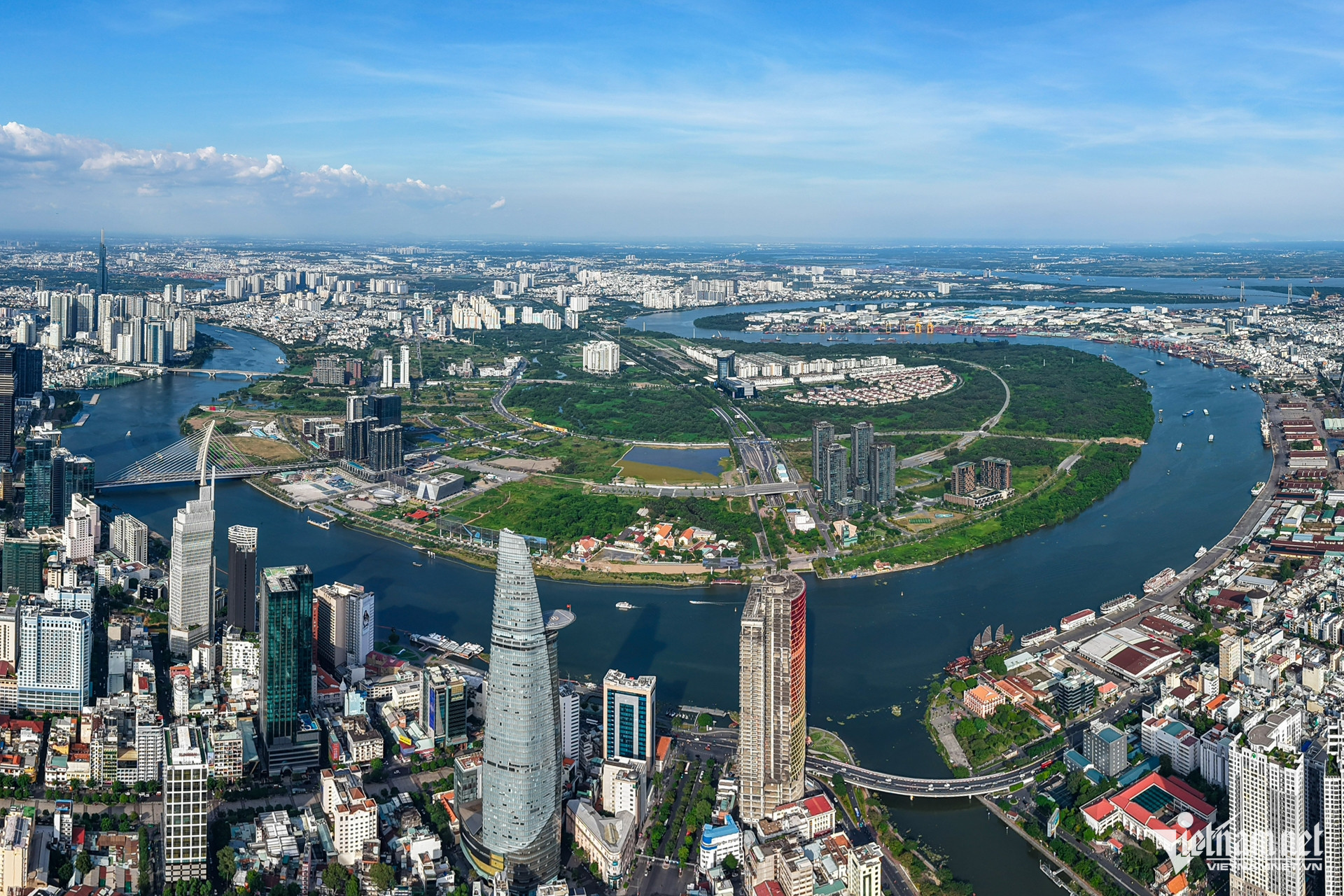
On behalf of the Politburo, Party General Secretary and State President To Lam signed Resolution No. 09-NQ/TW on the construction and development of Ho Chi Minh City in the new era.
Ho Chi Minh City to become a symbol of Vietnam’s dynamic development in the 21st century
The Politburo stated that building and developing Ho Chi Minh City in the new era is “a particularly important political mission of the entire Party, people, military, and political system, especially the city’s Party organization, government and people,” under the guiding principle: “Ho Chi Minh City for the whole country, and the whole country for Ho Chi Minh City.”
The resolution also emphasizes the need to focus on completing synchronized, breakthrough and exceptional institutions and policies, while strongly promoting decentralization and delegation of authority to enable the special urban center to become a symbol of Vietnam’s dynamic development in the 21st century. The city is expected to lead in institutional innovation and development quality, governance standards, and serve as the country’s key growth engine, innovation hub and major gateway for international integration.
The Politburo also stressed that Ho Chi Minh City must establish a new development model, effectively leveraging its potential, advantages and strategic position to soon become a powerful economic-financial center, a culturally rich and humane city, and a regional hub for science, technology and innovation in Southeast Asia and Asia.
At the same time, the city’s Party organization and political system must be built into a united, exemplary, transparent and comprehensively strong apparatus, distinguished by leadership capacity and public service discipline, alongside a highly qualified cadre workforce willing to think boldly and act decisively for the common good.
Regarding development goals, the resolution states that by 2030, Ho Chi Minh City should become a civilized, modern, dynamic and innovative metropolis, serving as a center for economics, culture, society, science, technology, innovation, logistics and international integration, while leading the country’s industrialization and modernization efforts and holding a prominent position in Southeast Asia.
By 2045, the city is envisioned as a civilized, modern, dynamic and innovative urban center - a leading Asian hub for economics, culture, society, science, technology and innovation, as well as a globally attractive destination with distinctive cultural and social development, high quality of life and deep international integration.
Looking toward the 100th anniversary of national reunification in 2075, Ho Chi Minh City aims to become a global, smart and modern city with comprehensive development comparable to leading cities worldwide, featuring green and sustainable growth, high living standards and strong climate resilience.
Key tasks and solutions
The resolution outlines eight major tasks and solutions.
First, the city must build a new growth model based on science, technology, innovation, digital transformation, labor productivity and competitiveness.
Ho Chi Minh City is expected to develop on the foundation of a knowledge economy, digital transformation, an innovation ecosystem and entrepreneurial spirit. The state sector should continue playing a leading role, while the private sector is identified as one of the most important growth drivers. The city must pioneer digital transformation, green transition, energy transition, economic restructuring and workforce quality improvement.
The city is also tasked with implementing a data strategy focused on establishing and connecting interoperable databases for smart city governance; mastering core technologies such as AI, semiconductors, biotechnology, advanced materials and clean energy; developing nationally significant innovation centers; adopting special policies to attract investment and high-tech transfer; reforming public procurement mechanisms; and building shared research, testing and innovation infrastructure.
Second, the resolution calls for the establishment of breakthrough and exceptional institutions to drive the city’s development in the new era. The Politburo requested the drafting and issuance of a Special Urban Law to create an extraordinary institutional framework and synchronized legal corridor, described as a “breakthrough within breakthroughs,” allowing Ho Chi Minh City to maximize its strengths, mobilize all resources and accelerate sustainable development.
The city will also receive broad decentralization and delegation of authority to the People’s Council, People’s Committee and chairman of the municipal People’s Committee across most sectors, excluding defense, security, foreign affairs and religion. Greater authority and responsibility will also be assigned to local leaders alongside mechanisms for power oversight.
Ho Chi Minh City will additionally be allowed to pilot new mechanisms and controlled sandbox models that differ from existing legal regulations, while developing common quality standards and encouraging advanced standards beyond national norms and those applied elsewhere in the country.
Third, the city must pursue long-term and climate-adaptive urban planning. This includes developing a comprehensive master plan with a 100-year vision, planning and developing satellite urban areas surrounding the central urban zone, prioritizing completion of the urban railway network, and strengthening infrastructure linking seaports, airports, industrial zones and free trade areas.
Fourth, the city must effectively mobilize and utilize all resources for rapid and sustainable development. Ho Chi Minh City is expected to create mechanisms that strongly promote private sector participation in production and business activities, form private economic conglomerates of national and regional scale, improve state-owned enterprise efficiency and establish mechanisms to unlock land resources. The city will also be permitted to raise capital through municipal bonds, project bonds and loans from domestic and international financial institutions to implement major projects.
Fifth, the city is tasked with building a civilized and modern special urban area focused on improving residents’ quality of life. The Politburo directed Ho Chi Minh City to develop into an internationally ranked metropolis based on a multi-polar, multi-center model with smart and modern infrastructure and governance. The city must also accelerate social housing programs, relocate houses along canals, renovate old apartment blocks, prioritize green technology, new materials and renewable energy in urban construction and operations, while fundamentally addressing flooding, environmental pollution and urban green space expansion.
Sixth, the city must comprehensively develop culture and people worthy of the city named after President Ho Chi Minh. In the new phase, Ho Chi Minh City should focus on shaping a cultural and human value system characterized by patriotism, resilience, solidarity, compassion, dynamism and creativity. The city is also expected to become a major education and training center, aiming to build one of Asia’s leading education systems before 2030.
Seventh, the resolution highlights the importance of ensuring national defense and security while improving foreign affairs and international integration. One key task is closely combining socio-economic development with defense and security objectives, including the goal of making Ho Chi Minh City “drug-free” by 2030. The city must also improve foreign relations and proactively seize opportunities from next-generation trade agreements while expanding cooperation with cities around the world.
Eighth, the resolution calls for building a clean and strong Party organization and political system. Ho Chi Minh City is expected to improve the leadership capacity and combativeness of Party organizations and members, while establishing appropriate salary and incentive mechanisms to attract and retain talent. The city will be allowed to proactively increase staffing levels by up to 20% beyond central government allocations and experiment with a “come and go” mechanism for high-quality human resources. Anti-corruption, anti-waste and anti-negativity efforts must be strengthened, alongside the development of e-government and digital government.
Phuoc Sang
.svg)
