 Vietnamnet.vn

 Podcast



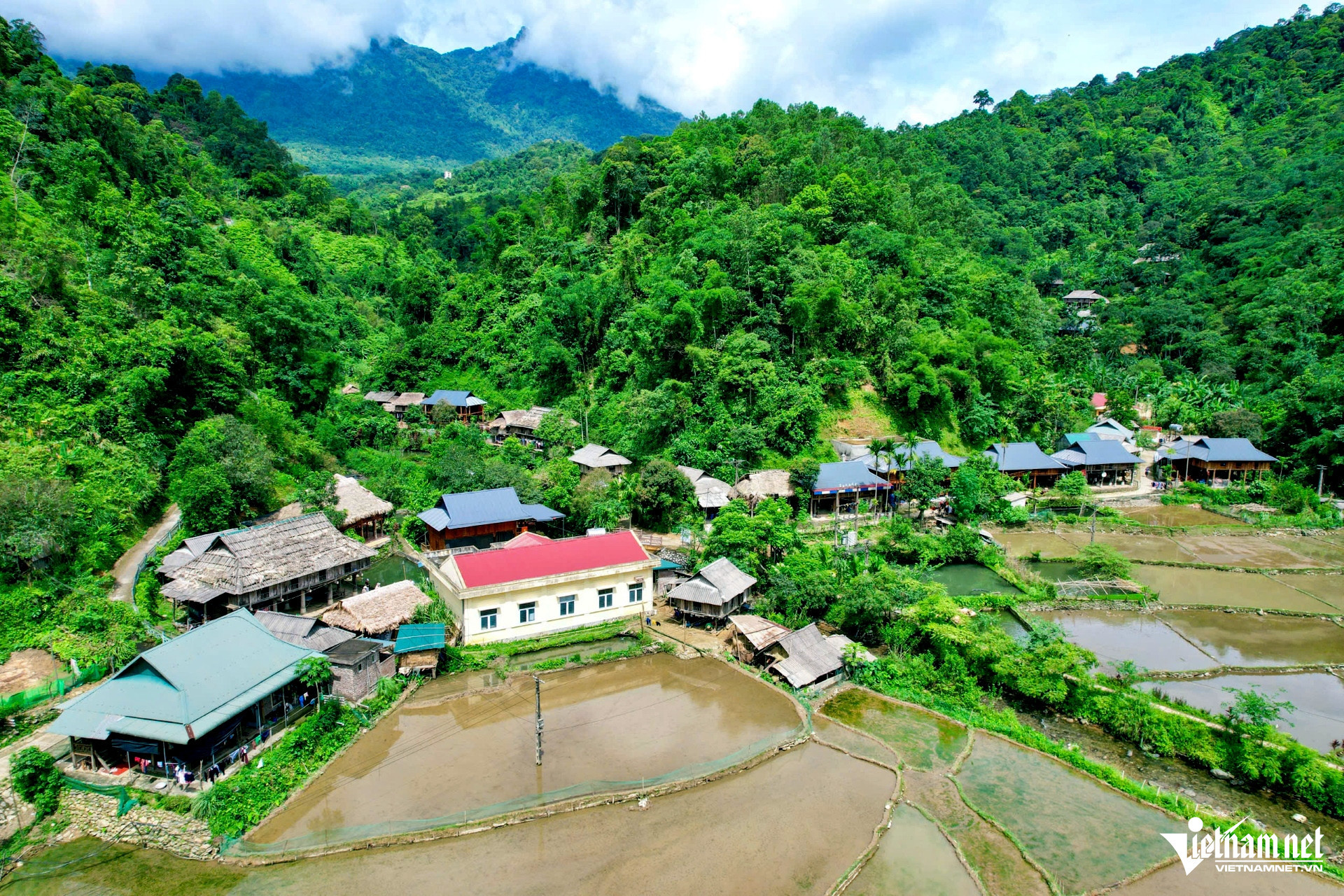
Stilt houses now glow with lights, village roads are clean and orderly, and stable livelihoods have helped the village reach new rural standards, becoming a bright spot in the core area of Pu Luong.
The most striking impression is the visible change along every slope and stilt house in Kho Muong. The small village nestled deep in a valley, once considered an isolated “island” that was hard to access, has become one of Thanh Hoa’s most attractive community tourism destinations.
Ha Van Thao, head of the village, said it lies more than 7 km from the center of Pu Luong commune and was once among the most disadvantaged hamlets in the area.
Rugged terrain, narrow roads, and frequent landslides during the rainy season made travel difficult. Livelihoods relied mainly on upland farming, glutinous rice cultivation, and small-scale livestock raising, resulting in low incomes. For many years, the poverty rate remained high.
In 2016, when local authorities identified tourism as a sustainable development path, Kho Muong, located in the core zone of the nature reserve and endowed with rare landscapes such as a basin-shaped valley, terraced fields and the famous Doi Cave, was selected as a starting point for a community tourism model.
Change began with residents reaching consensus to develop tourism. From just a few pioneering households renovating their stilt houses into homestays, all 64 households in the village now participate in developing the model. Traditional stilt houses have retained their original architecture while being upgraded to be clean, tidy, and suitable for domestic and international visitors.
Thanks to tourism, average incomes have risen markedly. A well-run homestay can earn VND150–300 million per year, several times higher than traditional farming. Support services such as motorbike transport for tourists, catering, sales of agricultural products, and cultural performances also generate stable income for many families.
As a result, Kho Muong became the first village in the commune to meet criteria to be recognized as ‘modern rural areas’.
Well-known tourism valley
Pu Luong commune leaders said in 2020 the Thanh Hoa provincial People’s Committee approved the project “Building a pilot community-based tourism model in Kho Muong village.” It develops branded, high-value and competitive community tourism products, aiming to be a distinctive OCOP product of the locality.
Under the plan, Kho Muong’s community tourism site aims to welcome about 7,000 visitors in 2025 and more than 9,000 in 2030, with 50 percent staying overnight and 50 percent being international visitors. Total tourism revenue in 2025 is projected at nearly VND7 billion, expected to rise to more than VND14 billion by 2030. The project is also expected to create jobs for 120 workers.
To tap tourism potential, authorities have invested in infrastructure, including upgrading access roads to Doi Cave, building check-in points, improving parking areas and village roads, and renovating the communal house into an exhibition space. At the same time, local cultural troupes have been developed, Thai folk songs revived, and adventure and exploration services created, linking tours from Mai Chau and Don village to Kho Muong.
Local leaders emphasized that Kho Muong does not pursue mass tourism. Residents maintain a moderate scale to ensure the environment and landscape are preserved.
“The success of Kho Muong shows that a well-organized community tourism model developed from residents’ own needs can become a powerful driver helping disadvantaged areas escape poverty. From an isolated village, Kho Muong has now become a new rural bright spot of the commune, contributing to making Pu Luong one of the province’s most attractive ecotourism regions,” a Pu Luong commune leader said.
Le Duong
.svg)
