 Vietnamnet.vn

 Podcast



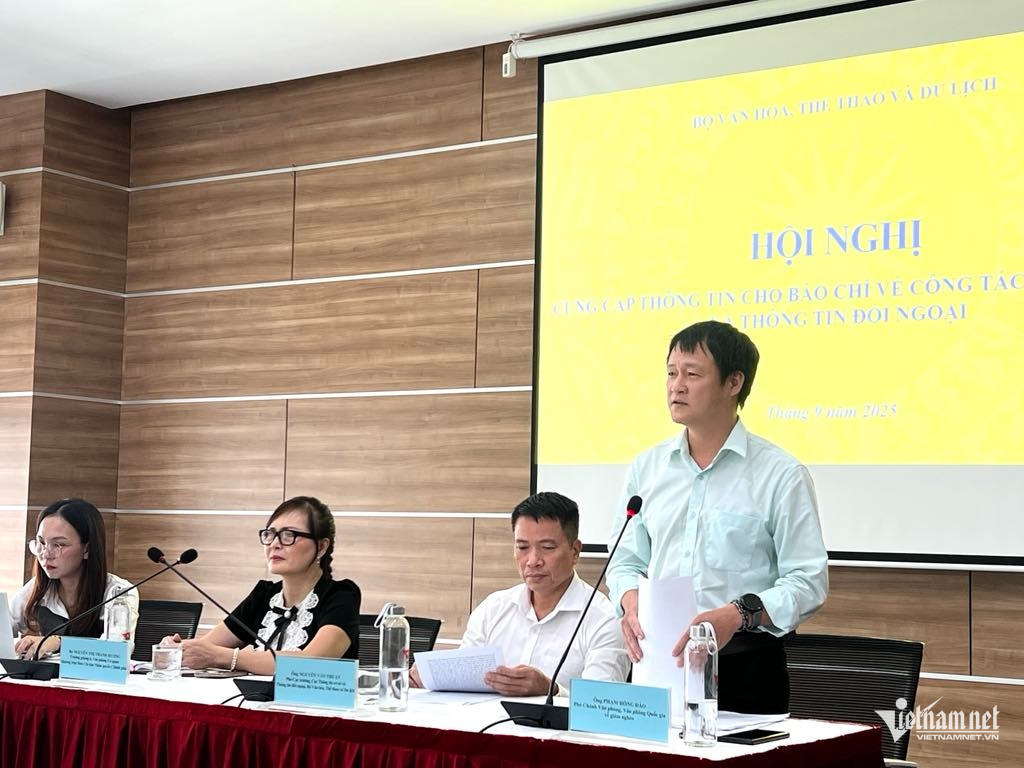
At a press briefing on human rights and foreign information held on September 26 in Hanoi, Pham Hong Dao, Deputy Chief of the National Office for Poverty Reduction under the Ministry of Agriculture and Environment (MAE), shared data on Vietnam’s poverty alleviation efforts and their role in securing human rights.
He said poverty reduction results met and exceeded the targets set by the National Assembly and Government in 2021-2025 (which aimed for a 1-1.5 percent annual reduction). The poverty household rate dropped from 5.2 percent at the beginning of the period to 1.93 percent in 2024. On average, the poverty rate among ethnic minorities and mountainous areas declined by more than 3 percent per year.
By the end of 2025, the multidimensional poverty rate is expected to fall to 0.9-1.1 percent, while the poverty rate among ethnic minority households to 12.55 percent.
“In 1998, the poverty rate nationwide was 58 percent; by end‑2024 it had dropped to just 1.93 percent. Under the poverty standard for 2021–2025, by end‑2025 it will be about 1 percent. The international community acknowledges Vietnam as among the fastest in poverty reduction,” Dao said.
To achieve those results, the Party and State prioritized mobilizing many resources for poverty reduction policies and activities. The national target program for sustainable poverty reduction had a total budget of VND75,000 billion for 2021–2025, including VND48,000 billion from the state budget, VND12,000 billion as local reciprocal funds, plus other social mobilization sources.
That program focused on socio‑economic investment in deeply poor areas and supported vulnerable groups to avoid falling into poverty.
Thanks to support from governments at all levels, many infrastructure systems such as electricity, roads, schools, and medical stations have been built, significantly improving living standards in poor and especially difficult areas.
Moreover, more than 10,500 poverty reduction models and projects have been implemented, creating sustainable livelihoods and promoting shifts in economic and labor structure in poor localities.
“In remote and distant areas, people don’t want to migrate, because that brings many social risks, especially for children. Stable jobs must be created so they earn income without forced migration,” Dao said.
Major challenges in remote areas
Dao also noted that poverty reduction in the coming period still faces many challenges.
In some difficult regions such as the midlands and northern mountains and the Central Highlands, poverty rates remain high, exceeding 50 percent in some areas, or even over 70 percent, posing high risk of falling back into poverty.
“There are still a few people who don’t want to escape poverty; they think, ‘why work if the State gives money to spend.’ That is difficult for policy makers; they need to design programs to change these mindsets,” Dao observed.
Some remote areas still lack essential infrastructure, with limited access to healthcare, education, clean water, and environmental sanitation. Production, commercial, and logistics infrastructure remain underdeveloped, affecting livelihood efficiency.
In many localities, poverty reduction models lack sustainability and are not closely aligned with local conditions, indigenous culture, or long-term development needs.
MAE is actively collaborating with relevant ministries to develop poverty standards for 2026-2030.
“Directive 05 from the Party Central Committee’s Secretariat tasked the Government with creating multidimensional, inclusive, and sustainable poverty standards suited to each period’s socio-economic conditions. At a recent meeting, Deputy Prime Minister Tran Hong Ha instructed MAE to update indicators for basic social service deficits, including new indicators related to natural disaster impacts,” Dao shared.
“We want to raise the income poverty standard, but some argue the budget cannot yet support it, suggesting we temporarily apply the 2021-2025 standard for 2026-2030 and adjust later when funds are available. However, this would make poverty reduction challenging in the new context,” Dao added.
The projected state budget support for the National Target Program for New Rural Development and Sustainable Poverty Reduction for 2026-2030 is VND360,000 billion.
From 2026 to 2030, sustainable poverty reduction will address three major issue groups: supporting socio‑economic infrastructure development in poor areas; addressing deficits in basic social services under the new poverty standard; and management, information/communication, oversight, and monitoring.
Vietnam has issued national poverty standards eight times. Vietnam is among the first 30 countries in the world, and the first country in Asia, to adopt a multidimensional poverty standard, ensuring a minimum living standard aligned with sustainable development goals.
Tran Chung
.svg)
