 Vietnamnet.vn

 Podcast



The 14th National Congress of the Party has opened up long-term strategic orientations for the country in the coming decades. Goals regarding sustainable development, reorganizing developmental space, innovating growth models, and improving citizens' quality of life have been set as consistent pillars.
In conversations with VietNamNet, doctors, artists, and entrepreneurs at the peak of their talent, profession, and experience shared their observations and expectations for the country's primary goals in the coming time, focusing on the "development for the people" theme chosen by the 14th Congress.
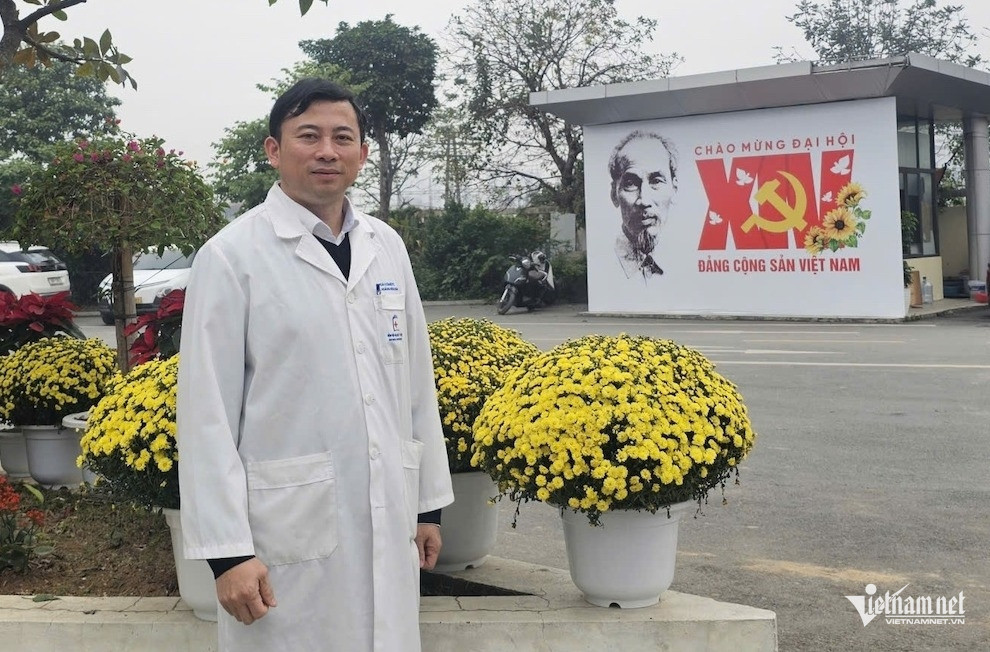
Associate Professor Dr Hoang Bui Hai came through the harsh trial of the Covid-19 pandemic. Having worked directly in outbreak hotspots in central provinces and Binh Duong, and later serving as deputy director of the Covid-19 Treatment Hospital under Hanoi Medical University Hospital, he views the pandemic not only through a professional lens but also from the perspective of an insider reflecting on the structure and future of the healthcare sector.
As post–14th Congress policy decisions place public health at the center of development, long-standing concerns of medical professionals seem to have found the right policy moment.
The following is an interview with Dr Hai.
Following the 14th Party Congress, when the State identifies public healthcare as a major priority, how do you perceive the shift in current medical thinking and policy?
Healthcare and education are the two most important pillars of society because the ultimate goal is human happiness. Only with health can people feel happiness and have the capacity to create happiness for others. Elevating public healthcare to a strategic policy decision is extremely important. When people are placed at the center, we move toward sustainable development, minimize negative impacts, and build a trustworthy living environment.
In your opinion, what does the healthcare sector need to change in the coming time - from doctor training to system organization, so that people truly benefit from the Party and State's healthcare policies?
I clearly notice that currently, the State is "untying" scientific research activities by cutting intermediate steps, reducing administrative procedures, and granting immunity from criminal liability for risks causing damage to the State related to budgets/funds during the testing and application of new scientific progress. The State and society have also devoted much attention to residency training for doctors.
Your question above is a question for an entire industry. I am not a policymaker, but from a personal perspective through work experience, I believe the starting point remains people. To have a strong medical sector, we must have well-trained people.
We need to build a unified training system nationwide that approaches regional and international standards. This is also a point that Hanoi Medical University is very concerned about, to strongly innovate the training program, from entrance and exit evaluations to professional standard sets. But students cannot be taught only through textbooks in lecture halls. The practice environment at the hospital is a vital factor for human resource training. The hospital-university model remains the world standard.
Medical training is very expensive. The tuition students pay only accounts for a small part of the actual cost. In developed countries, medical students are considered a precious resource. Students from other countries must pay very high tuition. If we can standardize the input, the training process, and the output, we can not only meet domestic demand but also participate in the international labor market. When the program is globally recognized, Vietnamese doctors can fully become high-quality labor exports.
Additionally, I believe we need to reduce the imbalance between primary healthcare and specialized healthcare. For skilled doctors to work at lower-level facilities, they need sufficient income to support their lives, opportunities for research and skill improvement, a professional working environment, talented colleagues to learn from, and interconnected systems for medicines and diagnostics.
This cannot be gained overnight, but it is an issue that must be calculated seriously.
However, current tuition fees for medical students are not low, even two to three times higher than the average tuition fees of other fields.
That is why, to encourage students to pursue medical studies, the State could expand preferential loan policies with binding commitments, and encourage businesses and philanthropists to invest in universities and research.
We also need national financial coordination for medical human resource training, while investing heavily in simulation centers, basic research centers, innovation centers, and high-tech applications in healthcare. We should call upon philanthropists and businesses, if they have the means, to direct their spiritual and material sponsorship toward universities and research centers.
to be continued...
Thanh Hue
.svg)
