 Vietnamnet.vn

 Podcast



Despite facing unprecedented challenges in recent years, Vietnam’s agriculture sector continues to serve as a stabilizing force and growth engine for the national economy, Prime Minister Pham Minh Chinh said at the Ministry of Agriculture and Environment’s annual conference.
The Prime Minister emphasized that agriculture has played a pivotal role in ensuring food security, maintaining macroeconomic stability, and contributing to social welfare and national defense amid global uncertainty and domestic pressures.
Resilience in times of adversity
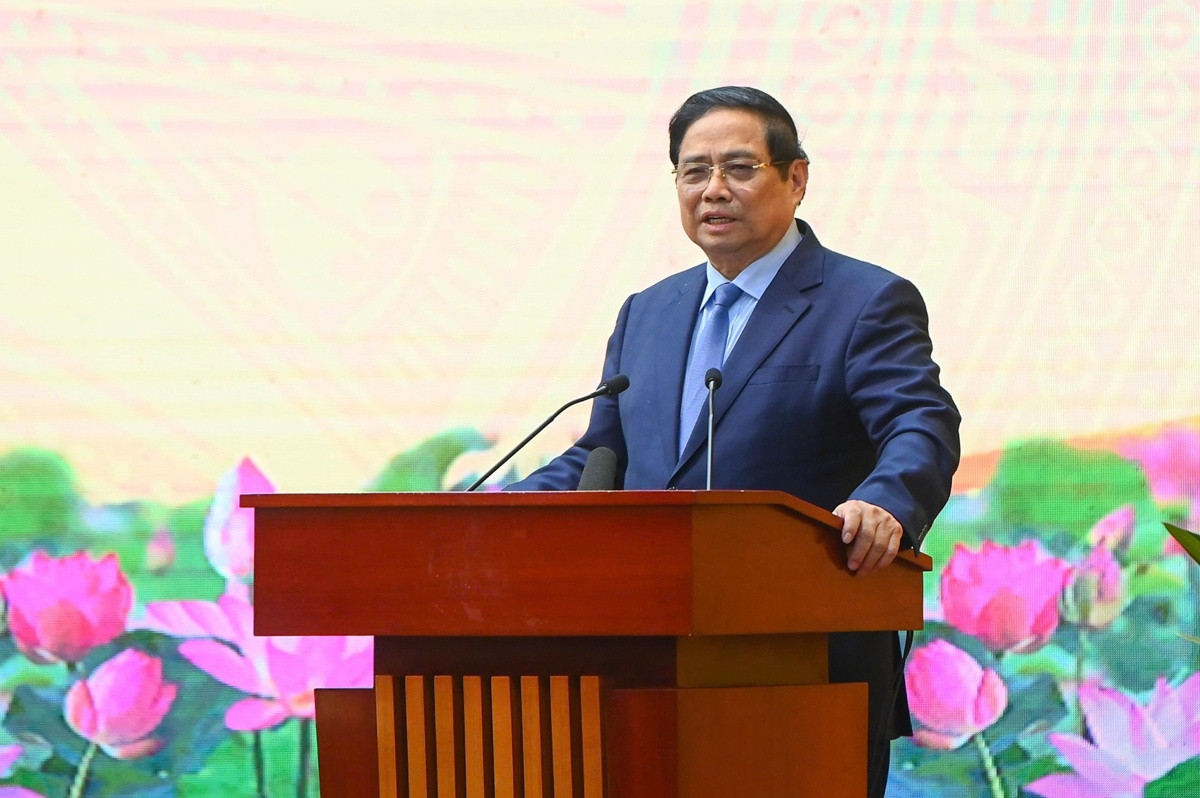
During the 2021–2025 period - especially in 2025 - the sector grappled with disruptions from the Covid-19 pandemic, global supply chain breakdowns, volatile trade policies from major economies, and intensifying climate-related disasters.
Yet, according to the Prime Minister, the industry demonstrated remarkable resilience. “Under the unified leadership of the Party, the decisive governance of the Government, support from the National Assembly, the determination of citizens and enterprises, and international cooperation, the agriculture sector overcame tremendous hardship to achieve noteworthy outcomes,” he said.
In 2025, most major targets were met or exceeded. The sector’s export turnover reached approximately $70 billion, with a trade surplus of over $20 billion - clear evidence of a shift from “agricultural production” to “agricultural economics,” and a boost in value and competitiveness.
A buffer for social stability and inflation control
Pham Minh Chinh stressed that agriculture played a critical role during major disruptions such as the Covid-19 crisis, ensuring sufficient food supply for nearly 100 million people and thereby supporting social stability.
“Two critical elements in inflation control are food and energy. Agriculture has fulfilled its responsibility excellently,” he stated.
He highlighted the transformative role agriculture played in Vietnam’s development - from a post-war country facing food shortages to a global rice exporter with an emerging agri-brand identity. Despite rapid industrialization and urbanization, he underscored the need to maintain food security under all circumstances.
The Prime Minister reiterated the "three rural pillars" strategy, which places the farmer at the center, rural areas as the foundation, and agriculture as the driving force. All policies, he said, must aim to uplift farmers' lives and nurture a generation of smart, tech-savvy, and climate-resilient rural entrepreneurs.
Reform, green transition, and digital transformation
Acknowledging the efforts of the Ministry of Agriculture and Environment, the Prime Minister praised the agency’s strong streamlining - cutting nearly half of its internal units - and its bold legislative reforms, including two newly passed laws and a resolution that unlocks land and resource bottlenecks.
Summarizing 2025’s achievements, he cited six defining phrases: “Lean administration – institutional breakthroughs – green and digital transition – rural development – resource unlocking – resilience under pressure.”
He noted the sector's strides in applying science and technology, developing land, agriculture, and fishery databases, and rolling out major programs like the 1-million-hectare high-quality, low-emission rice initiative.
While the land database was developed rapidly, he stressed that data must be “accurate, complete, clean, and live” - interconnected and shared across systems.
He also emphasized that branding is essential. Without strong agricultural branding, Vietnam’s products remain underpriced. A powerful brand, however, can multiply their value.
To advance the “One Commune, One Product” (OCOP) program, he outlined five core pillars: brand building, raw material zoning, enterprise leadership, tech application, and credit support. OCOP, he said, must evolve from a local pride point to a competitive force in domestic and international markets.
Facing the challenges ahead
Looking forward, the Prime Minister identified three major challenges: worsening climate extremes, increasing demands for green and circular transformation amid global integration, and resource constraints in institutions, personnel, infrastructure, and finance.
He endorsed the sector’s 2026 roadmap and urged a focus on six key themes: modern governance, institutional reform, science-driven development, prosperous rural communities, sustainable resource use, and environmental safety.
Finally, he called on the industry to expand markets, enhance agricultural branding, improve resource and environmental management, accelerate decentralization, streamline administration, and build a high-caliber public service workforce.
“I am confident that in 2026, the agriculture sector will break through once again - driving a prosperous rural economy, modern countryside, and a dignified, empowered farming community,” he said.
Vu Diep
.svg)
