 Vietnamnet.vn

 Podcast



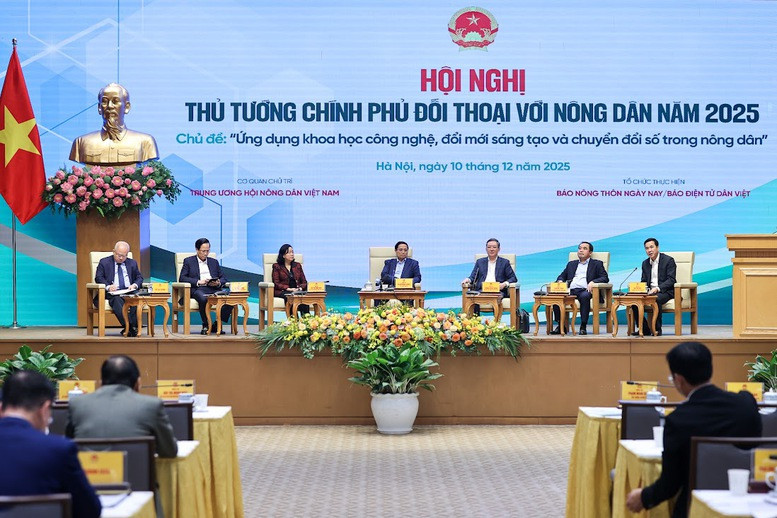
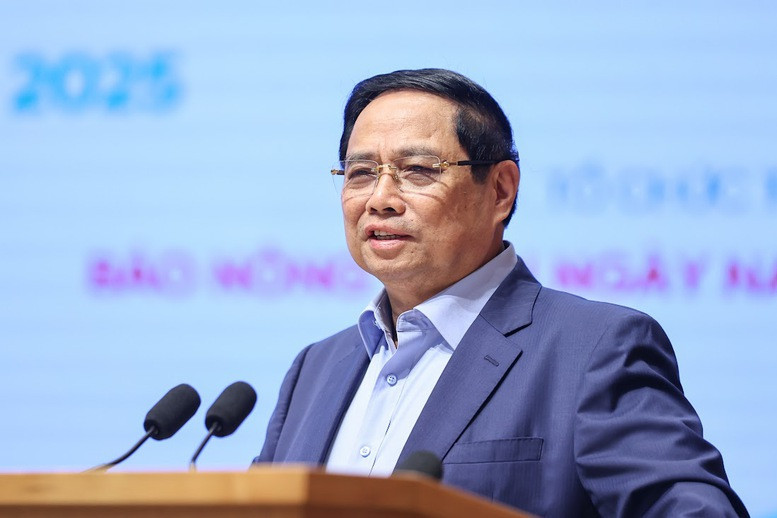
The Prime Minister proposed a “three partnerships” approach for supporting farmers in adopting innovation and digital tools. These are:
Supporting knowledge transfer and technology handover;
Building supportive policies for livelihoods and job creation;
Connecting to markets, product consumption, and brand development.
He also laid out five core tasks for farmers:
Promote the application and transfer of science, technology, innovation, and green transition in production. Focus on high-tech agriculture and an agricultural economy.
Actively contribute policy ideas to improve institutions and the investment climate.
Be bold and pioneering in agricultural entrepreneurship and innovation.
Enhance smart management capacity in production, value chains, and business operations.
Proactively access capital, land, expand markets, and build product branding.
Eight priorities for rural transformation
To tackle bottlenecks and build a prosperous agricultural sector, a modern countryside, and civilized farmers mastering science and technology, the Prime Minister outlined eight focus areas for all levels of government:
First, affirm the long-term strategic role of agriculture, farmers, and rural development. Farmers should be the center, subject, driving force, and resource. Shift fully to market-oriented production, restructure toward green, organic, circular, low-emission farming, and apply high-tech, digital transformation suited to each region’s potential.
Second, recognize science, technology, innovation, and digital transformation as key to resolving current agricultural challenges and boosting value-added and product quality. Encourage “order-based” collaboration between scientists, businesses, cooperatives, and farmers.
Third, for research investment, internet infrastructure, and e-commerce platforms for farmers, ministries should develop public-private partnerships to modernize digital infrastructure.
Fourth, regarding capital, credit, science and tech training, and agricultural insurance, he urged simple, accessible, and mutually beneficial policies.
Fifth, he stressed a firm stance against unsafe food. Investment should focus on digital data systems for agriculture and the environment to support traceability, carbon emission tracking, and value chain governance. Modern testing centers should be built.
Sixth, continue promoting sustainable value chains and private sector development in agriculture and rural areas.
Seventh, he called on the Vietnam Fatherland Front and social-political organizations to uphold their role as the broadest connectors of the public, as guided by General Secretary To Lam.
Eighth, continue implementing social welfare programs, new rural development, poverty reduction, and ethnic minority and mountain region economic development. Prioritize the well-being of the poor, remote communities, and vulnerable groups.
All welfare programs must adhere to the principle of "six clears": clear people, clear tasks, clear responsibilities, clear authority, clear timelines, and clear results. They should also follow the “three disclosures, three monitors”: disclose objectives, resources, and progress; be monitored by the people, the front, and the press; and institutionalize the process of "people know, people discuss, people do, people inspect, people supervise, people benefit," the Prime Minister emphasized.
Tam An
.svg)
