 Vietnamnet.vn

 Podcast



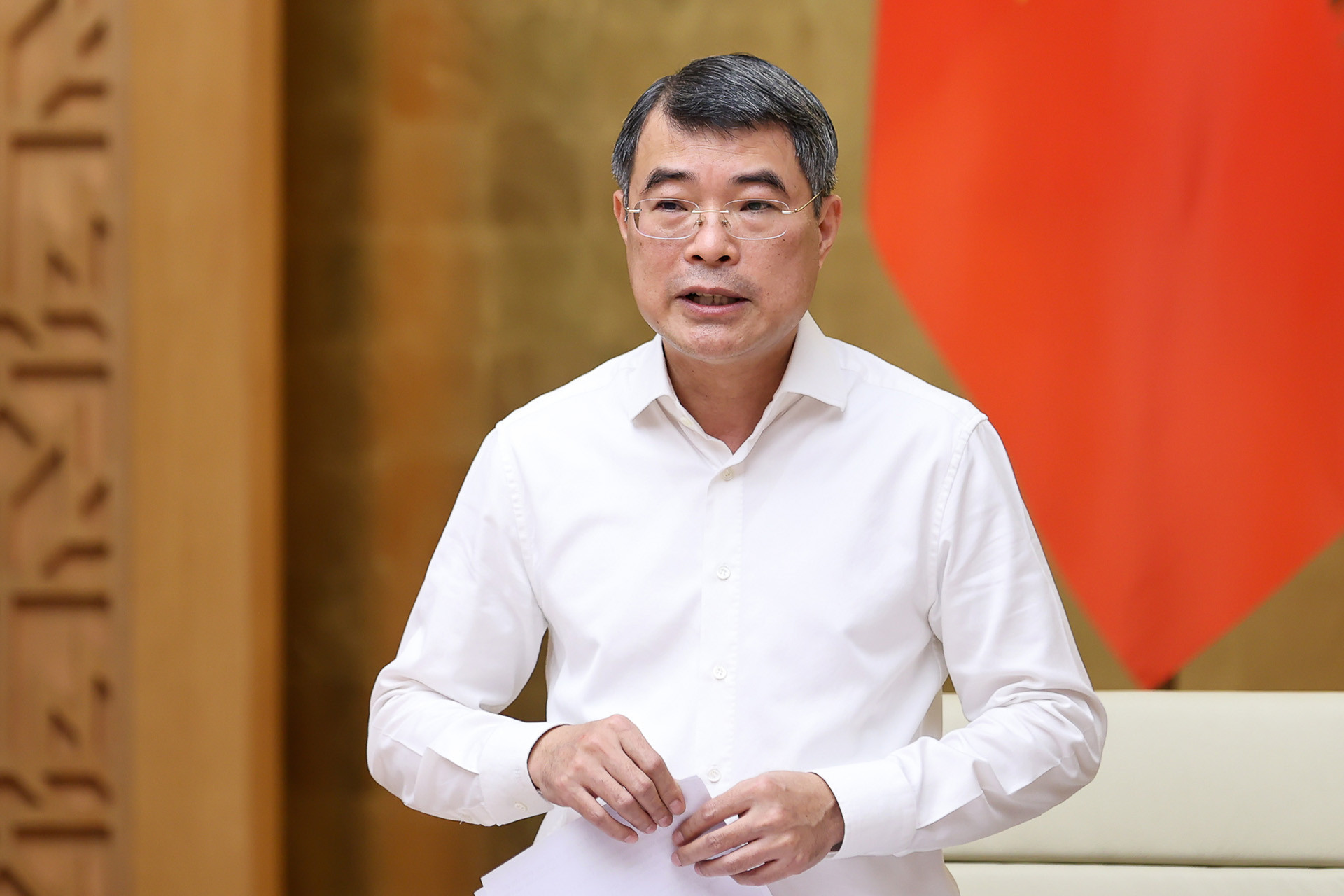
He always demands to know what must be completed by which date, which ministry is responsible, and how failure to meet these deadlines will be handled.
The Prime Minister sets very specific timelines: the plan to cut business conditions must be submitted before April 20; public investment capital allocation must be finished by May 10; disbursement KPIs (key performance indicators) must be established before May 15; and in the second quarter, many major projects regarding the financial market, SCIC, and corporate bonds must be completed.
This shows that the new Government no longer accepts the slow operational pace of the apparatus as a normal state.
Those who have followed Le Minh Hung for many years see a distinct style: presenting issues coherently and logically, using little emotional discourse, and paying special attention to the enforceability of policies.
Hung’s management style recently has taken on a rather technocratic tone: few slogans, many deadlines, and diving deep into the operational mechanisms of the system.
Looking at the numbers alone, the scale of reform in the first month was actually quite large. The Government issued eight resolutions on cutting or simplifying administrative procedures and business conditions. In total, 164 legal documents were amended, 890 business conditions were abolished, and hundreds of procedures were simplified, with the goal of reducing compliance time and costs by over 50 percent.
In a Government meeting, the Prime Minister emphasized: "Do not let cutting one procedure lead to the growth of another," clearly reflecting a new management mindset: Reform no longer stops at announcing the number of procedures cut on paper but must substantively change the way the apparatus operates.
Macro-stability as a foundation for growth
Economist Nguyen Dinh Cung remarked that after more than a month of the new Government’s operation, "professionals all notice many new and different points." According to him, the reduction of licenses, business conditions, and administrative procedures is "on the right track, with initial results”.
However, he also noted that issuing resolutions is only the first step. It is equally important to have specialized units to monitor, supervise, and evaluate implementation regularly. For many years, according to Cung, the biggest bottleneck in business environment reform in Vietnam is not the policy itself, but in the implementation.
The new Government does not seem to choose the path of stimulating growth through strong monetary easing or launching large-scale support packages. This clearly reflects the personal imprint of Prime Minister Le Minh Hung, a person who rose from the finance and banking sector and is famous for being cautious with macro-stability.
In many recent speeches, he has emphasized: "Macro-stability is the foundation for development."
In a working session with the State Bank of Vietnam, he spoke very bluntly: "Gold is an asset people have the right to hold, but the State does not encourage it because it does not create added value for the economy."
In a working session with the Ministry of Finance, the Prime Minister emphasized the requirement to "shift from a management mindset to a service mindset, creating an environment to promote production and business investment."
As for the Ministry of Industry and Trade, he required the sector to "shoulder key tasks to contribute to double-digit growth," while emphasizing the responsibility to "never allow shortages of electricity or petroleum in any situation”.
In a session with the Ministry of Agriculture and Environment, he stressed that agriculture is the backbone of the economy, the foundation of macroeconomic stability and social stability.
Those instructions show that the new Government is approaching growth in a rather different direction than before: not just boosting credit or pumping more money, but trying to make the markets, resources, and supply systems of the economy operate more smoothly.
Perhaps that is why the focus of management in the first month lay not in new stimulus packages, but in cutting procedures, unblocking projects, forcing progress, and unblocking resources trapped in the economy.
Of course, one month is too short to speak of the success of an entire term.
Actually, behind that frantic management pace is immense pressure from the new growth targets set by the Central Committee in Conclusion 18-KL/TW issued in early April 2026. This document identifies a series of key tasks for the 2026–2030 period, including the goal of average GDP growth of 10 percent or more, institutional reform, digital economy development, and promoting sustainable growth.
Tu Giang
.svg)
