 Vietnamnet.vn

 Podcast



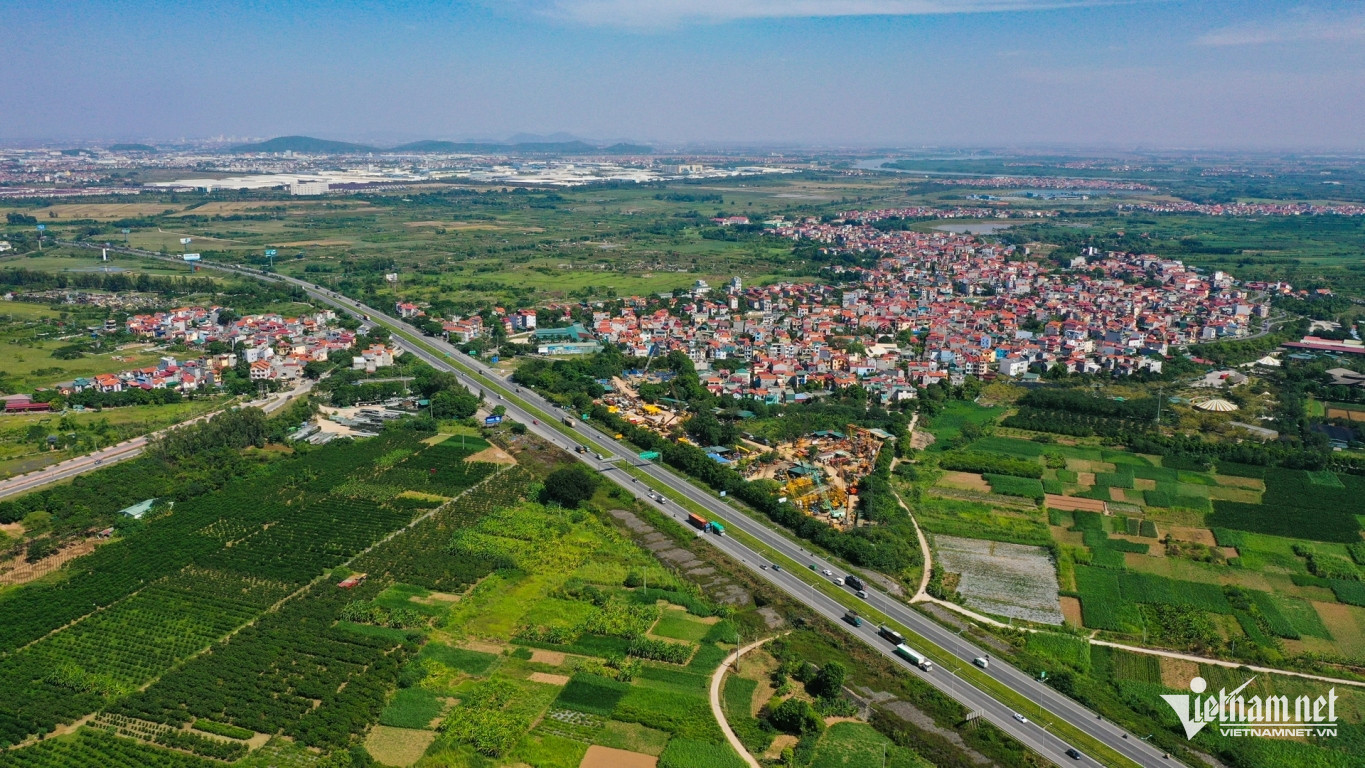
At a press conference on July 15 announcing the second quarter and first half market report, Pham Thi Mien, Deputy Director of the Vietnam Real Estate Market Research and Appraisal Institute (VARS IRE), said the provincial mergers had created a significant "wave" impacting the real estate market.
The strongest interest occurred from late March to early April, with property prices surging by up to 40 percent. This primarily affected land plots, with strong activity in the provinces of Ninh Binh, Hai Phong, Bac Giang, Hai Duong, and Hanoi’s outskirts.
“However, by mid-April, the market gradually stabilized, and the investment ‘fever’ to anticipate the merger of provinces and cities cooled down. Investors no longer rushed into the game recklessly like before,” Mien said.
“Instead, they waited for accurate planning and orientation to consider investing. In localities with previous ‘waves’, prices and liquidity showed signs of slowing down, especially in areas not included in the administrative center planning,” she explained.
Also according to Mien, streamlined administrative processes and reduced project implementation costs due to mergers have all facilitated selling price decreases.
Regarding supply in the first half of 2025, VARS IRE reported a total of 64,000 residential real estate products, equivalent to 80 percent of 2024’s full-year supply. Of these, over 51,000 were new products, with the remainder being re-offered inventory.
The supply surge was driven by large-scale projects accelerated by developers, new projects launched after resolving legal issues, and clear signs of market recovery, particularly in the southern region.
“While supply has increased, the structure remains imbalanced, especially in major cities like Hanoi, HCM City, and Da Nang, where demand is highest. The market is dominated by high-end and luxury apartments, with almost no commercial apartments priced below VND60 million/sq m,” Mien noted.
VARS IRE predicted a continued strong recovery in the second half of 2025, with supply improving as numerous commercial housing projects move forward after resolving legal hurdles.
However, the supply-demand imbalance is unlikely to improve. The reason is that projects will continue to be launched at high prices when land use costs, which account for the largest proportion of project development, are increasing sharply, and infrastructure and utility investment costs are high.
Additionally, cash is flowing to suburban areas as urban prices have become too high, offering limited growth potential and lower return rates for the latter.
Golden investment window
Le Dinh Chung, CEO of SGO Homes, predicted that the real estate market will rebound positively once administrative boundaries stabilize.
Notably, markets with strong infrastructure and industrial development, such as provinces around Hanoi and new administrative centers like Bac Giang, Hung Yen, Hai Phong and Quang Ninh, will be key focal points.
Chung noted that properties meeting actual housing demand will see price increases. In practice, land plots in low-density areas with few amenities experience a lower price growth rate compared to developed residential areas with robust amenities and housing demand.
Therefore, investors who previously had the habit of investing in land will gradually shift to residential real estate. They will focus on densely populated areas, central areas and have good rental potential.
According to Chung, after the provincial mergers, the third and fourth quarters will be the golden opportunity for professional investors to learn about the market and make investment decisions.
The market is currently “standing still” as many investors are observing, which will be an opportunity for those who make decisions early.
“When investing in any real estate segment, you need to pay attention to factors such as central location, good population density, full amenities, and meeting the needs of living in addition to the price story,” Chung noted.
Nguyen Van Dinh, Vice President of the Vietnam Real Estate Association, noted that after the merger, localities will certainly have adjustments in policies, strategies, and planning, so investors need to be calm to accept the changes.
According to Dinh, real estate value will only truly benefit if it goes hand in hand with local economic growth and an improved investment environment. Therefore, investors should not "surf" according to short-term price increase expectations.
"It is necessary to invest selectively, based on analysis of actual data and assessment of regional compatibility. This will be the key to avoiding risks when the market fluctuates," said Dinh.
Nguyen Le
.svg)
