 Vietnamnet.vn

 Podcast



The announcement was made by Prime Minister Le Minh Hung during a voter meeting in Hai Phong on April 28, following the first session of the 16th National Assembly.
The meeting, held both in person at the Hai Phong Convention and Performance Center and online across 114 communes, wards, and special administrative units, was attended by senior officials including Minister of Industry and Trade Le Manh Hung, Minister and Chairman of the Government Office Dang Xuan Phong, and Hai Phong Party Secretary Le Ngoc Chau.
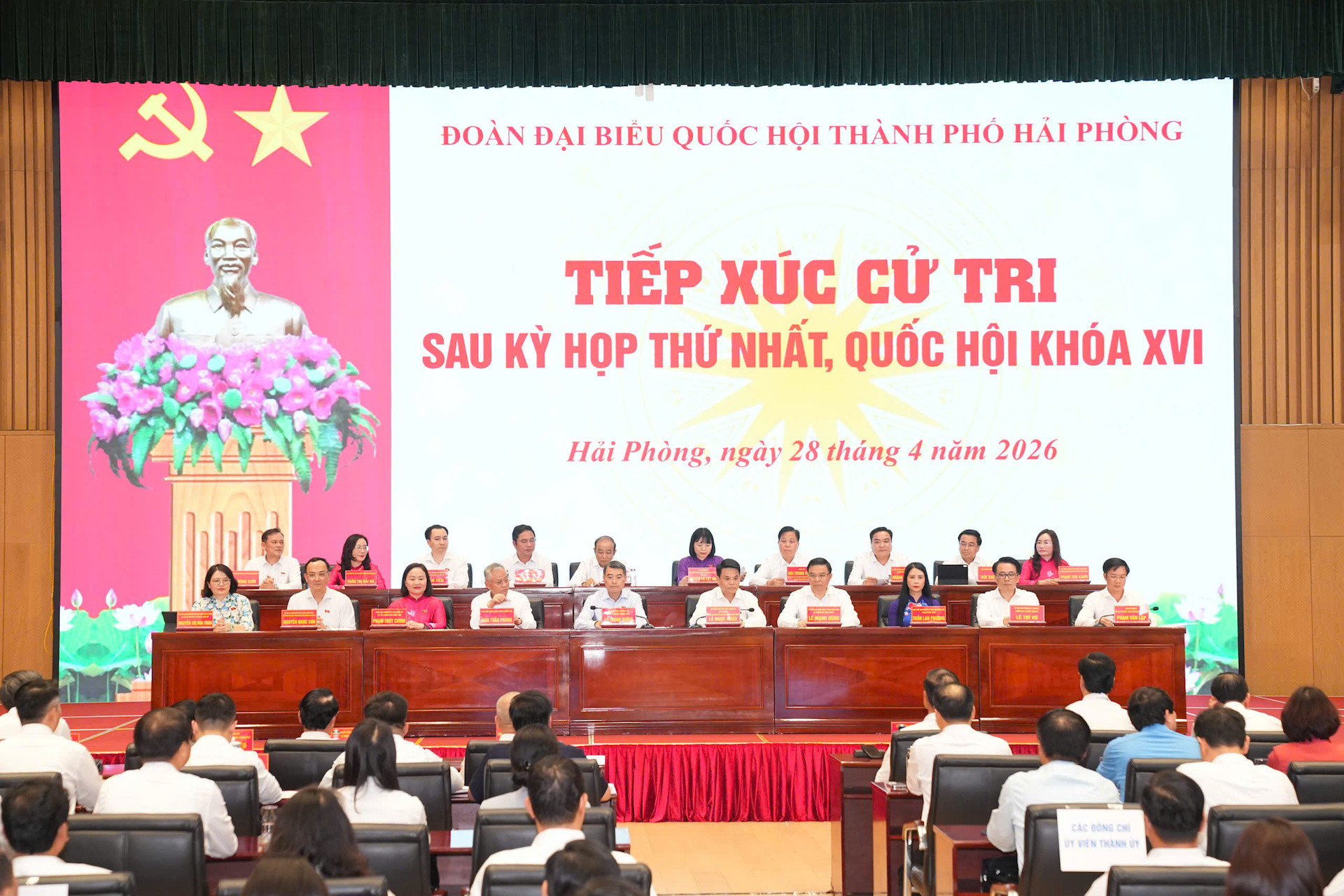
Addressing voters, the Prime Minister emphasized that the first session of the new National Assembly term carries special significance, not only marking the beginning of a new tenure but also addressing critical issues shaping the country’s future development.
Unlike previous first sessions, which typically focused on personnel matters, this session adopted a more flexible and open agenda, allowing for the timely inclusion and resolution of urgent, real-world issues.
The National Assembly passed a series of important decisions related to socio-economic development, promptly institutionalizing the Party’s policies into law with broad consensus.
The government has also directed an urgent review of stalled and problematic projects involving significant resources, reporting them to competent authorities and incorporating them into the session’s agenda. This has enabled the National Assembly to issue resolutions with specific and breakthrough mechanisms and policies.
Central authorities have required local governments to conduct comprehensive reviews, assign clear responsibilities, and strengthen accountability among leaders, including Party secretaries and chairpersons, in resolving project bottlenecks.
Firm stance on cutting unnecessary spending
Prime Minister Le Minh Hung said the government has been actively studying adjustments to tax laws for submission to the National Assembly during this session. The upcoming decree will include the proposal to double the income tax threshold for household businesses.
He also reported that in the first four months of 2026, Vietnam’s macroeconomic situation remained broadly stable, with inflation under control and major economic balances ensured.
The two-tier local government model has been operating relatively smoothly, alongside decentralization efforts and resource allocation aimed at strengthening grassroots capacity.
The central government continues to prioritize macroeconomic stability, inflation control, and fiscal discipline, with a firm commitment to cutting unnecessary expenditures.
At the same time, efforts are ongoing to streamline the administrative apparatus, improve efficiency, and enhance the quality of public officials, in line with the designation of 2026 as a year focused on strengthening grassroots-level personnel.
Strong support for Hai Phong’s development
The Prime Minister acknowledged Hai Phong’s positive performance in the first quarter, particularly its strong economic growth, with GRDP rising by 11.21 percent and exports reaching US$12.1 billion. State budget revenues, public investment, and investment attraction were also highlighted as bright spots, alongside progress in strategic infrastructure and planning, especially transport links connecting seaports and airports.
He urged the city to continue implementing Party and State policies decisively and effectively, in line with directives from Party General Secretary and President To Lam.
The government remains committed to supporting Hai Phong in maximizing its potential and advantages, ensuring that existing mechanisms and policies are implemented in a substantive and effective manner.
As both head of government and a National Assembly deputy representing Hai Phong, Prime Minister Le Minh Hung reaffirmed his commitment to working alongside the city’s Party organization, authorities, and people to achieve national development goals, including the city’s own aspirations.
Hai Phong Party Secretary Le Ngoc Chau acknowledged the Prime Minister’s guidance and voter feedback, affirming that these inputs will be translated into concrete action plans and implemented effectively.
He highlighted ongoing efforts to reform administrative procedures and advance digital transformation, noting that 1,816 out of 2,182 procedures have been reduced by at least 50 percent in processing time.
The city has also implemented land database projects with a total investment of over VND1.8 trillion (US$74 million), although challenges remain in data integration across systems.
Regarding construction materials - a major bottleneck for infrastructure development - Hai Phong has identified demand of around 563 million cubic meters for more than 1,100 projects between 2026 and 2030. The city has planned 69 material mines and introduced flexible licensing and auction mechanisms to ensure stable supply and meet the needs of key projects.
Hoai Anh
.svg)
