 Vietnamnet.vn

 Podcast



At a signing ceremony on February 10, FPT Chairman Truong Gia Binh emphasized that Vietnamese economic conglomerates must unite to master core technologies. He described it as a long-term, resource-intensive endeavor requiring national ambition and perseverance.
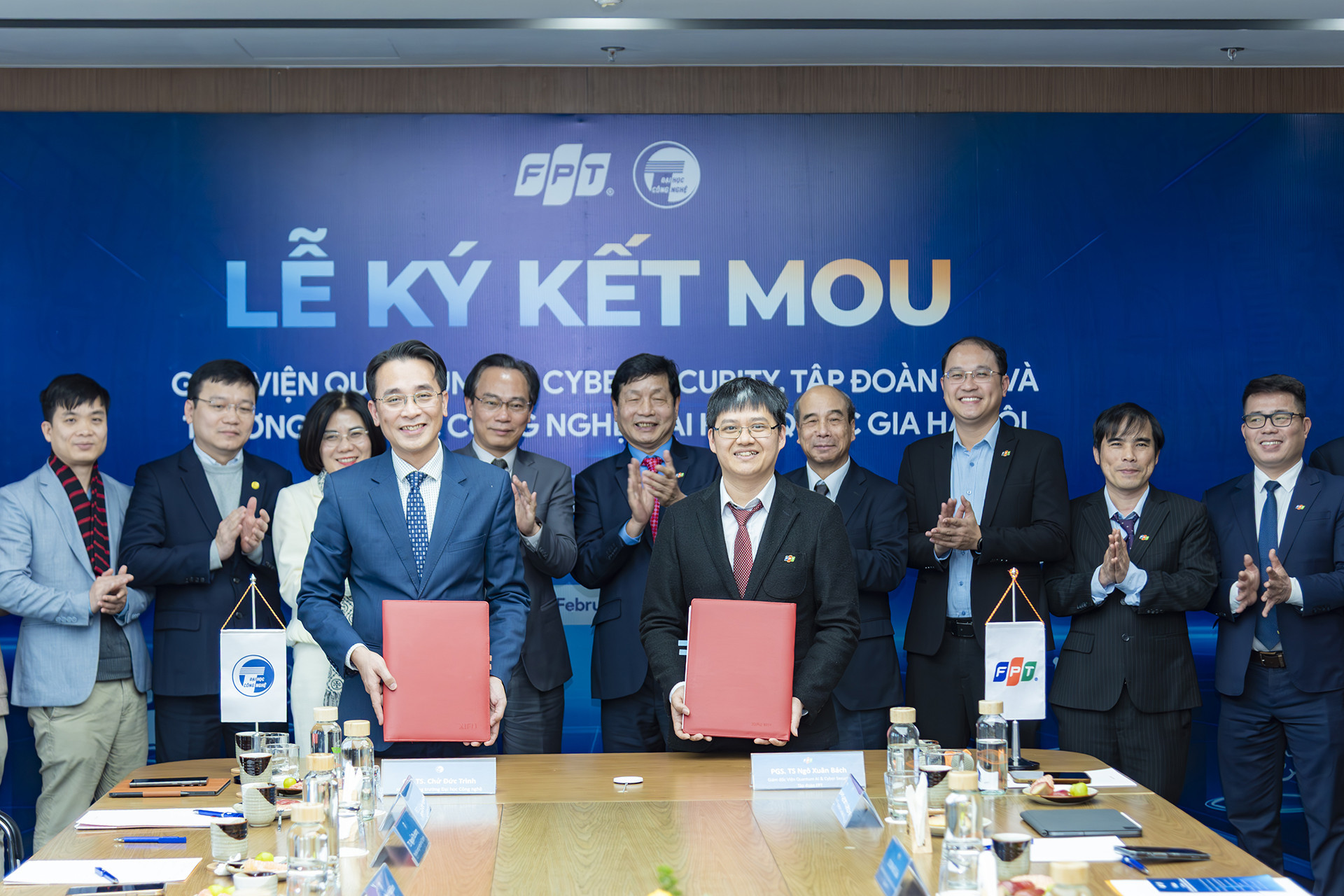
The agreement was formalized among FPT Corporation, the Quantum AI & Cyber Security Institute (QACI), and the University of Engineering and Technology under Vietnam National University, Hanoi. The goal: to foster training, research, and development of high-quality human resources in strategic technology domains vital to Vietnam’s future.
According to the agreement, the two sides will focus on developing talent in key sectors such as artificial intelligence, quantum computing, and cybersecurity.
QACI, under FPT Corporation, will offer opportunities for internships and research, and will consider launching scholarship programs for undergraduate and graduate students at the university.
The partnership also includes joint scientific research projects, collaborative product development, co-hosted academic conferences, and sharing of research outcomes with the broader community - forming a seamless innovation value chain to serve Vietnam’s strategic tech advancement.
Speaking at the event, FPT Chairman Associate Professor, Doctor Truong Gia Binh highlighted the significance of the partnership, calling it a milestone for comprehensive collaboration between FPT and VNU Hanoi.
He noted, “Vietnam faces the crucial challenge of converting scientific and technological achievements into engines for economic growth. I have two appeals. First, each scientist, technologist, and engineer should contribute directly or indirectly to the government’s double-digit growth targets in the coming years. Second, Vietnamese conglomerates must venture together into the core technology space - this is a game that demands major resources, sustained resolve, and national aspiration.”
Associate Professor, Doctor Hoang Minh Son, President of Vietnam National University, Hanoi, underscored the importance of linking academic training and research with real-world applications, describing this partnership as a crucial move to enhance the university system’s research and teaching capacity.
“If growth is based solely on labor, capital, and resources, breakthroughs are difficult,” he said. “Real breakthroughs come when we shift from a material-based economy to a knowledge-based one. Science and technology can only become true growth engines when we create new, practical knowledge and tackle real problems faced by businesses and the nation. In today’s tech race, the deciding factor remains human capital and talent.”
Professor, Doctor Chu Duc Trinh, Rector of the University of Engineering and Technology, VNU Hanoi, stated that the current bottleneck is not a lack of knowledge or experts, but the absence of strong, trustworthy mechanisms linking scientists and businesses.
He explained, “Today’s partnership lays the foundation for a genuine innovation model - one where universities, enterprises, and scientists collaborate to solve major national and business challenges. Our university stands ready to accompany and implement specific joint tasks starting now.”
Founded on December 13, 2025, QACI is one of the first quantum research centers led by a Vietnamese enterprise.
FPT has pledged a $100 million investment into the institute, focusing on practical solutions to national challenges in quantum technologies, AI, and cybersecurity.
Its targets include training 100 PhDs, developing 2,000 technology experts, and producing 500 scientific publications, patents, and intellectual property assets.
Thai Khang
.svg)
